

Sir Joshua Reynolds, Three Ladies Adorning a Term of Hymen 1773. Tate.
9 rooms in Historic and Early Modern British Art
The first public exhibitions bring new audiences and new status to British art. This gallery recreates the spectacle of these early displays
The first temporary exhibition of contemporary art opens in London in 1760. Many more soon follow, notably the annual summer exhibitions held from 1769 by the new Royal Academy. For the thousands of visitors attending, these exhibitions can be overwhelming, unruly experiences. Noisy, hot and overcrowded, people come for the spectacle as much as for the art. They are as bursting with paintings as with people. As in this room, the pictures are densely hung from floor to ceiling in a kaleidoscope of styles and subjects.
For artists, this brings new challenges and opportunities. They worry that their work cannot be seen properly in the crowded conditions. To stand out against the competition, they bring ever greater individuality, experimentation and even flamboyance to their work. Art becomes regularly talked about in the newspapers, and reviews from critics can make or break careers.
Exhibitions become fashionable events. Artists are able to directly address more people than ever before, beyond a small number of elite patrons. To engage this wider public, their work often reflects popular interests and current affairs. Exhibitions become places where the nation’s ideas and anxieties are expressed.
There is a new buzz around British art. A sense of national identity is projected through these exhibitions. They help define a ‘British school’, which is celebrated as a sign of the nation’s cultural wealth and progress. Exhibitions contribute to how the country imagines itself on the world stage.
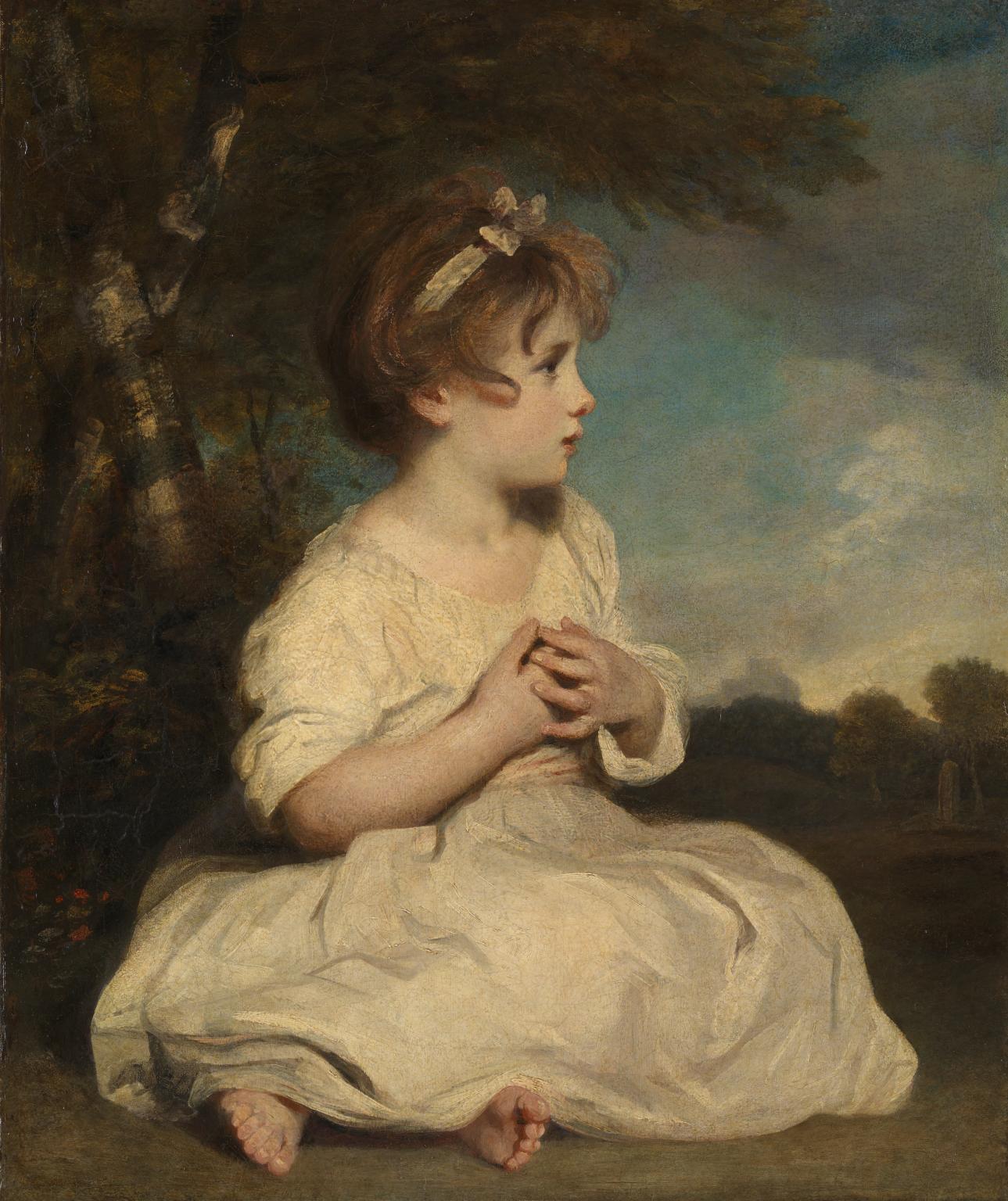
Sir Joshua Reynolds, The Age of Innocence ?1788
The identity of Joshua Reynolds’s young model is uncertain. It is perhaps Reynold’s great-niece Theophila Gwatkin, a Miss Anne Fletcher, or a Lady Anne Spencer (the youngest daughter of the 4th Duke of Marlborough). This painting is an example of a ‘fancy’ picture, a type of 18th century painting showing figures, particularly children, playing out various roles. It was painted over one of Reynolds’s existing paintings, titled A Strawberry Girl. He altered all elements of the girl’s figure except for her hands. The Age of Innocence was one of Reynolds’s most popular images – more than 323 full-scale copies were made of it between 1856 and 1893.
Gallery label, October 2023
1/30
artworks in The Exhibition Age
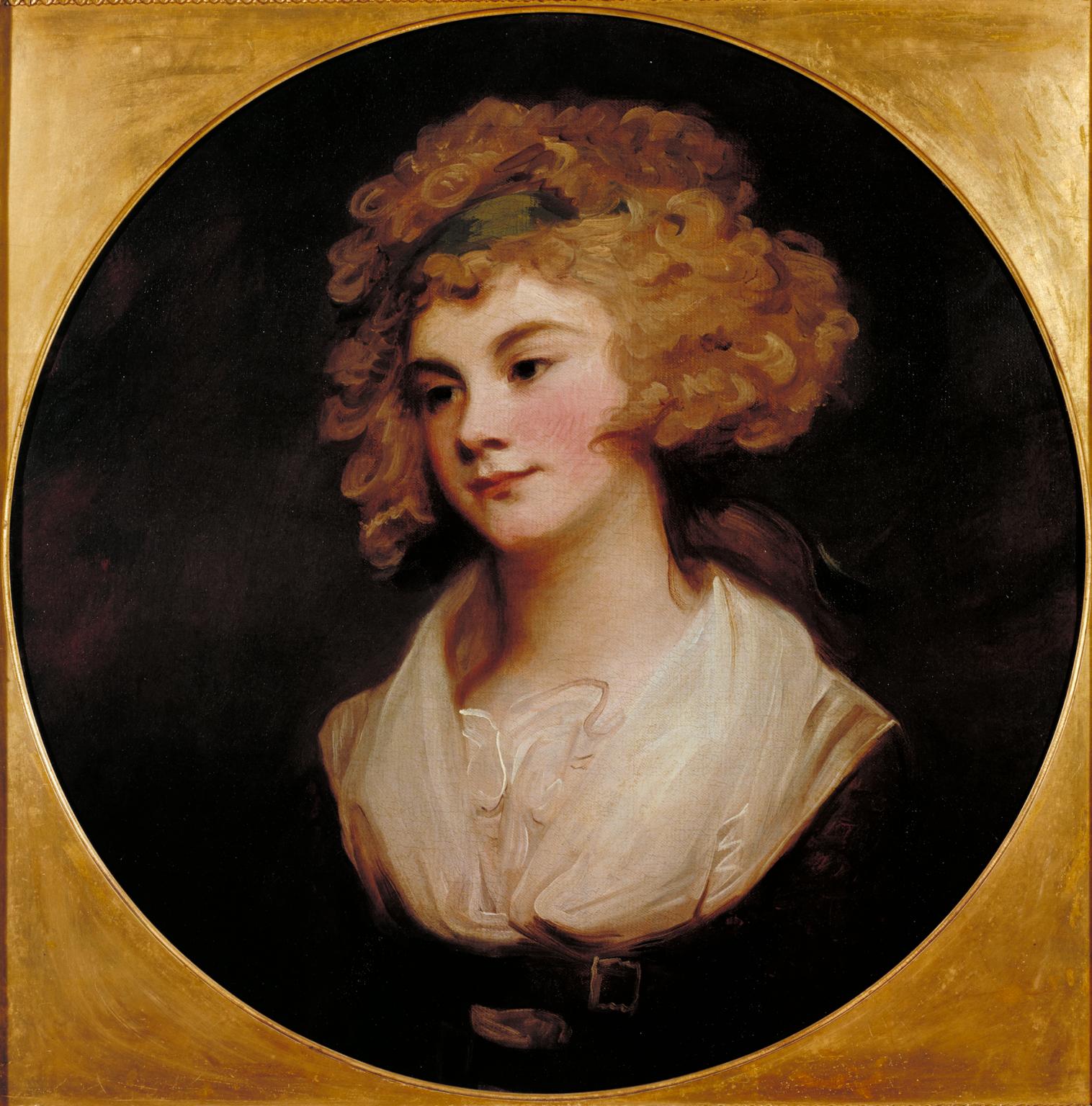
George Romney, A Lady in a Brown Dress: ‘The Parson’s Daughter’ c.1785
George Romney was one of London’s most fashionable portraitists. He was particularly admired for the charm and simplicity of his female portraits. He chose not to exhibit his works publicly after 1772, instead relying on word of mouth for private commissions. Romney became known for his virtuoso ‘performances’ at sittings, quickly painting the sitters’ likeness directly onto the canvas. This painting demonstrates the artist’s loose, expressive brushwork. We do not know the identity of the sitter, but later, in the second half of the 19th century the work became widely known as ‘The Parson’s Daughter’.
Gallery label, February 2024
2/30
artworks in The Exhibition Age

Thomas Stothard, Nymphs Discover the Narcissus exhibited 1793
Thomas Stothard depicts a scene here from the Roman poet Ovid’s mythological narrative, Metamorphoses. The boy Narcissus, obsessed with his own reflection in the water, wastes away and turns into a flower. Here a group of nymphs discover the flower growing on the riverbank. The painting was first exhibited at the Royal Academy in 1793. Stothard’s steadiest form of income was book illustration, but his reputation as a history painter was beginning to grow in the 1790s. It was on this basis that he was elected a full member of the Royal Academy in 1794.
Gallery label, October 2023
3/30
artworks in The Exhibition Age
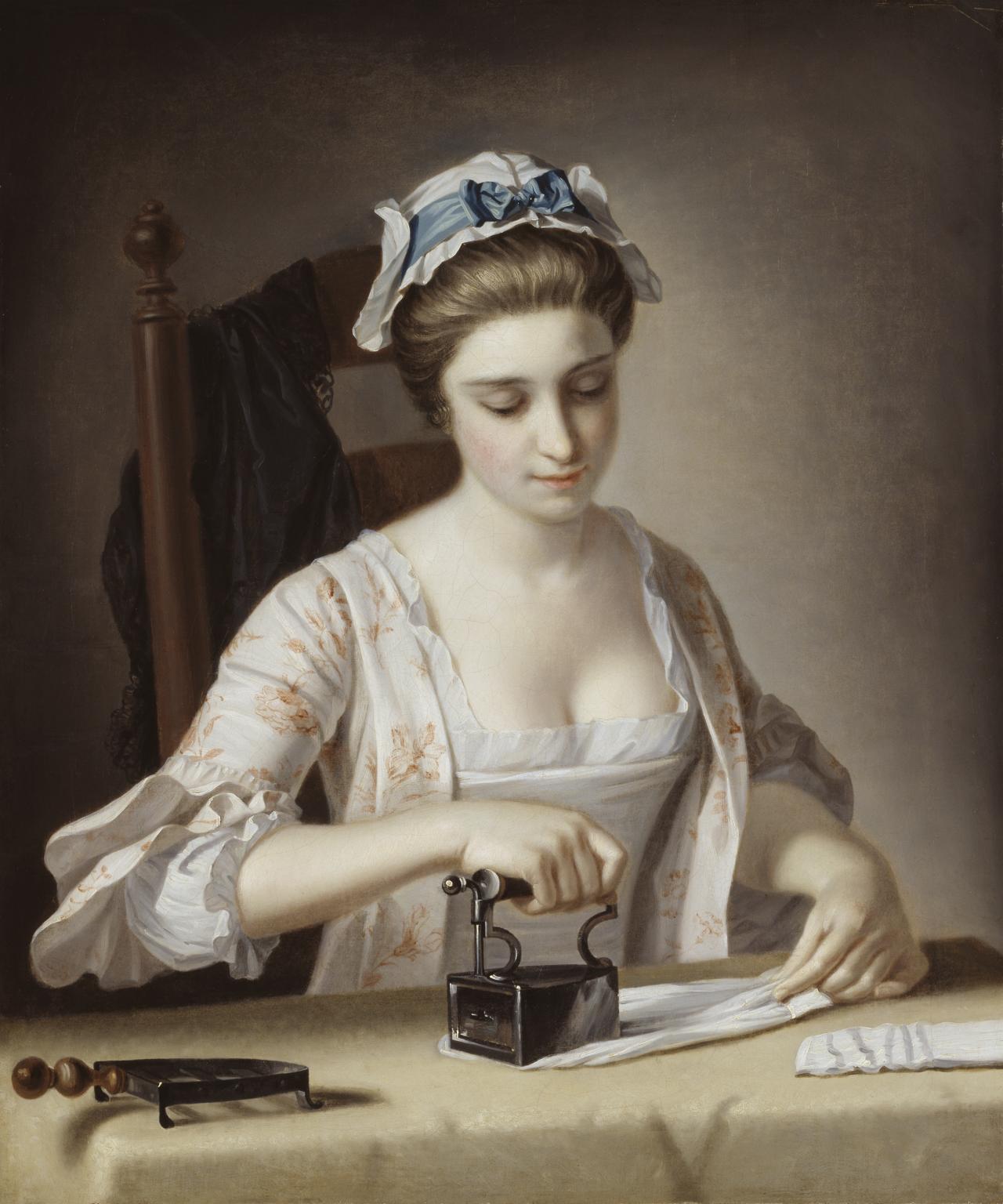
Henry Robert Morland, A Laundry Maid Ironing c.1765–82
This painting of a maid ironing is typical for Morland, who specialised in such ‘fancy pictures’ - subjects drawn from everyday life but with imaginative elements. He repeatedly painted and exhibited idealised pictures of young women in working-class roles, as ballad singers, oyster sellers and laundry maids. Here, the woman is shown passively gazing down, serene as she works, her tools and appearance pristine. There is little indication of her individuality, or of the real hardship of such domestic labour. Instead, she represents a contrived ‘type’, made attractive for contemporary middle and upper-class viewers and saleable for the print market.
Gallery label, June 2022
4/30
artworks in The Exhibition Age
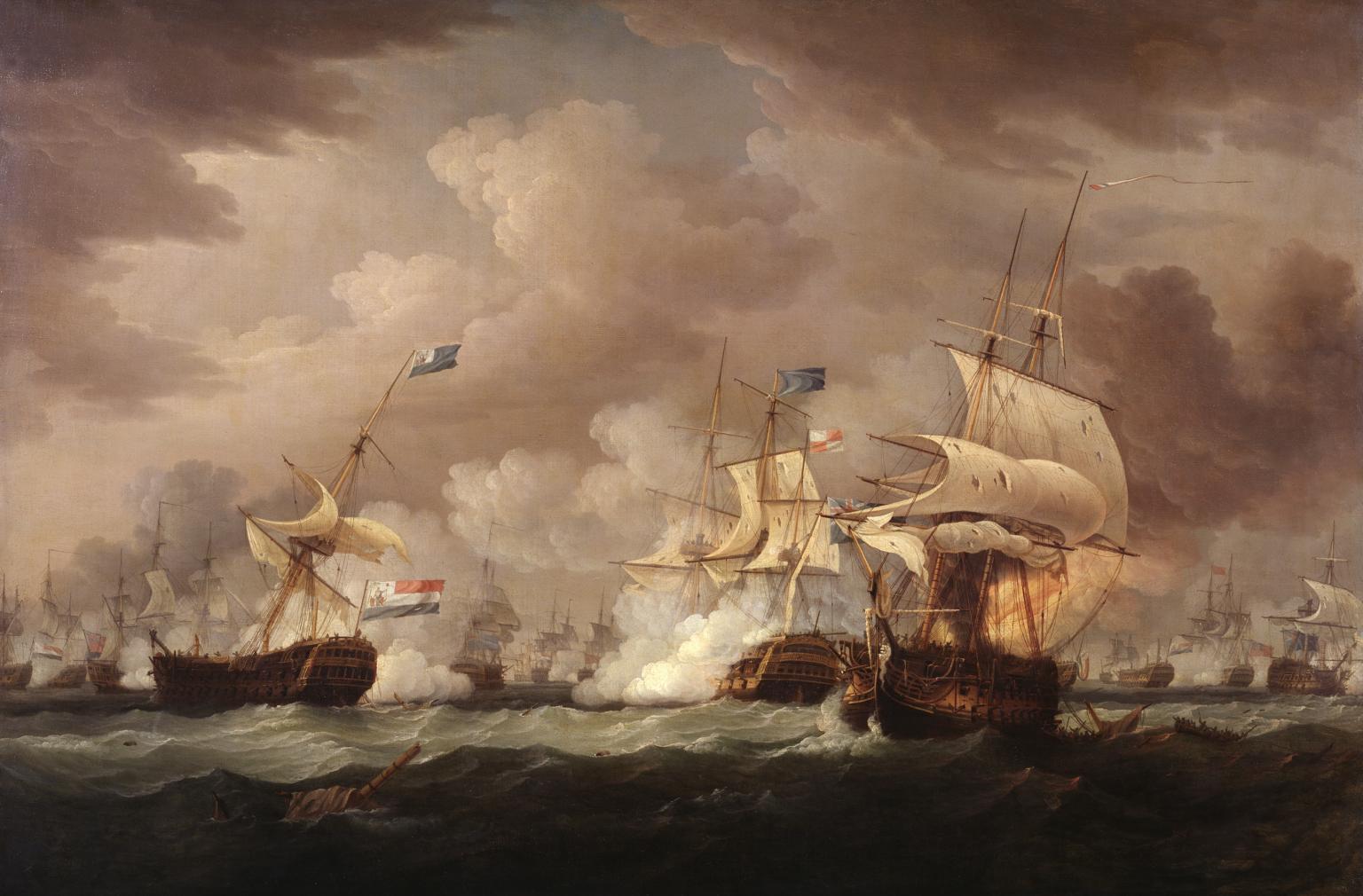
Thomas Whitcombe, The Battle of Camperdown 1798
This painting shows the naval battle that took place on 11 October 1797 near Camperduin, off the coast of North-Holland in the Netherlands. Whitcombe depicts the dramatic moments shortly after the British ship Venerable fired at its Dutch opponent Vrijheid. Just behind Venerable, to the right, is the Dutch ship Alkmaar in flames. The battle resulted in a resounding victory for the British fleet midway through the French Revolutionary Wars (1792–1802). Thomas Whitcombe specialised in maritime pictures, including of naval battles. Images like this, celebrating Britain’s naval power and victories, helped create a sense of national identity.
Gallery label, October 2023
5/30
artworks in The Exhibition Age
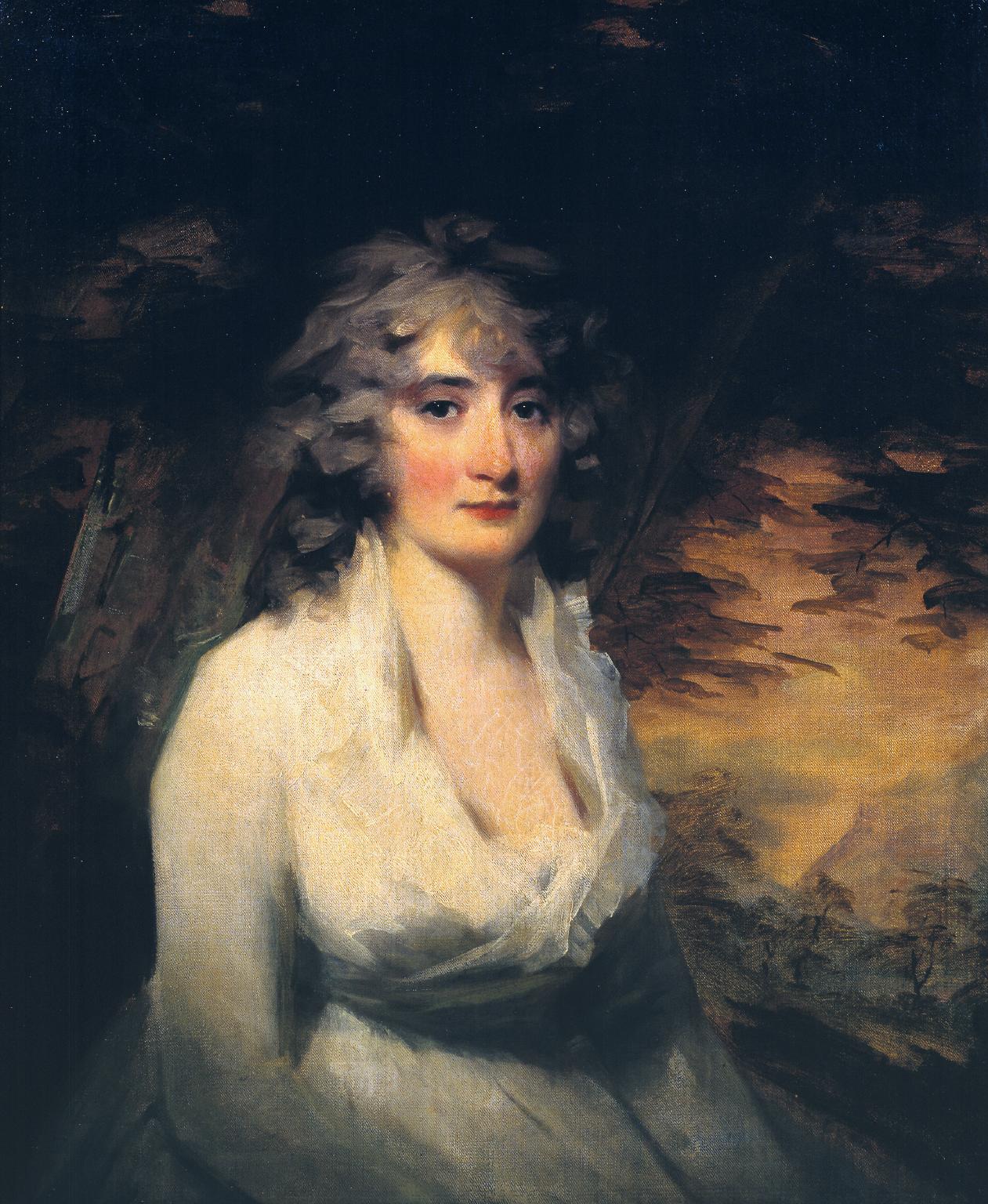
Sir Henry Raeburn, Mrs H.W. Lauzun ?1796
This painting depicts Anne Neale Lauzun (1776–1861), née Tucker. Born in Bermuda, her family were part of the British colonial administration. She spent her youth in Bermuda before moving to Edinburgh in 1792. Henry Raeburn painted this portrait in Edinburgh, possibly to commemorate Tucker’s marriage to Lieutenant Henry William Lauzun in 1796. The strong central light source and loose brushwork in this painting, reflect Raeburn’s cultivation of his own unique style as his career progressed.
Gallery label, October 2023
6/30
artworks in The Exhibition Age
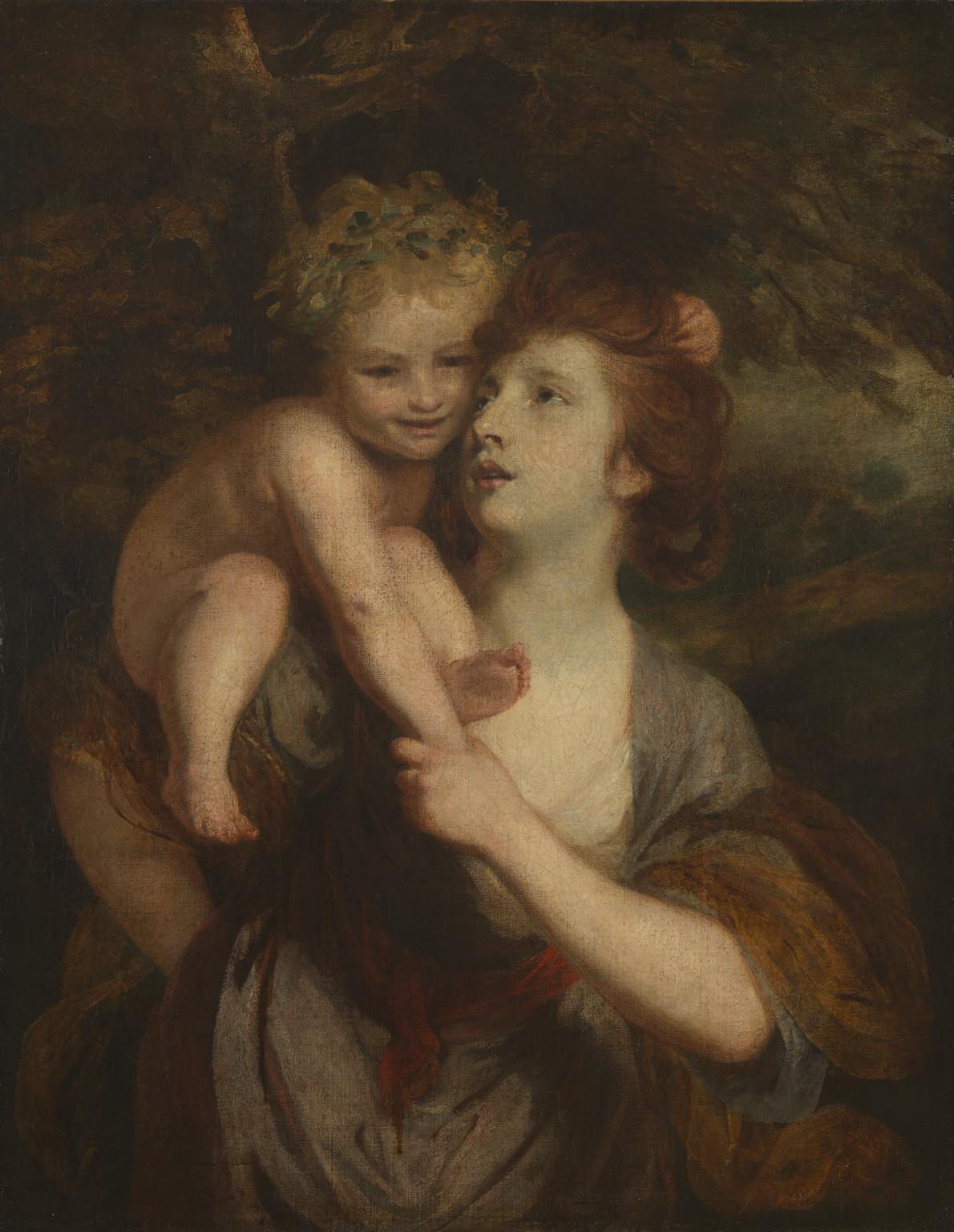
Sir Joshua Reynolds, Mrs Hartley as a Nymph with a Young Bacchus exhibited 1773
Elizabeth Hartley (1751-1824) is depicted here as a mythological figure. She holds a young Bacchus, the ancient Greco-Roman god of wine and festivity. By the time this painting was exhibited at the Royal Academy in 1773, Hartley was one of the most celebrated actresses on the London stage. Reynolds exhibited this painting with the title ‘A Nymph with Young Bacchus’. It was not presented as a portrait of Mrs Hartley, but as a subject or ‘fancy’ picture. Such pictures incorporated imagined elements into a scene, particularly of women and children.
Gallery label, October 2023
7/30
artworks in The Exhibition Age
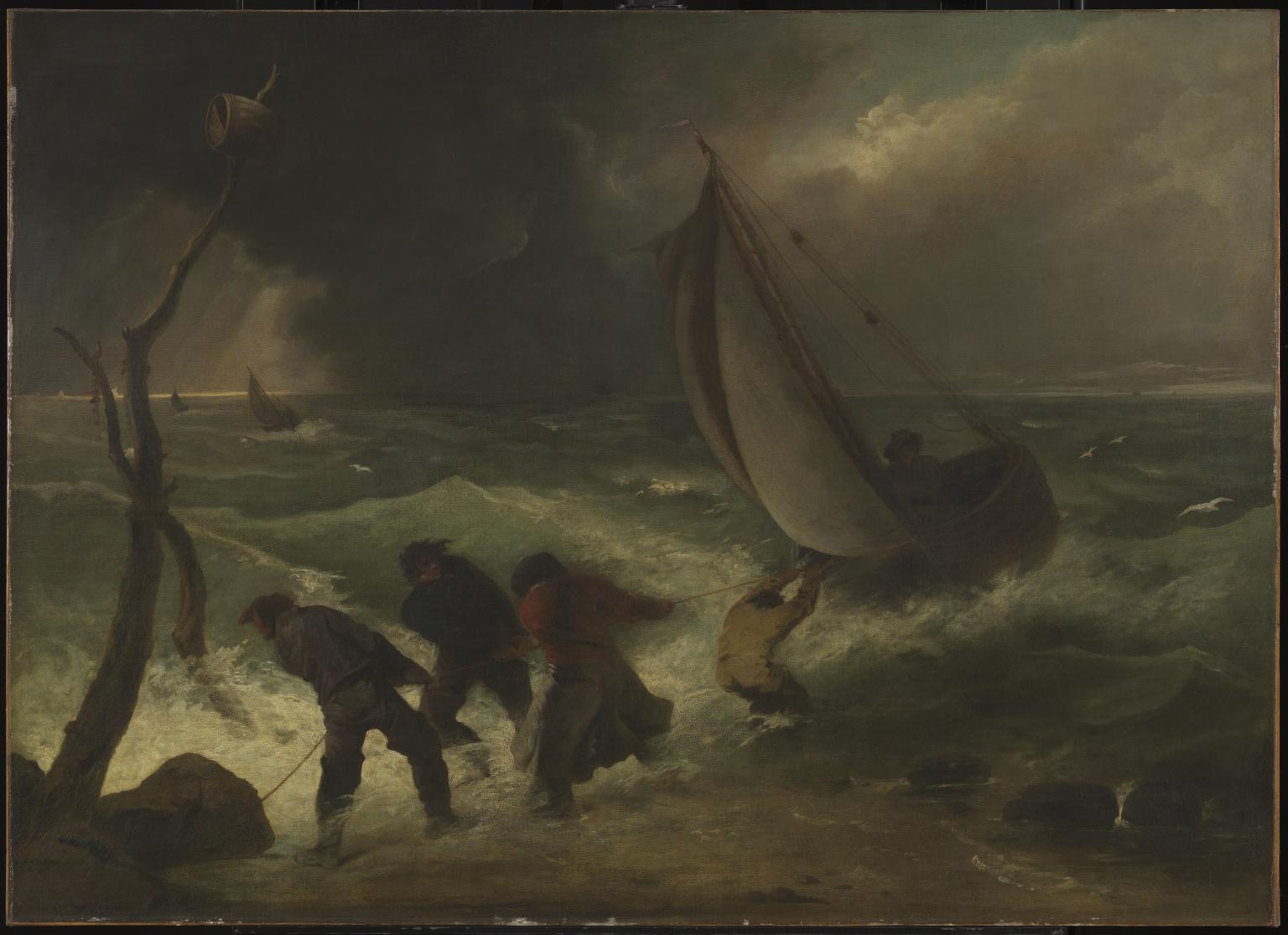
John Hoppner, A Gale of Wind c.1794
John Hoppner was one of the leading portraitists of his day. When he exhibited this painting at the Royal Academy in 1794, it would have stood out to exhibition-goers as a highly unusual subject for the artist. Indeed, this is the only work Hoppner is known to have exhibited that wasn’t a portrait. We think the stormy seascape is set just off St Catherine’s Point in the Isle of Wight, an area known for its dangerous waters. The painting gave Hoppner an opportunity to show off his expressive brushwork and his ability to convey drama and narrative. Capturing a sense of the artistic competition of the time, one critic remarked: ‘The present aggression is incontestably bold, and well executed, and should be rewarded with a booty of reputation.’
Gallery label, February 2024
8/30
artworks in The Exhibition Age
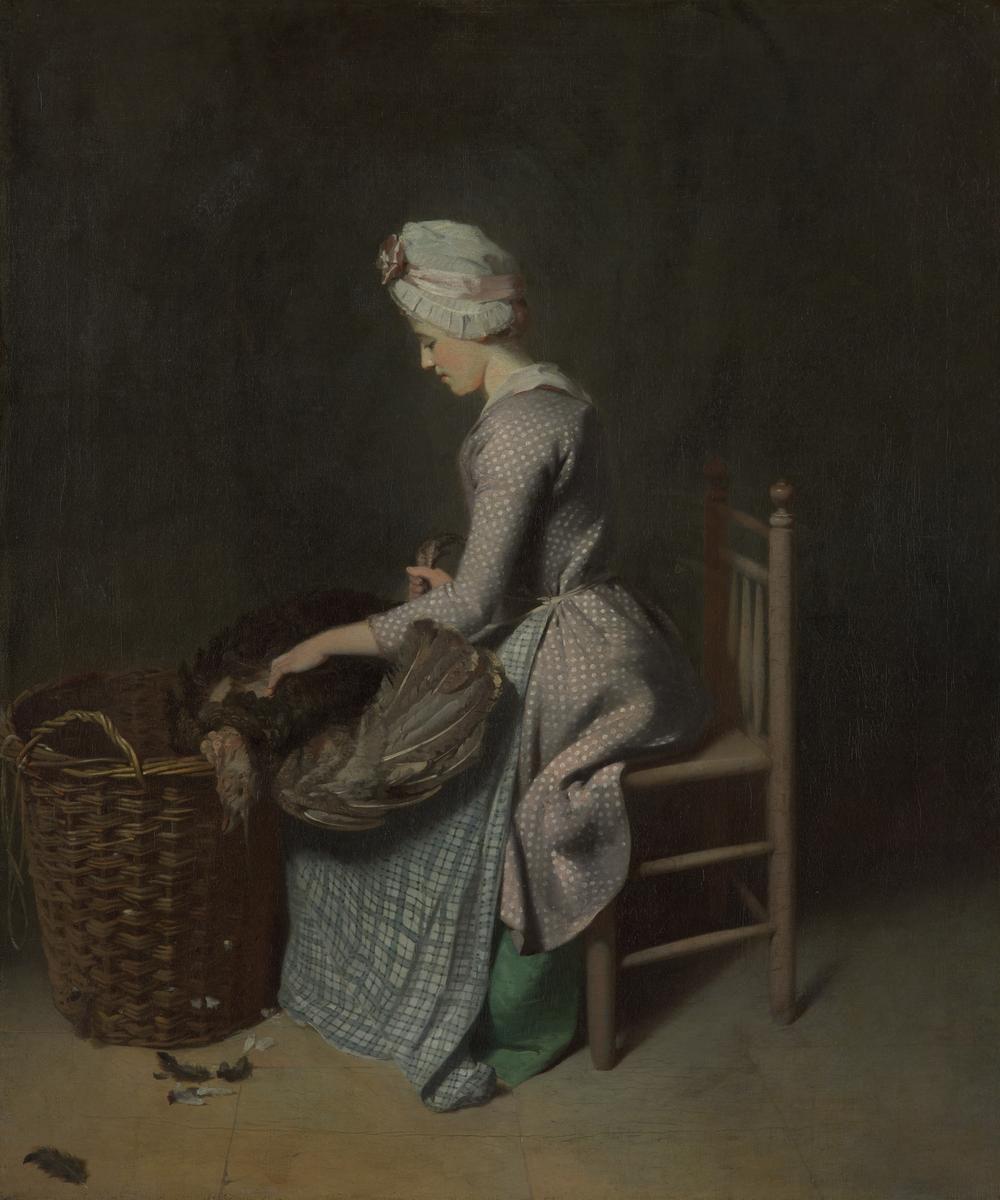
Henry Walton, Plucking the Turkey exhibited 1776
This painting was exhibited in London in 1776, during the early stages of the war with revolutionary America. Walton’s image of a cookmaid plucking a turkey is an example of the kind of lowly subject-matter denigrated by Sir Joshua Reynolds and the new Royal Academy.
But it may also make a coded political reference. The turkey was very closely associated with America: Benjamin Franklin even proposed that it should become the symbol of independent America, instead of the eagle. The painting may, therefore, be a pro-British comment on the anticipated fate of the rebellious colonists.
Gallery label, September 2004
9/30
artworks in The Exhibition Age
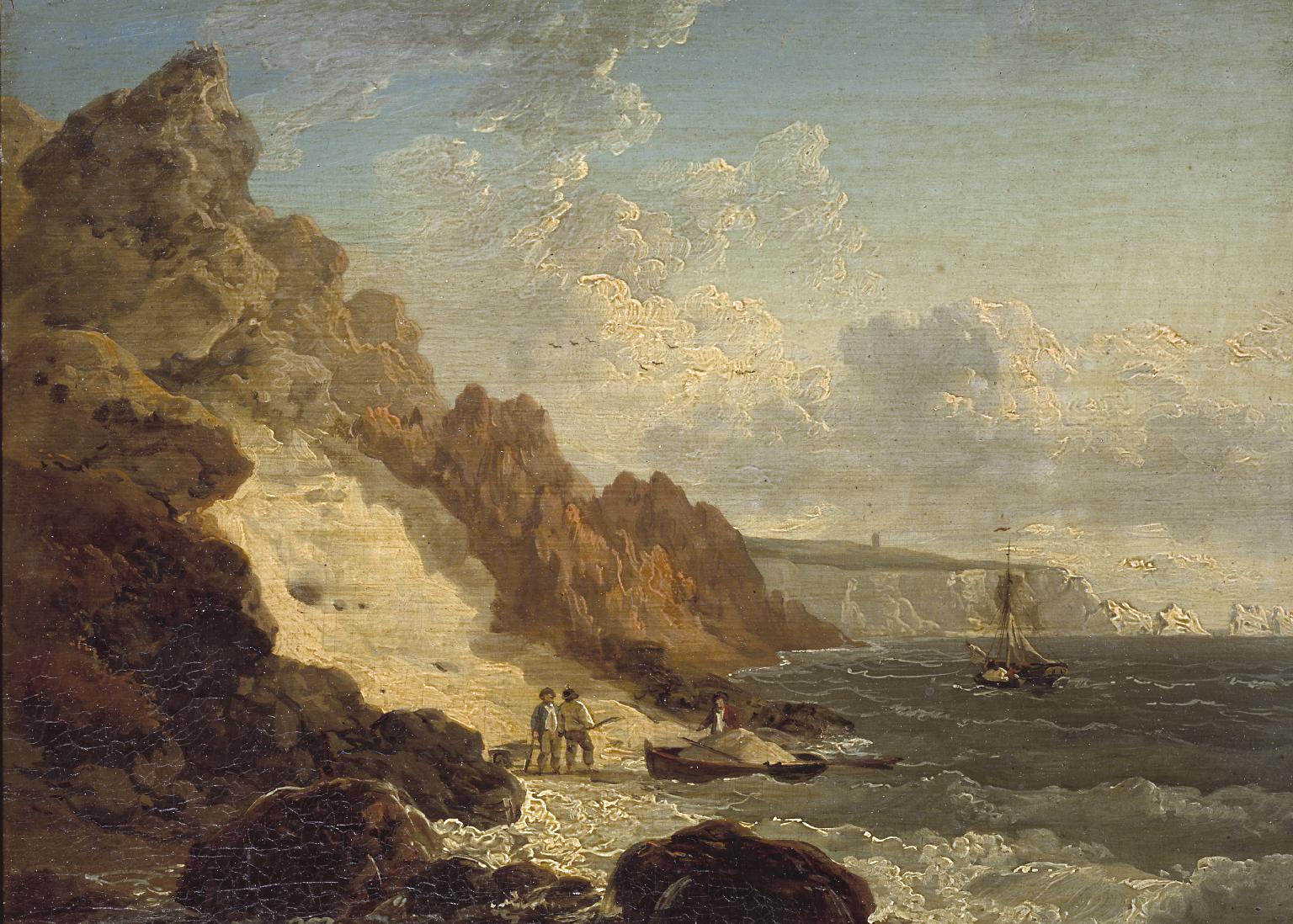
Julius Caesar Ibbetson, Sand Quarry at Alum Bay ?exhibited 1792
Julius Caesar Ibbetson visited the Isle of Wight in 1791, which inspired him to paint many views of the coves and cliffs. This picture shows the local scenery at Alum Bay, with a group of men quarrying sand in the foreground. The famous Needles – a row of chalk stacks in the sea – are visible in the distance. This is probably one of the several coastal scenes of the Isle of Wight that Ibbetson exhibited at the Royal Academy between 1792 and 1796. Throughout his career, Ibbetson travelled widely, including to China and the island of Java in Indonesia (then a Dutch colony). Many of his landscape paintings were inspired by the places he visited.
Gallery label, October 2023
10/30
artworks in The Exhibition Age

John Hoppner, Miss Harriet Cholmondeley exhibited 1804
11/30
artworks in The Exhibition Age
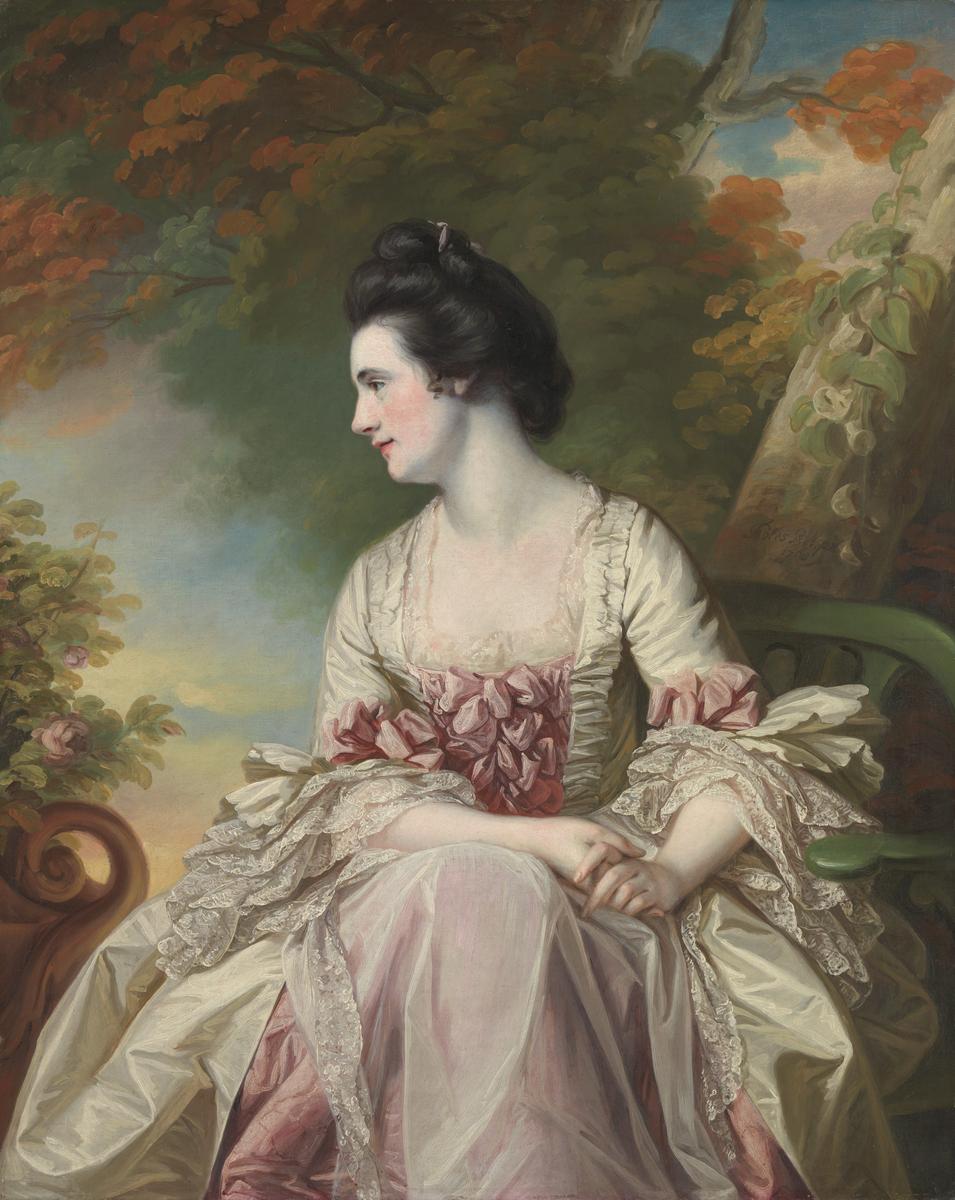
Francis Cotes, Portrait of a Lady 1768
This elegant and ornamental portrait
is a fine example of Cotes's style, which emphasises fashion rather than character. The sitter, whose identity is uncertain, sits on a garden bench in an artificial yet striking pose. Her gown and its lace are arranged decoratively about her, the pink and white colouring echoed by the foxgloves behind her, and the roses on the left. The portrait was painted in 1768, the same year as the foundation of the Royal Academy. Cotes was one of its founder members, which his prominent signature on the tree trunk, 'F Cotes RA px', proudly announces.
Gallery label, February 2010
12/30
artworks in The Exhibition Age
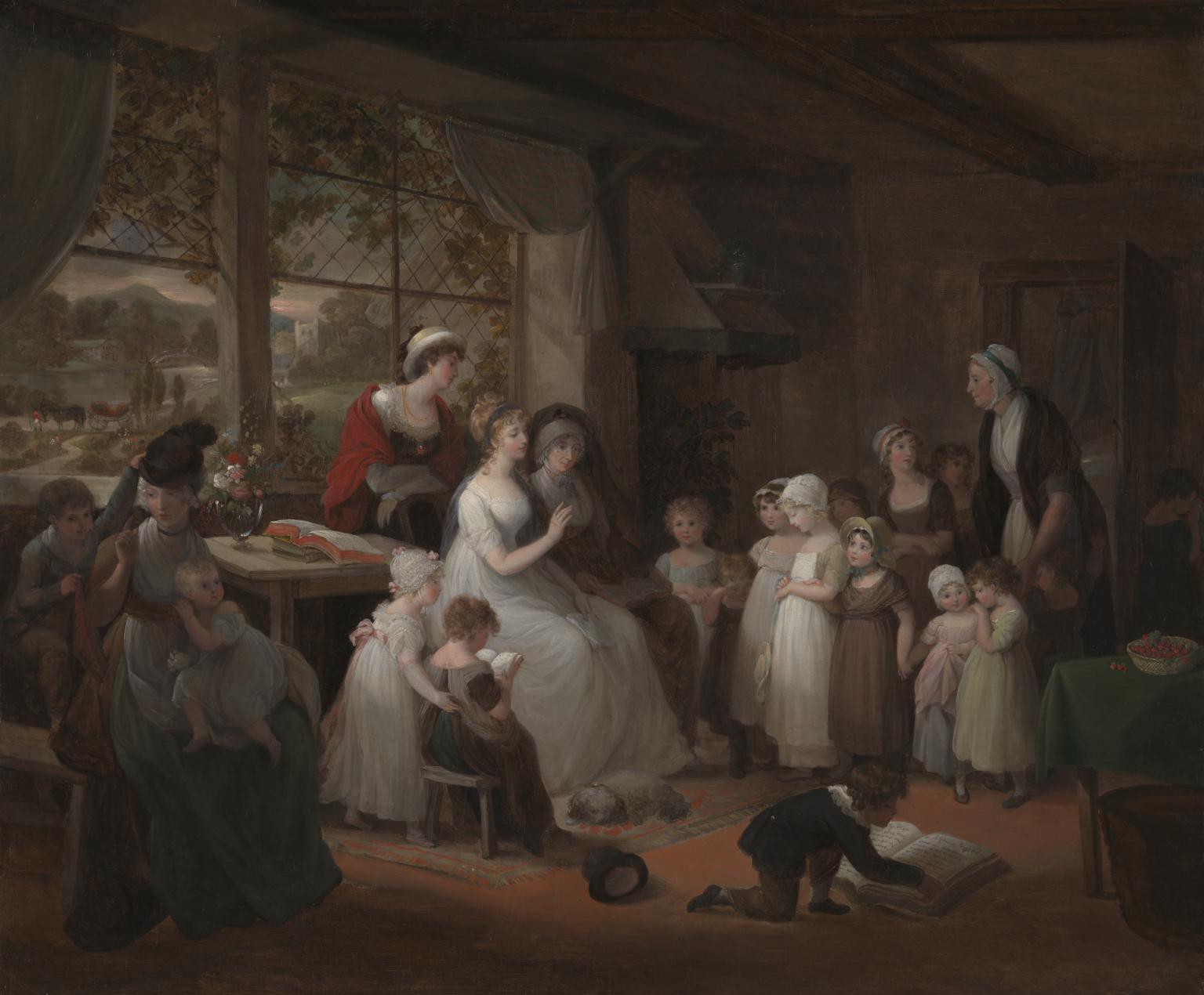
Maria Spilsbury, The Schoolmistress c.1803
A young woman in white is shown teaching the children gathered around her. One boy sits absorbed in reading A Pilgrim’s Progress, by John Bunyan. The Christian message of this book is reinforced by the church seen in the distance. Maria Spilsbury often portrayed women in such nurturing roles, reflecting the importance of women educators at this time. Women were especially active in the growing Sunday School movement, which aimed to educate working-class children on Sundays, their one day off. Spilsbury also painted a larger version of this picture (with more overt Christian symbolism) and probably exhibited one of these at the Royal Academy in 1804. At that time, her work was reputedly so popular that carriages would queue outside her London studio.
Gallery label, October 2023
13/30
artworks in The Exhibition Age
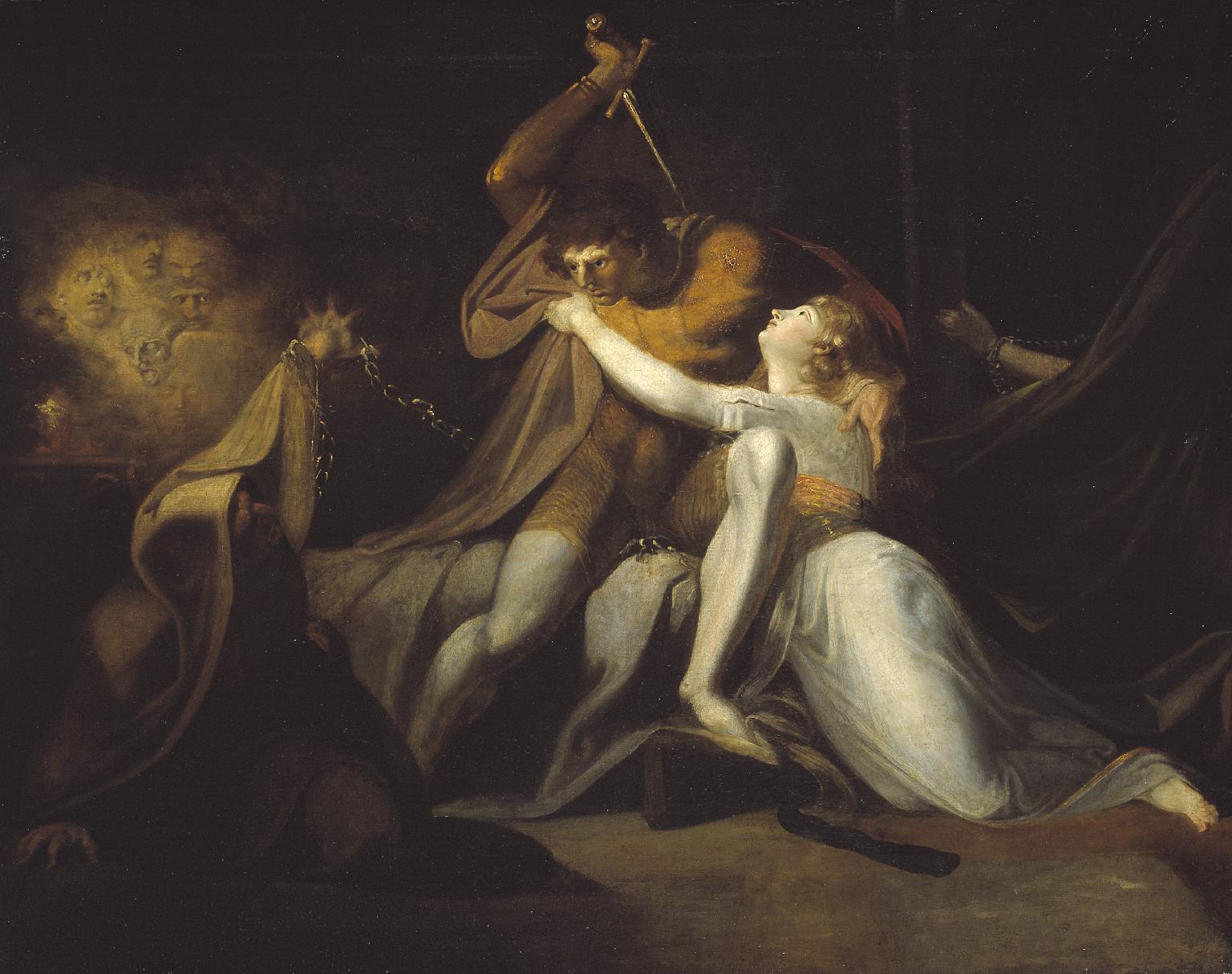
Henry Fuseli, Percival Delivering Belisane from the Enchantment of Urma exhibited 1783
Waking from an enchanted sleep, Percival is shown raising his sword to strike the wizard Urma. Meanwhile, his lover, Belisane, clings to his side. Although Henry Fuseli claimed this story was from the ‘Provencal Tales of Kyot’, it was actually his own invention. At first glance, this painting seems to depict the kind of heroic scene associated with grand manner painting. However, it disregards the noble themes and moral lessons such painting usually demanded. Instead, Fuseli’s strange and supernatural imagery emphasises emotional drama and spectacle. This played into Fuseli’s persona as a wild eccentric, equally admired and reviled by contemporaries.
Gallery label, February 2024
14/30
artworks in The Exhibition Age
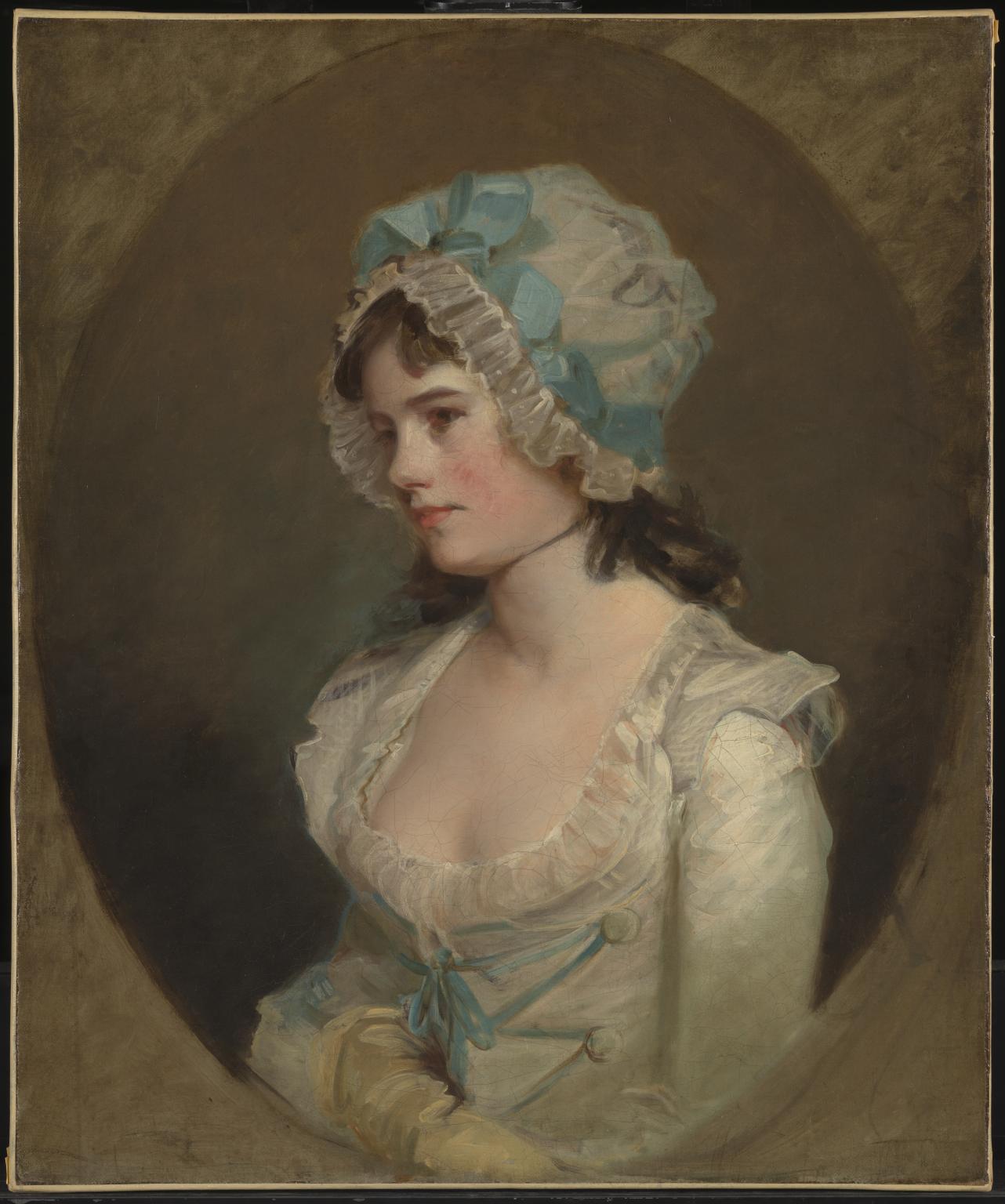
John Hoppner, Mrs Williams c.1790
Little is known about the woman in this painting. She is thought to have been the wife of a Captain Williams. John Hoppner portrays her in her youth, possibly before her marriage. Hoppner was a skilled colourist, demonstrated in Mrs William’s rosy cheeks and the blue trimmings of her bonnet and blouse. He first exhibited at the Royal Academy in 1780. While he was initially interested in landscape painting, Hoppner soon turned to portraiture which provided a steadier source of income. He achieved considerable success, receiving commissions from numerous aristocrats and members of the royal family.
Gallery label, October 2023
15/30
artworks in The Exhibition Age
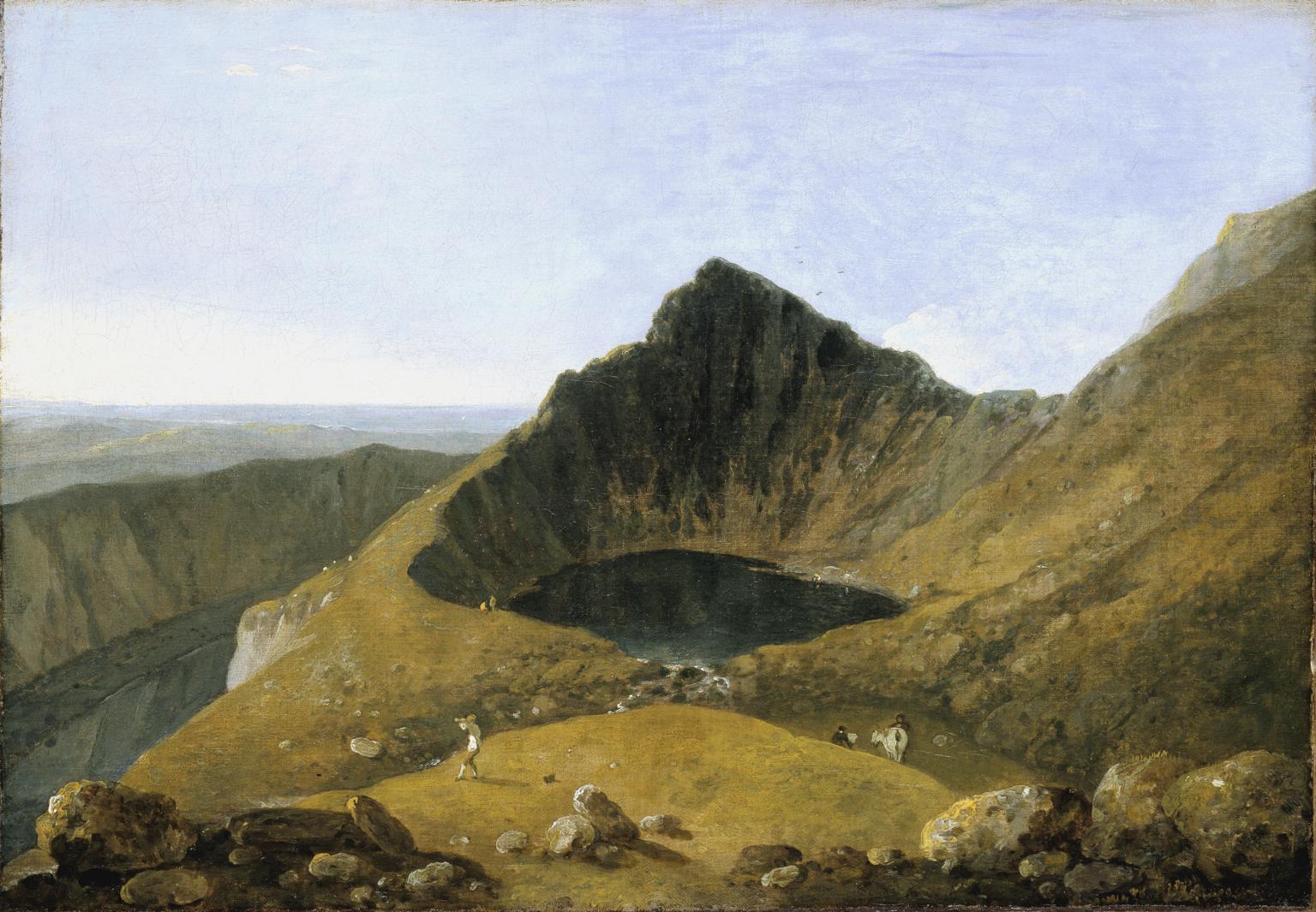
Richard Wilson, Llyn-y-Cau, Cader Idris ?exhibited 1774
Richard Wilson paints Llyn Cau, a lake near the summit of Cadair Idris in North Wales. He heightened the precipice and included imagined landscape features to create a balanced, more ordered composition. The tiny people underscore the monumental scale of the scenery. Wilson suggests we are looking at an untouched paradise, ideal for contemplating nature. The figure with a telescope may reflect the fashionable enthusiasm for such remote scenery. The Welsh countryside particularly appealed to Wilson’s contemporaries because of the new taste for sublime awe-inspiring landscapes and the growing interest in Welsh history and culture.
Gallery label, February 2024
16/30
artworks in The Exhibition Age
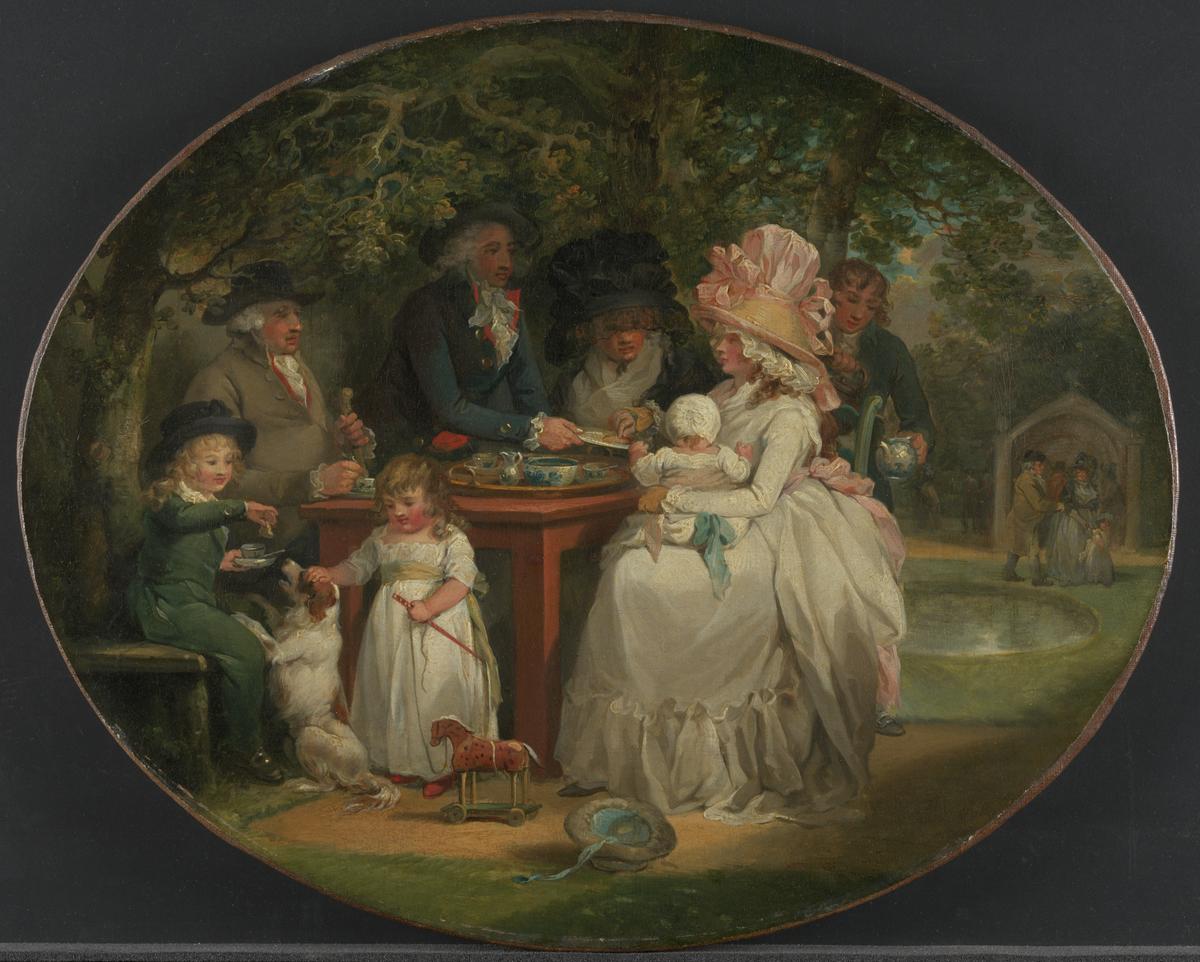
George Morland, The Tea Garden engraved 1790
This small painting shows an affluent family taking tea in a pleasure garden, a popular leisure activity in the 18th century. It perhaps shows Bagnigge Wells or Ranelagh Gardens, both on the outskirts of London. Through the slightly stiff, unsmiling appearance of the adults, George Morland may have been playing upon current humour about keeping up public appearances. Morland likely painted it with the print trade in mind: the image was first engraved in 1790, to considerable success. Morland’s work was widely reproduced in print, providing the artist with a steady income and raising his public profile.
Gallery label, February 2024
17/30
artworks in The Exhibition Age
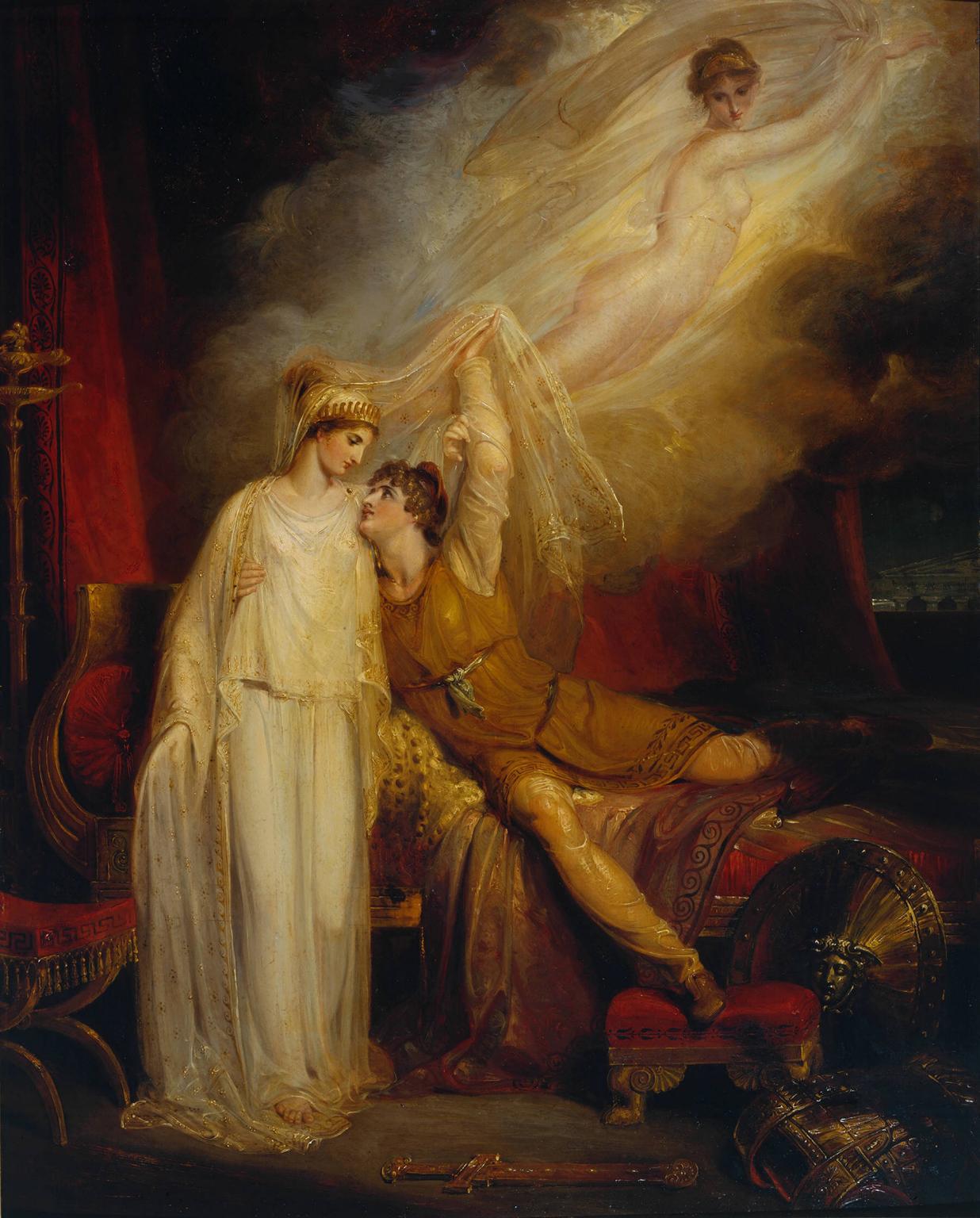
Richard Westall, The Reconciliation of Helen and Paris after his Defeat by Menelaus exhibited 1805
This painting is inspired by Greek legend: Helen was married to Menelaus, king of Sparta. Her affair with the Trojan prince, Paris, led to the Trojan War. Richard Westall painted this scene for Thomas Hope, a wealthy collector. His London home had rooms designed and furnished in the different styles of the ancient world – Egypt, India, Greece and Rome. Westall modelled the figure of Helen on a Greek statue in Hope’s collection. In the 1790s Westall’s Royal Academy exhibits were the talk of the town. His flashy paint effects divided opinion, however, and many thought his work was too stylised and unnatural.
Gallery label, February 2024
18/30
artworks in The Exhibition Age
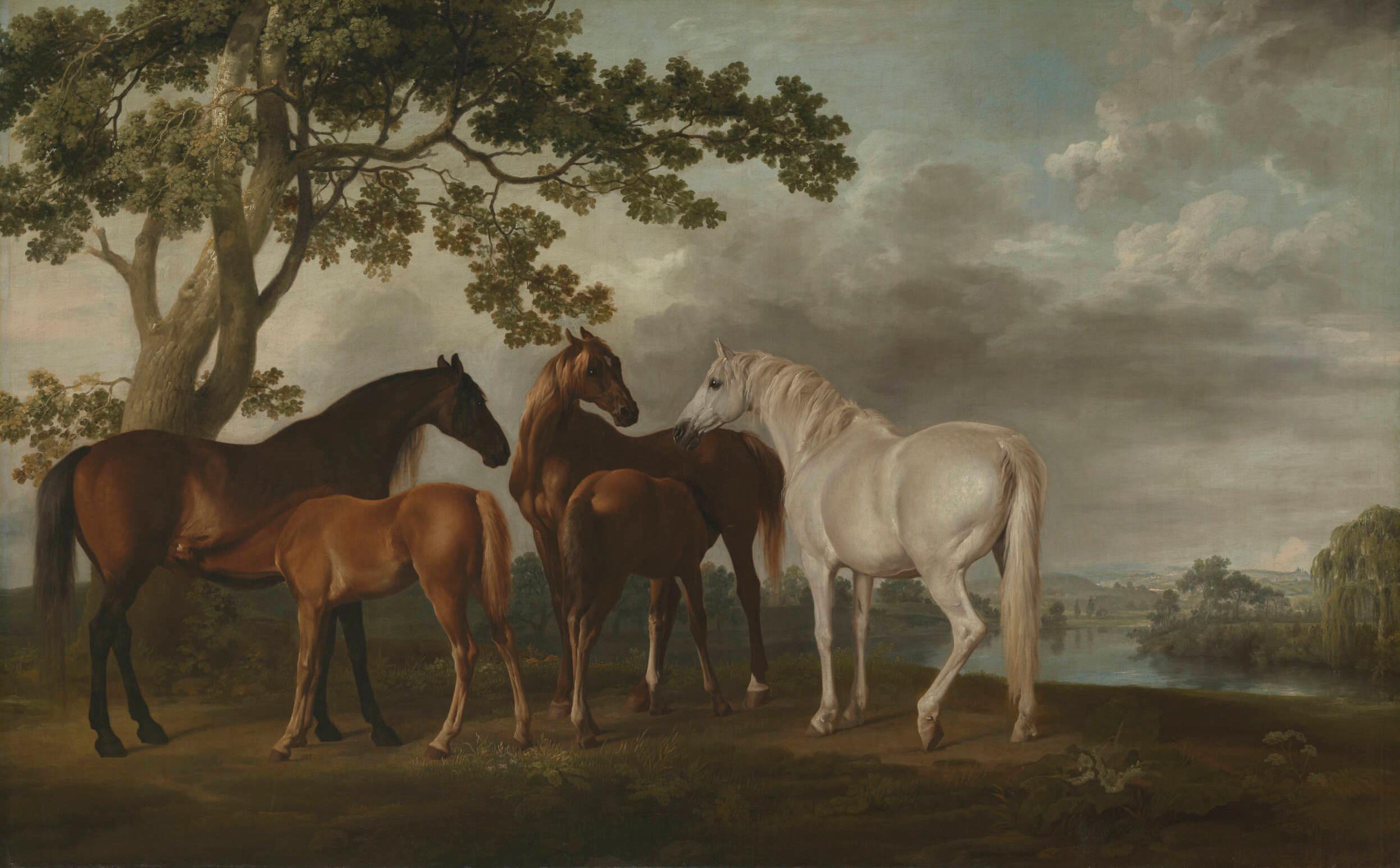
George Stubbs, Mares and Foals in a River Landscape c.1763–8
This painting seems to have been used as an ‘overdoor’, hung with two other pictures by Stubbs above the doors in the dining room of George Brodrick, 3rd Viscount Midleton, MP (1730–65). Reflecting the ornamental use to which this painting was to be put, it seems that Stubbs, the premier animal painter of his day, did not set out to be especially original. The figures of the horses are the same as those appearing in another painting, a commission for Lord Rockingham representing specific horses owned by him, although the colour of one has been changed from brown to grey.
Gallery label, February 2016
19/30
artworks in The Exhibition Age

Edward Penny, The Gossiping Blacksmith exhibited 1769
Edward Penny was the first Professor of Painting at the Royal Academy (founded in 1768). This painting was displayed in the Academy’s first exhibition the following year. It illustrates lines from Shakespeare’s King John, which were also printed in the exhibition catalogue: ‘I saw a smith stand with his hammer thus, The whilst his iron did on the anvil cool, With open mouth swallow a taylor’s news.’ Paintings with Shakesperian themes were increasingly popular in the 18th Century. They appealed to a sense of national pride for many of the people who flocked to attend art exhibitions.
Gallery label, October 2023
20/30
artworks in The Exhibition Age
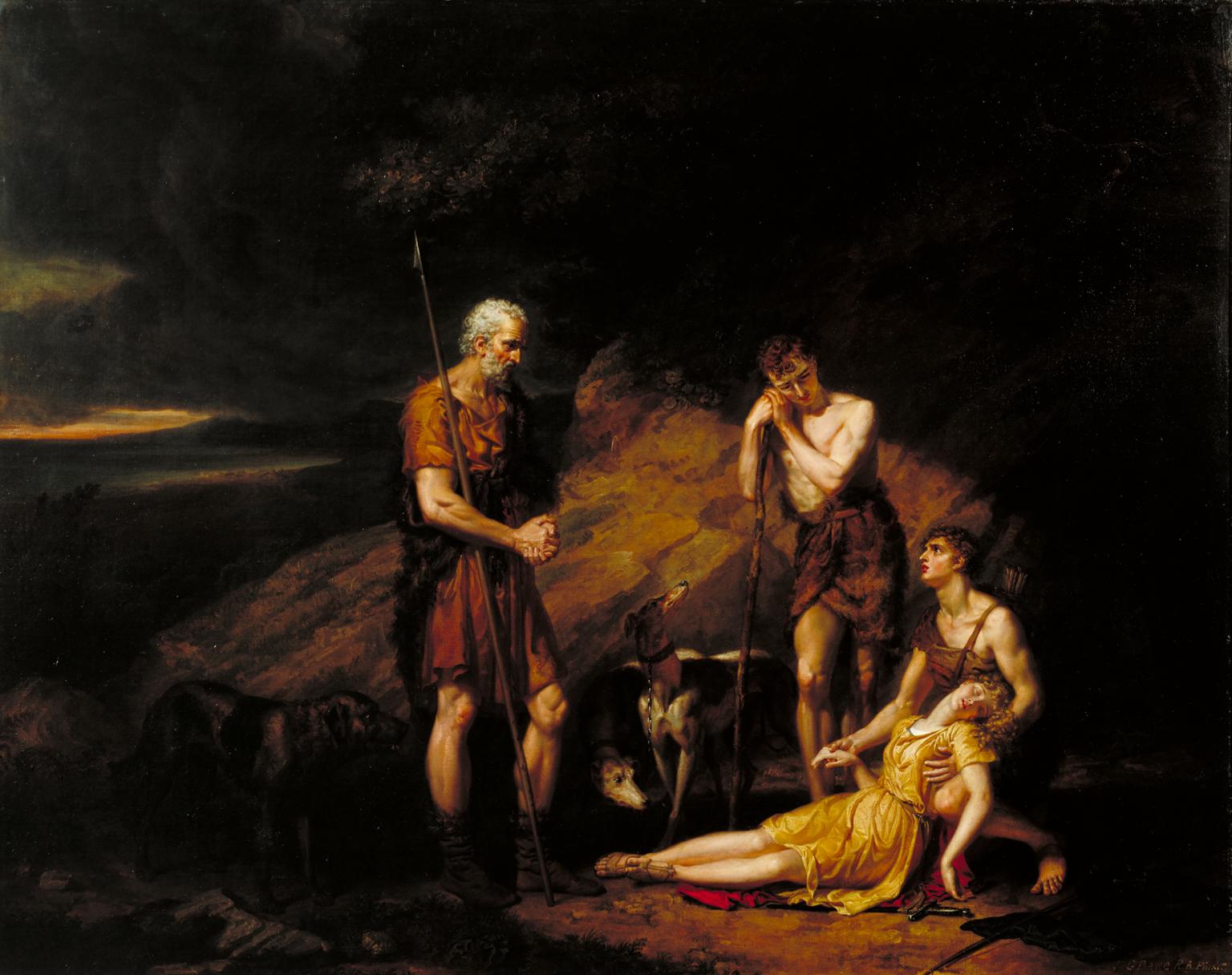
George Dawe, Imogen Found in the Cave of Belarius exhibited 1809
George Dawe depicts a scene from Shakespeare’s play Cymbeline. Imogen – the heroine and daughter of Cymbeline, the ancient king of Britain – escapes court and disguises herself as a young man. Here, Dawe shows the moment when the character Belarius (left) and Imogen’s two long-lost brothers (right) discover her in a cave. They believe she is dead, but she has actually just drunk a sleeping potion. Dawe mainly painted portraits, but here ventures into ‘history painting’ (images of biblical, mythological, literary or historical subjects). This was regarded as the highest genre of painting at the time and indicates Dawe’s ambitions as an artist. With its high-minded literary theme and dramatic lighting, this painting was meant to stand out when it was first exhibited at the British Institution in 1809.
Gallery label, October 2023
21/30
artworks in The Exhibition Age
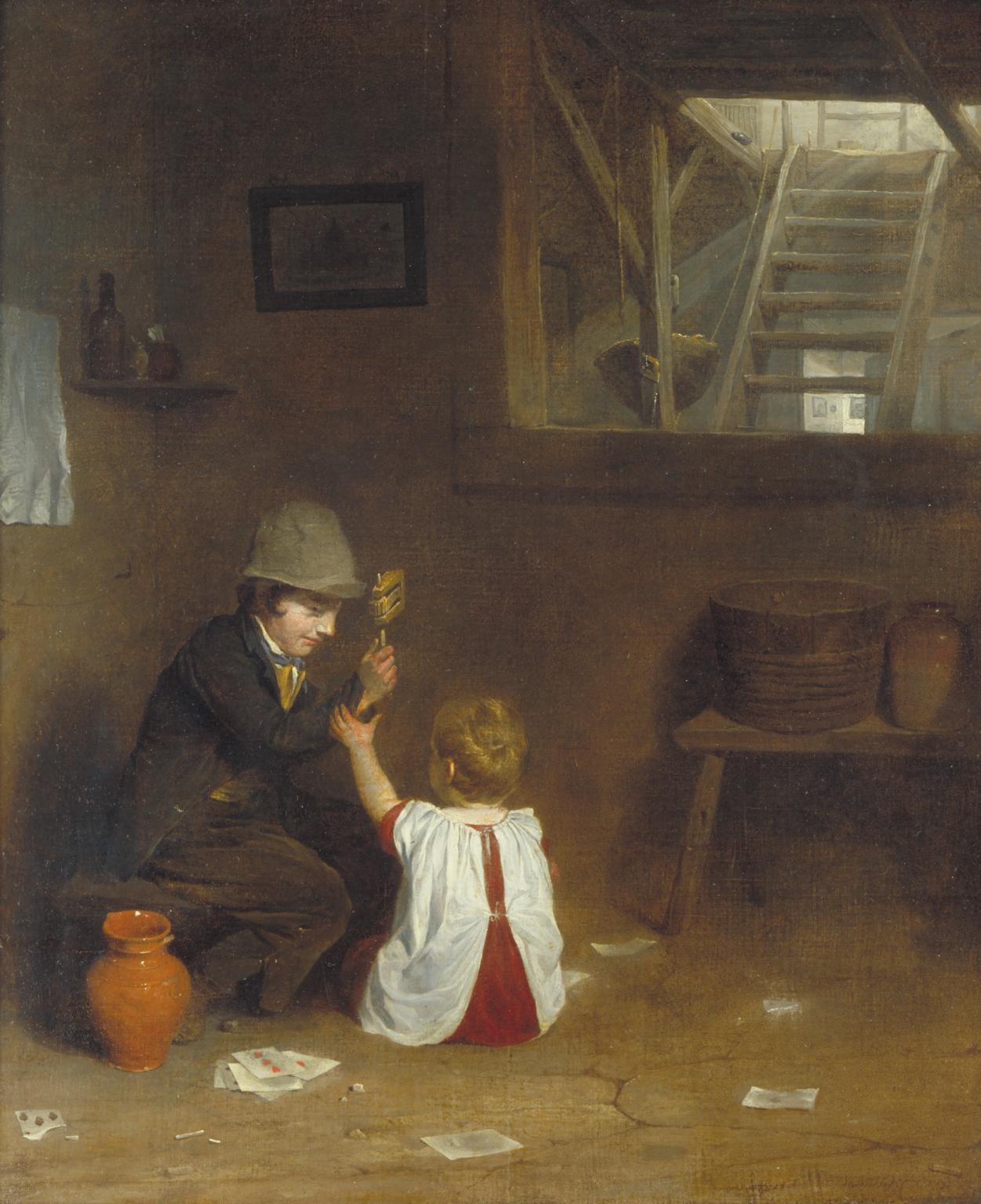
William Mulready, The Rattle exhibited 1808
William Mulready’s painting is quietly intimate and domestic, showing a young boy playing with a baby. This subject may reflect debates at the time about infant education, sparked by the numbers of children seen on the streets. Here, Mulready presents the family home as a place for learning, security and happiness. He exhibited the work at the British Institution in 1808. This was the first genre painting (scenes of everyday life) that he showed to the public and it marked a shift in his art, likely influenced by the popularity of similar narrative subjects by his friend, David Wilkie.
Gallery label, February 2024
22/30
artworks in The Exhibition Age

Francesco Zuccarelli, A Landscape with the Story of Cadmus Killing the Dragon exhibited 1765
This painting illustrates the story of Cadmus, founder of the ancient city of Thebes, as told in Ovid’s Metamorphoses. Cadmus is slaying the dragon that has killed his companions. They have died trying to collect spring water from the dragon’s cave, not knowing that it is sacred to the god Mars. Cadmus is protected by a lion-skin and armed with a javelin. The Italian painter Zuccarelli left Venice for London in 1752, his mythological landscapes popular with British patrons. In 1768 he was commissioned to produce works for George III, and was a founding member of The Royal Academy.
Gallery label, February 2016
23/30
artworks in The Exhibition Age
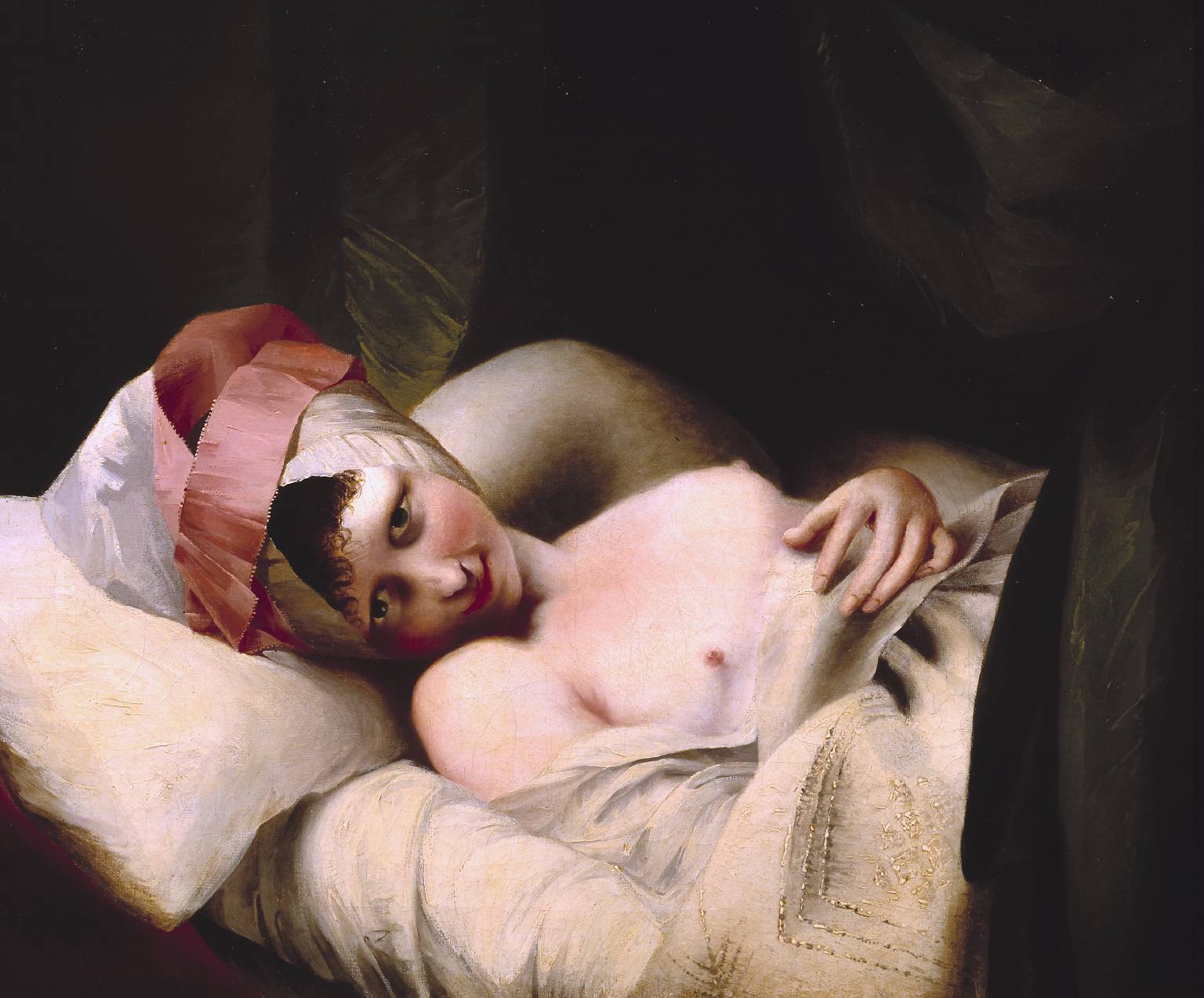
Rev. Matthew William Peters, Lydia c.1777
The explicit eroticism of this picture is unusual in 18th century British art. The semi-naked woman (identified as ‘Lydia’ in a print) gazes provocatively out at the viewer, one hand suggestively hidden. This subject proved popular, and Matthew William Peters painted several versions of it. He exhibited one of these at the Royal Academy in 1777, where it was met with as much amusement as outrage. One critic remarked, it ‘is a good picture, and makes every gentleman stand for some time’. After Peters was ordained as a priest, he reputedly expressed deep regret for painting such erotic subjects. Nonetheless, he was nicknamed the ‘reverend painter of Venuses’, jokingly associating his pictures of desirable women with the goddess of love and beauty.
Gallery label, October 2023
24/30
artworks in The Exhibition Age
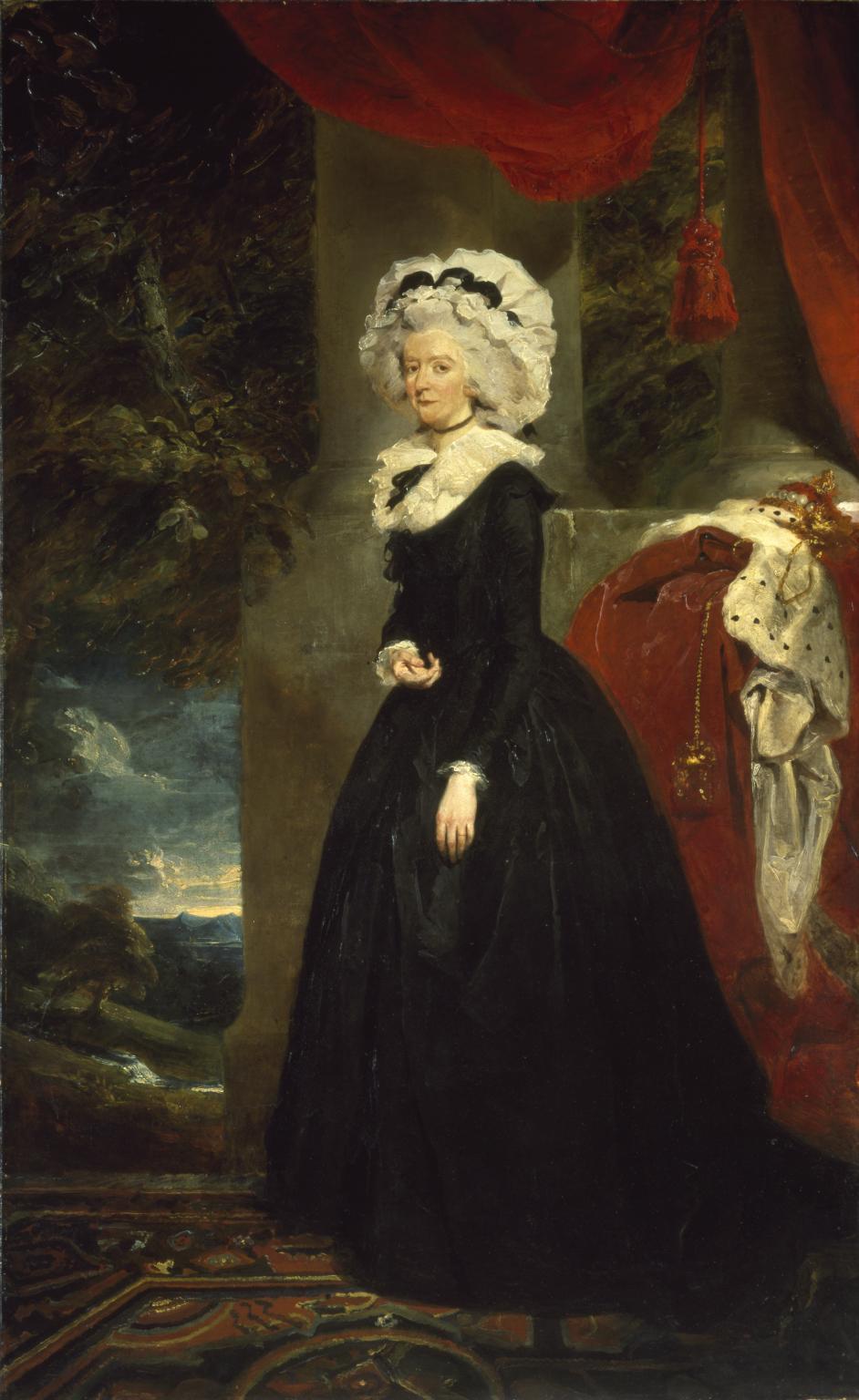
Sir Thomas Lawrence, Philadelphia Hannah, 1st Viscountess Cremorne exhibited 1789
Lady Cremorne is shown standing confidently, gazing directly out at the viewer. This seems apt given her high social standing: she was lady-in-waiting to Queen Charlotte and her grandfather was William Penn, who established the British colonial settlement in Pennsylvania, America. Thomas Lawrence was only 19 when he painted this imposing portrait, and it was his first full-length painting. He included it among his exhibits at the Royal Academy in 1789, where it caught the press’s attention. Lawrence was heralded as the successor to the aging Joshua Reynolds. Soon after this, Lawrence painted Queen Charlotte, a prestigious commission perhaps suggested by Lady Cremorne herself.
Gallery label, February 2024
25/30
artworks in The Exhibition Age
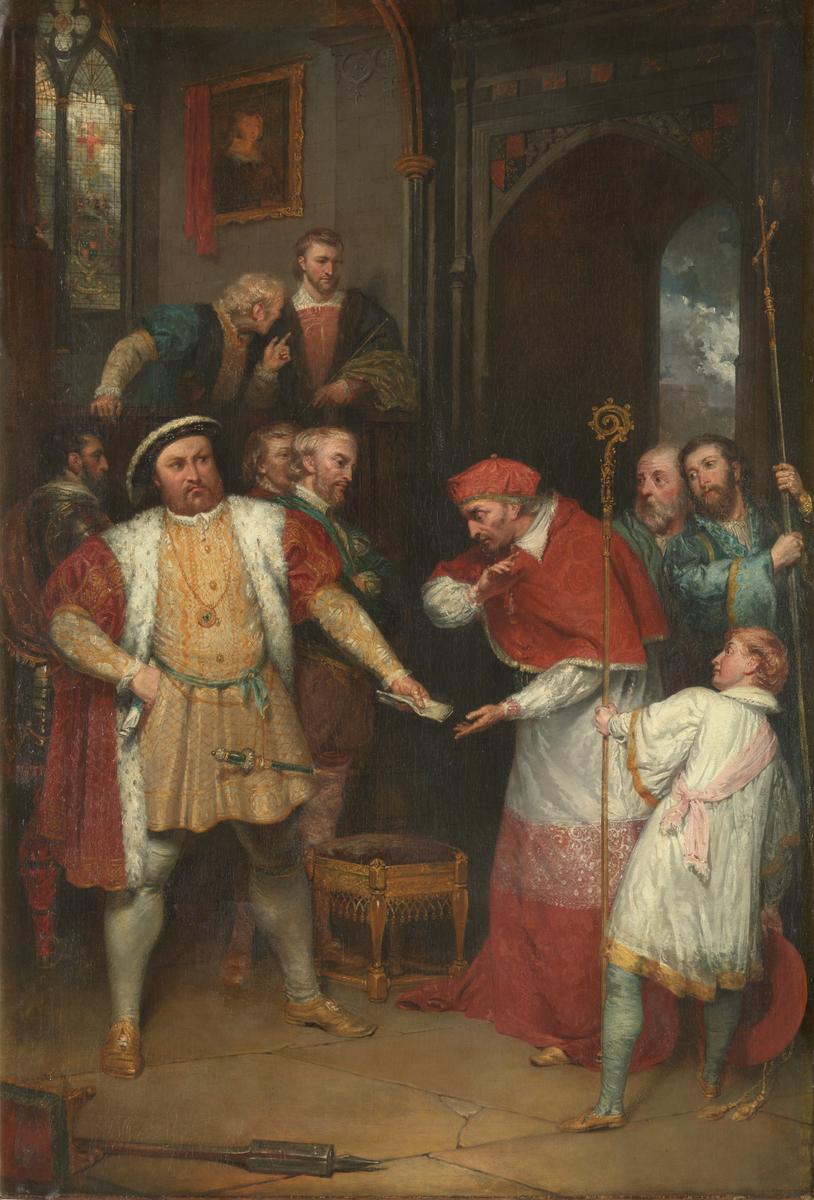
Henry Monro, The Disgrace of Wolsey exhibited 1814
Henry VIII stands commandingly on the left, handing papers to Cardinal Thomas Wolsey. This signals Wolsey’s downfall – as the King’s chief adviser he failed to secure the annulment of Henry VIII’s first marriage, ultimately leading to his arrest for treason. While a historical subject, Henry Monro drew his inspiration from Shakespeare’s play Henry VIII. He worked on the painting over 5 months in late 1813, employing ‘Ben’ from the local workhouse to model as Wolsey. Monro had been an ambitious young artist, and when the painting was exhibited at the British Institution in 1814 after his early death in March that year, it secured Monro’s celebrity.
Gallery label, February 2024
26/30
artworks in The Exhibition Age
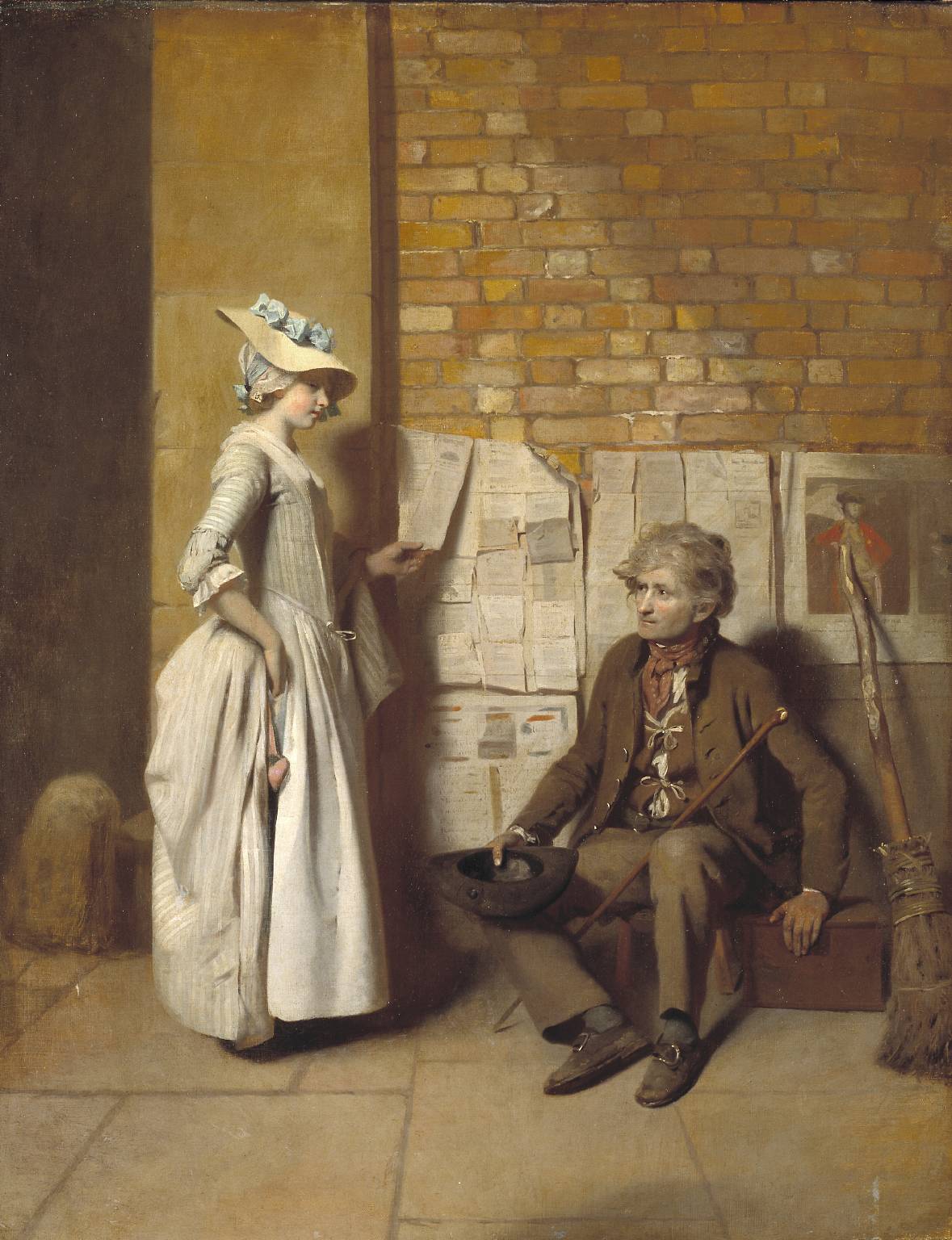
Henry Walton, A Girl Buying a Ballad exhibited 1778
This painting shows a fashionable young woman approaching an old ballad-seller on the street, whose printed wares are pinned up behind him. Henry Walton exhibited this painting at the Royal Academy in 1778. He likely hoped this imaginative image of city life would appeal to exhibition-goers. But he may also have intended a political reading too. The two portrait prints on the right are recognisable as General William Howe and his brother, Admiral Richard Howe. Their doubts about Britain’s war with Revolutionary America had recently led them to resign from military command. This was highly topical as the war was hugely controversial in Britain.
Gallery label, February 2024
27/30
artworks in The Exhibition Age
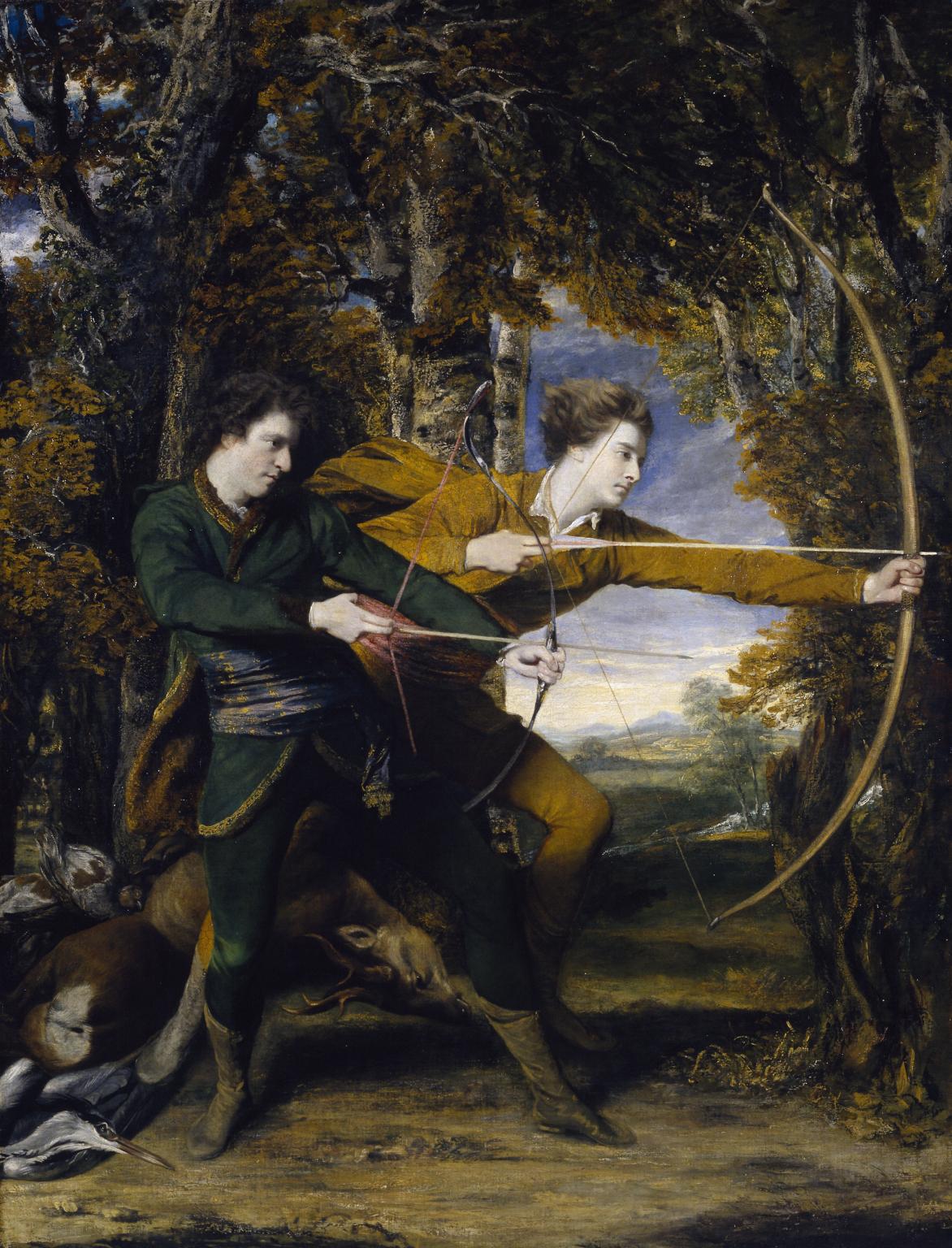
Sir Joshua Reynolds, Colonel Acland and Lord Sydney: The Archers 1769
This portrait depicts two young aristocrats. Dressed in quasi-historical clothing invented by the artist, they are mimicking a medieval or Renaissance hunt; the dead game they leave in their trail underlining their noble blood and aristocratic right to hunt. This painting celebrates their friendship by linking it to an imaginary chivalric past, when young lords pursued ‘manly’ activities together against a backdrop of ancient forest. The subjects are shown in perfect harmony – at one with each other and joint masters over nature.
Gallery label, February 2016
28/30
artworks in The Exhibition Age
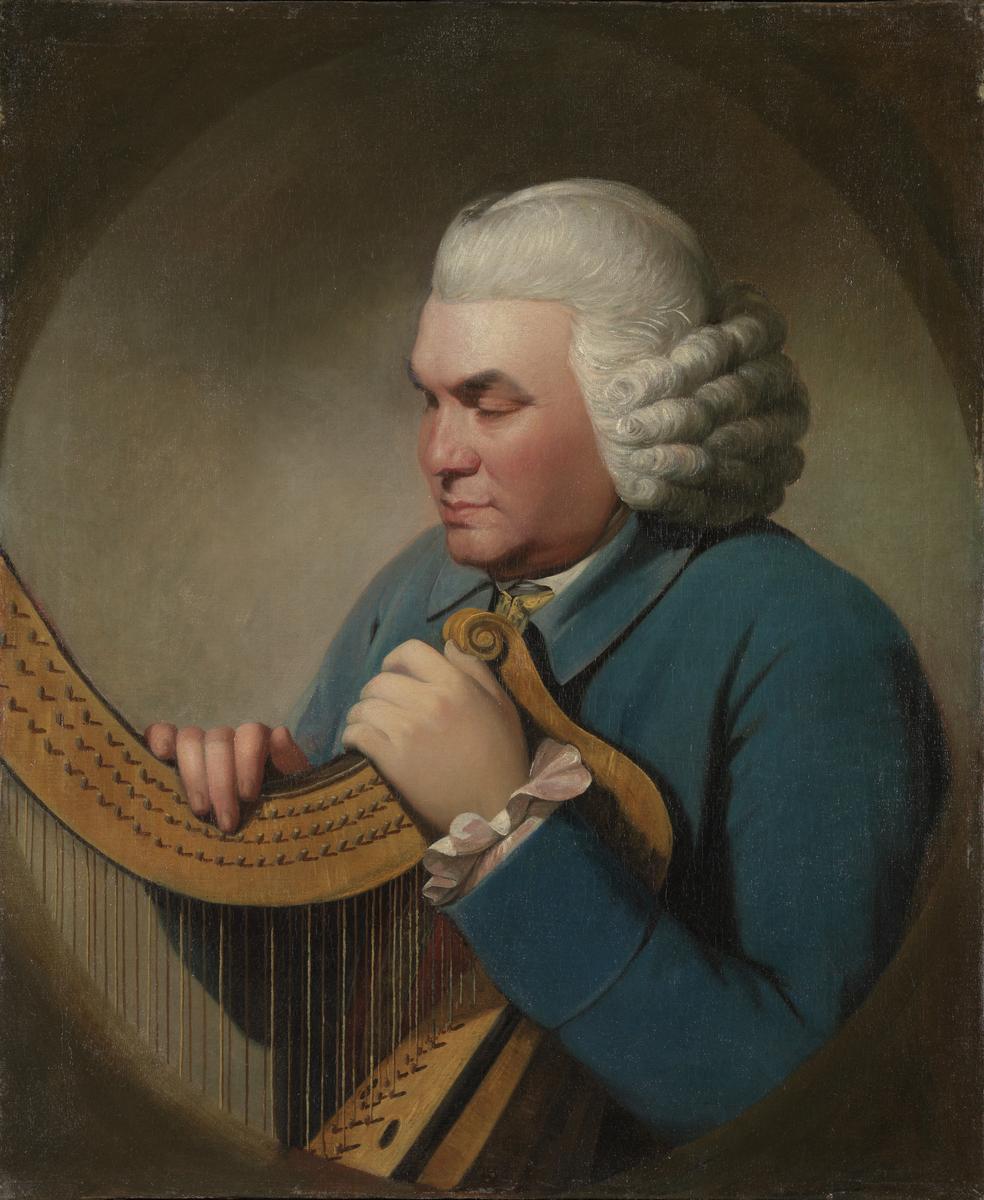
William Parry, Portrait of John Parry Holding his Harp 1780–90
This portrait shows the celebrated Wesh musician John Parry, sensitively painted by his son William Parry. John Parry’s reputation as ‘the famous blind Harper’ is visualised here – he is shown with his eyes closed (as was conventional for blind sitters) and holding a Welsh triple harp. Rather than playing this instrument, John’s hands rest on top and he appears lost in thought. This may allude to his perception of the world through his other senses, like touch and sound. John’s deep contemplation also evokes the poetic, other-worldly nature of music, associating him with the popular, romantic image of the Welsh bard. This might be the portrait William Parry exhibited in 1787 as a posthumous tribute to his father.
Gallery label, October 2023
29/30
artworks in The Exhibition Age
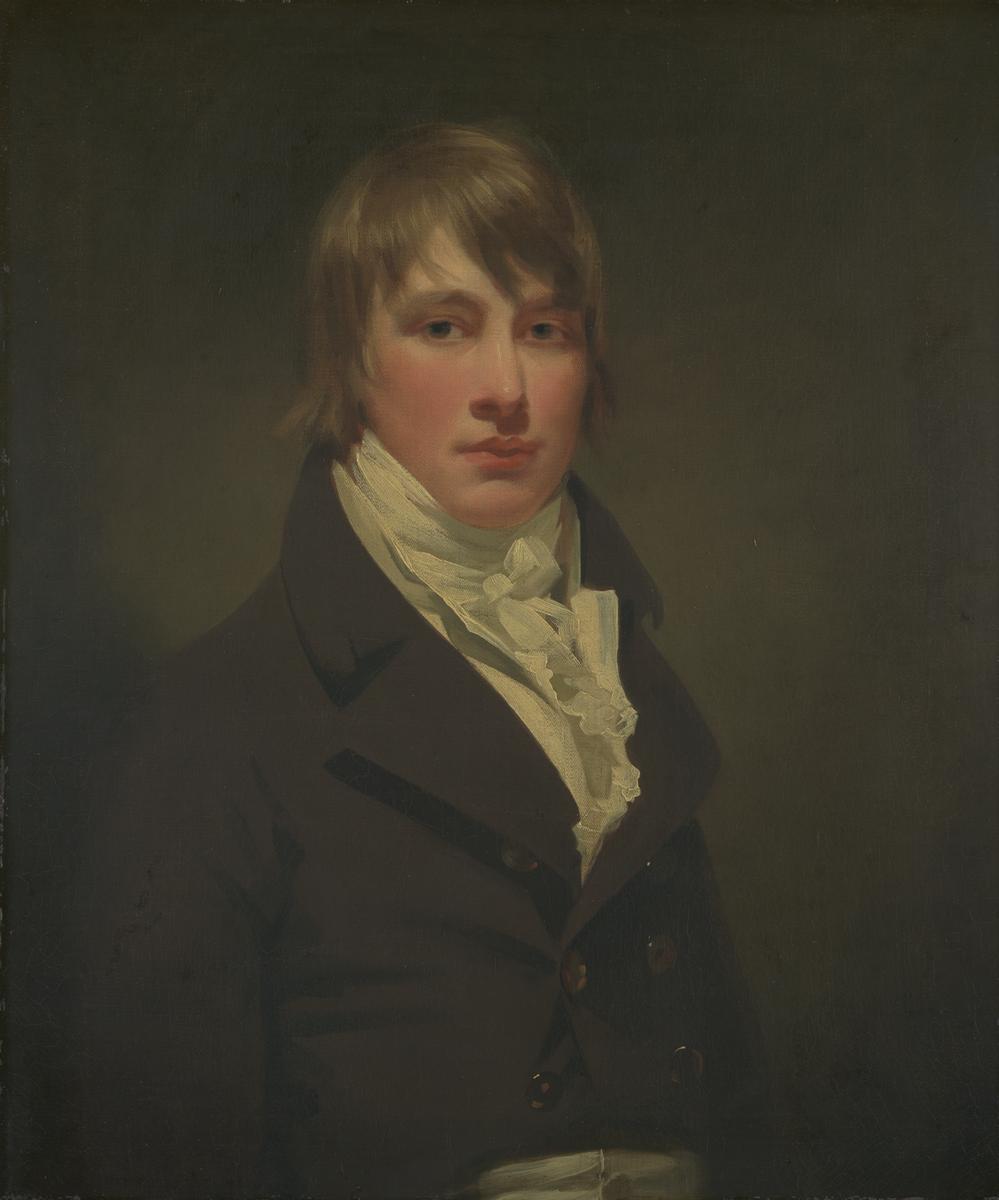
Sir Henry Raeburn, Pringle Fraser c.1804
Pringle Fraser was born in Lanarkshire, Scotland, in 1787. Here, he is around 17 years old. The dramatic lighting focusses attention on his face, illuminated against the dark, restrained background. This striking light effect and the fluid handling of paint suggests Henry Raeburn’s growing artistic confidence. By this time, Raeburn was celebrated as one of Scotland’s greatest portraitists. As an adult, Fraser travelled to India and joined the East India Company’s army, eventually becoming a Captain in the 7th Regiment in the Madras Native Infantry.
Gallery label, October 2023
30/30
artworks in The Exhibition Age
Art in this room
Sir Joshua Reynolds
The Age of Innocence
?1788
George Romney
A Lady in a Brown Dress: ‘The Parson’s Daughter’
c.1785
Thomas Stothard
Nymphs Discover the Narcissus
exhibited 1793
Henry Robert Morland
A Laundry Maid Ironing
c.1765–82
Thomas Whitcombe
The Battle of Camperdown
1798
Sir Henry Raeburn
Mrs H.W. Lauzun
?1796
You've viewed 6/30 artworks
You've viewed 30/30 artworks