Skip navigation

Main menu

  • What's On
  • Visit
  • Art
    • Discover Art
    • Artists
    • Artworks
    • Stories
    Stories
    Stories

    Watch, listen and read

  • Learn
    • Schools
    • Tate Kids
    • Research
    • Activities and workshops
    Tate Kids
    Tate Kids

    Games, quizzes and films for kids

  • Shop
Become a Member
  • View All
  • Exhibitions And Displays
  • On Today
  • Events
  • Tate Modern
  • Tate Britain
  • Tate St Ives
  • Tate Liverpool
  • Tate Britain
    Tate Britain Free admission
  • Tate Modern
    Tate Modern Free admission
  • Tate Liverpool + RIBA North
    Tate Liverpool + RIBA North Free admission
  • Tate St Ives
    Tate St Ives Ticket or membership card required
  • Families
  • Accessibility
  • Schools
  • Private tours
  • Discover Art
  • Artists
  • Artworks
  • Stories
  • Schools
  • Tate Kids
  • Research
  • Activities and workshops
Tate home page

Try searching for...

  • A Bigger Splash
  • James McNeill Whistler
  • Julio Le Parc
  • Tate Britain Commission 2026
  • Tate Membership
Become a Member
Back to Tate Britain
Free Display

JMW Turner

See the world’s largest free display of paintings by JMW Turner

A castle on a hill dissolves in luminous blue mist above a still river at sunrise, the pale yellow sun and its reflection glowing through haze while a lone cow wades in the shallows

Joseph Mallord William Turner, Norham Castle, Sunrise c.1845. Tate.

Tate Britain is home to the largest collection of works by Joseph Mallord William Turner (1775–1851).

Described as the ‘father of modern art,’ Turner shocked with his unique brushwork and use of colour. His portrayals of the modern world were unlike any seen before. As one of the country’s greatest painters, he fittingly lends his name to the contemporary Turner Prize.

See Turner’s art free in these galleries.
Read more

Tate Britain
Main Floor Clore Gallery

Getting Here

Ongoing

Free

8 rooms in JMW Turner

JMW Turner: Rise to Fame

JMW Turner: Rise to Fame

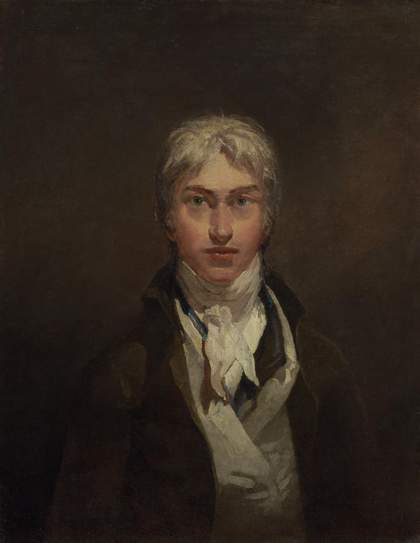
Joseph Mallord William Turner (1775–1851) was the star of his generation of artists. His bold paintings challenged convention and still inspire artists today

Go to room

Joseph Mallord William Turner, Self-Portrait c.1799. Tate.

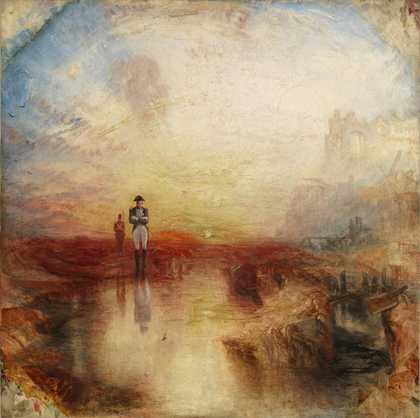
Turner and his Critics

Turner and his Critics

This gallery focuses on the reactions to Turner’s paintings when they were first shown. Whether his works were praised or mocked, he never failed to steal the limelight in exhibitions

Go to room

Under a vast fiery sunset a lone figure in bicorne hat and white breeches stands with folded arms on a blood-red shore, reflected in a wet pool, a guard behind him and a pale fortress in the distance

Joseph Mallord William Turner, War. The Exile and the Rock Limpet exhibited 1842. Tate.

Experiments on Canvas

Experiments on Canvas

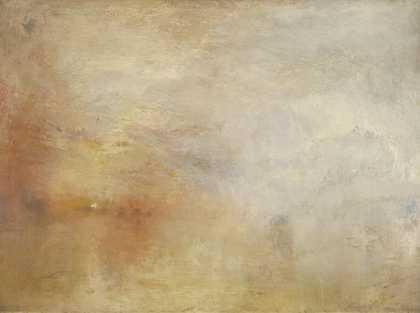
The paintings in this room have become celebrated examples of Turner’s boundary-pushing late style. And yet in his own lifetime they were unknown

Go to room

Hazy expanse of golden, orange and grey paint with a pale sun sinking low at left, its glow dissolving water and sky into a single luminous mist.

Joseph Mallord William Turner, Sun Setting over a Lake c.1840. Tate.

Toil and Terror at Sea

Toil and Terror at Sea

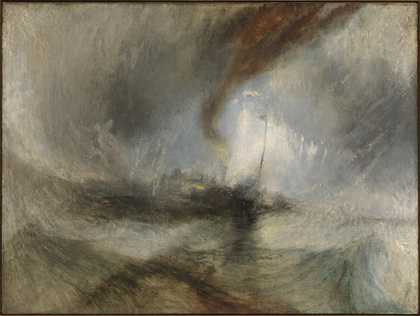
Turner was fascinated by the darker side to life at sea. He painted storms, shipwrecks and terrifying atmospheres over and over, leaving many of them unfinished

Go to room

Swirling vortex of grey snow, spray and sea almost engulfs a dark paddle-steamer, its tilted mast and smudge of brown smoke barely visible at the centre of the storm's arcing bands of light and dark

Joseph Mallord William Turner, Snow Storm - Steam-Boat off a Harbour’s Mouth exhibited 1842. Tate.

Sea Power

Sea Power

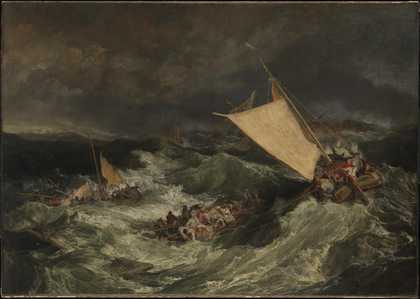
From the everyday work of fishermen to major naval battles, Turner’s paintings of the sea reflected Britain’s identity as a maritime nation

Go to room

Storm-tossed sea under a black sky: crowded open boats of survivors pitch on huge foaming green waves beside a heeling vessel with straining pale sail, as a ship founders in the gloom beyond

Joseph Mallord William Turner, The Shipwreck exhibited 1805. Tate.

Travels in Europe

Travels in Europe

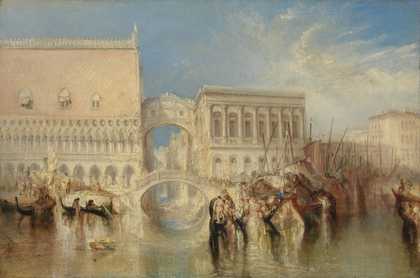
Turner’s art revolved around travel or being ‘on the wing’, as he called it. The paintings in this room present Europe as Turner saw and imagined it

Go to room

An ornate pink Gothic palace beside a canal, a high covered arch linking it to a white classical building, gondolas and crowded barges on the glittering water under a hazy blue sky

Joseph Mallord William Turner, Venice, the Bridge of Sighs exhibited 1840. Tate.

Constable: 'Six Footers'

Constable: 'Six Footers'

John Constable (1776–1837) was determined to paint on a larger scale, making his name as a great British landscape artist alongside JMW Turner

Go to room

A rainbow arcs over a cathedral's tall spire beneath heavy storm clouds, while a horse-drawn wagon fords a river in the shadowed foreground and a dog watches from the bank

John Constable, Salisbury Cathedral from the Meadows exhibited 1831. Tate.

Living Gardens

Living Gardens

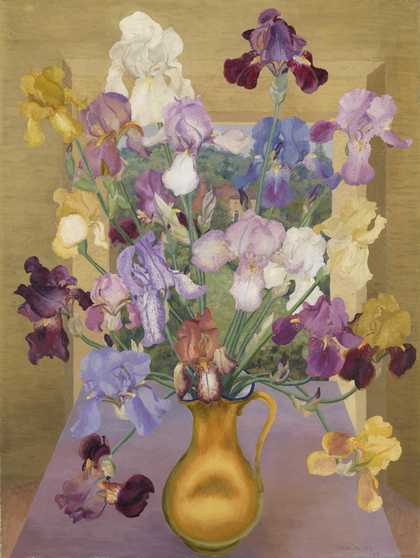
As Tate Britain’s own garden undergoes a transformation, this display reflects on the ways gardens have served as sites of inspiration, experimentation and refuge for artists throughout the 20th century

Go to room

Tall bearded irises in purple, mauve, yellow, white and deep maroon crowd a rounded yellow ochre jug on a mauve table, in front of a window opening onto green trees and a distant building

Sir Cedric Morris, Bt, Iris Seedlings 1943. Tate. © The estate of Sir Cedric Morris.

We recommend

A young man with tousled powdered hair gazes directly out from a dark brown background, wearing a dark coat, pale waistcoat and a full knotted white cravat.

Artist

Joseph Mallord William Turner

1775–1851
a person paints a watercolour sunset
watch

How to Paint Like Turner

Watercolour expert Mike Chaplin tackles the language of watercolour in Turner's work through line, tone and colour

Artwork
Close

Join in

  • Twitter
  • Facebook
  • YouTube
  • Instagram
  • Pinterest

Sign up to emails

This site is protected by reCAPTCHA and the Google Privacy Policy and Terms of Service apply.

Tate’s privacy policy

About

  • About us
  • Our collection
  • Terms and copyright
  • Governance
  • Picture library
  • ARTIST ROOMS
  • Tate Kids

Support

  • Tate Collective
  • Members
  • Patrons
  • Donate
  • Corporate
  • My account
  • Press
  • Jobs
  • Accessibility
  • Privacy
  • Cookies
  • Contact
© The Board of Trustees of the Tate Gallery, 2026
All rights reserved