

Sir John Everett Millais, BtOphelia 1851–2Tate
16 rooms in Historic and Early Modern British Art
The men and women of the Pre-Raphaelite circle question mainstream Victorian culture and ideas
In 1848, revolutions all over Europe spread the spirit of reform across the continent. Three art students, Dante Gabriel Rossetti, John Everett Millais and William Holman Hunt, launch a revolution in art. Rossetti is the son of an Italian revolutionary. Hunt worked in a textile warehouse for the popular political activist, Richard Cobden. Hunt and Millais watch Chartist campaigners march on parliament to petition for workers’ rights. In November 1848, the trio create a radical artistic group called the Pre-Raphaelite Brotherhood.
The Pre-Raphaelites reject the academic art of the Royal Academy, which holds certain historical subjects and styles in high esteem. They look for authenticity in art of all periods, but seek relevance to their modern times. The seven members, alongside the men and women in their wider circle, choose subjects that cast a light on social issues. They update stories from the Bible, Shakespeare and medieval poetry. They paint real people, objects and settings. Later on, their art becomes concerned with beauty and imagined worlds.
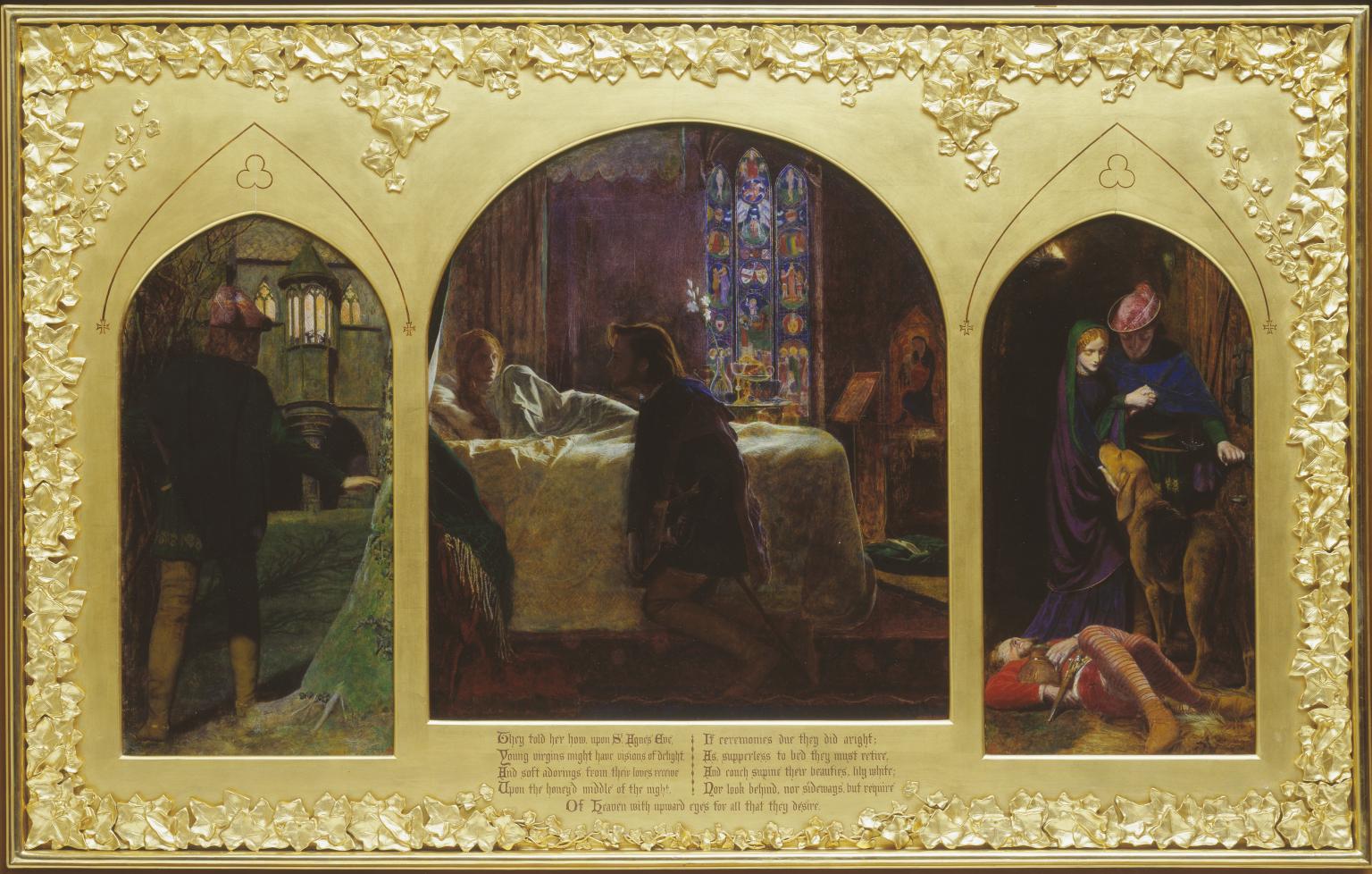
Arthur Hughes, The Eve of St Agnes 1856
This work was based on John Keats's poem The Eve of St Agnes (1820), inspired by the folk belief that a woman can see her future husband in a dream if she performs certain rites the day before the feast of St. Agnes, the patron saint of virgins. The frame is inscribed with the fourth verse of the poem, which sets the scene for the three episodes which Hughes depicts. First, Porphyro defies Madeleine’s family to approach the castle, where a banquet is in progress. He then awakens Madeline from her dreams. Finally, the lovers silently escape from the dark castle into the night.
Gallery label, March 2022
1/30
artworks in Beauty as Protest
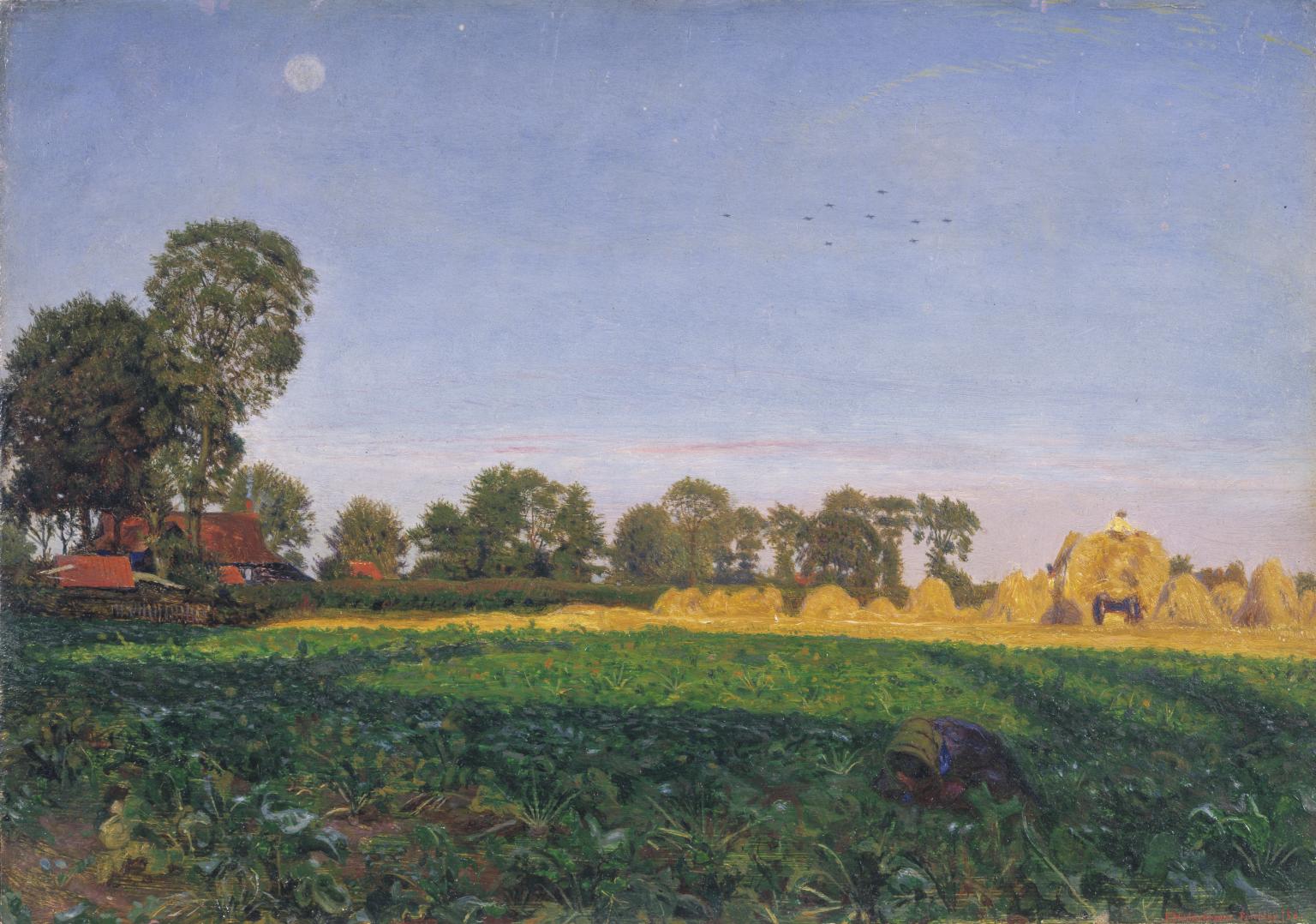
Ford Madox Brown, Carrying Corn 1854–5
This intensely coloured painting captures a harvest field just before sunset. Each landscape element is faithfully recorded in jewel-like colours. This is a nostalgic view of rural England, untouched by industrialisation and modern city life. Ford Madox Brown’s view is typical of idealists of the time who believed that an engagement with nature offered spiritual redemption from urban corruption. Brown and his family were facing financial hardship at the time this picture was painted. It was one of a number of ‘potboilers’, modest and straightforward landscapes he hoped would sell easily.
Gallery label, July 2007
2/30
artworks in Beauty as Protest
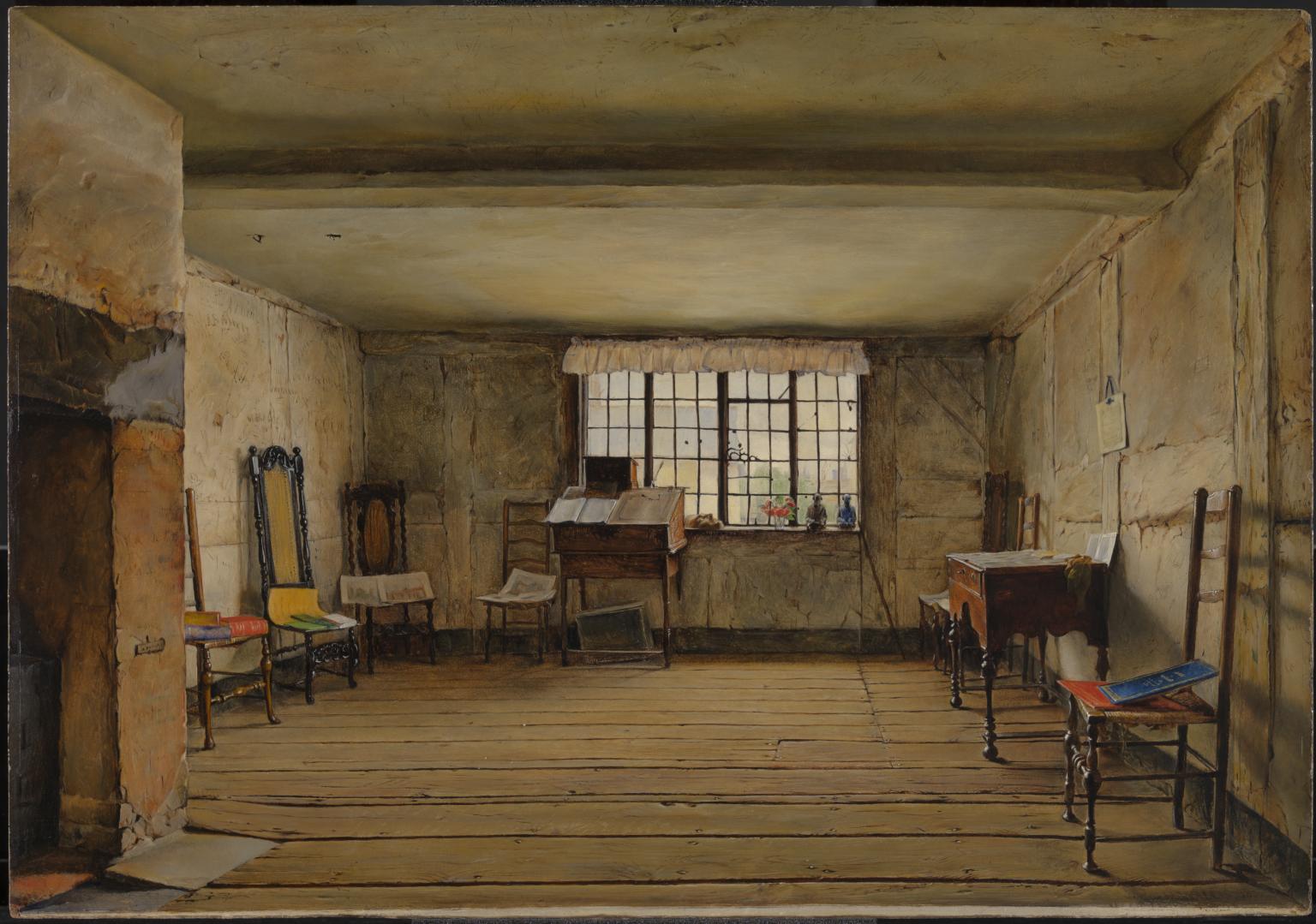
Henry Wallis, The Room in Which Shakespeare Was Born 1853
Wallis launched his career exhibiting a sequence of paintings of interior scenes connected with the life of playwright William Shakespeare (1564-1616). This one shows Shakespeare’s birthplace in Stratford-upon-Avon. It is based on a biography by Charles Knight written in 1842. It describes ‘the mean room, with its massive joists and plastered walls, firm with ribs of oak’. Wallis has painted the room in detail, including every nail securing the floorboards. He has also taken note of Knight’s passage describing how ‘hundreds amongst the hundreds of thousands by whom that name is honoured have inscribed their names on the walls of the room.’
Gallery label, June 2019
3/30
artworks in Beauty as Protest
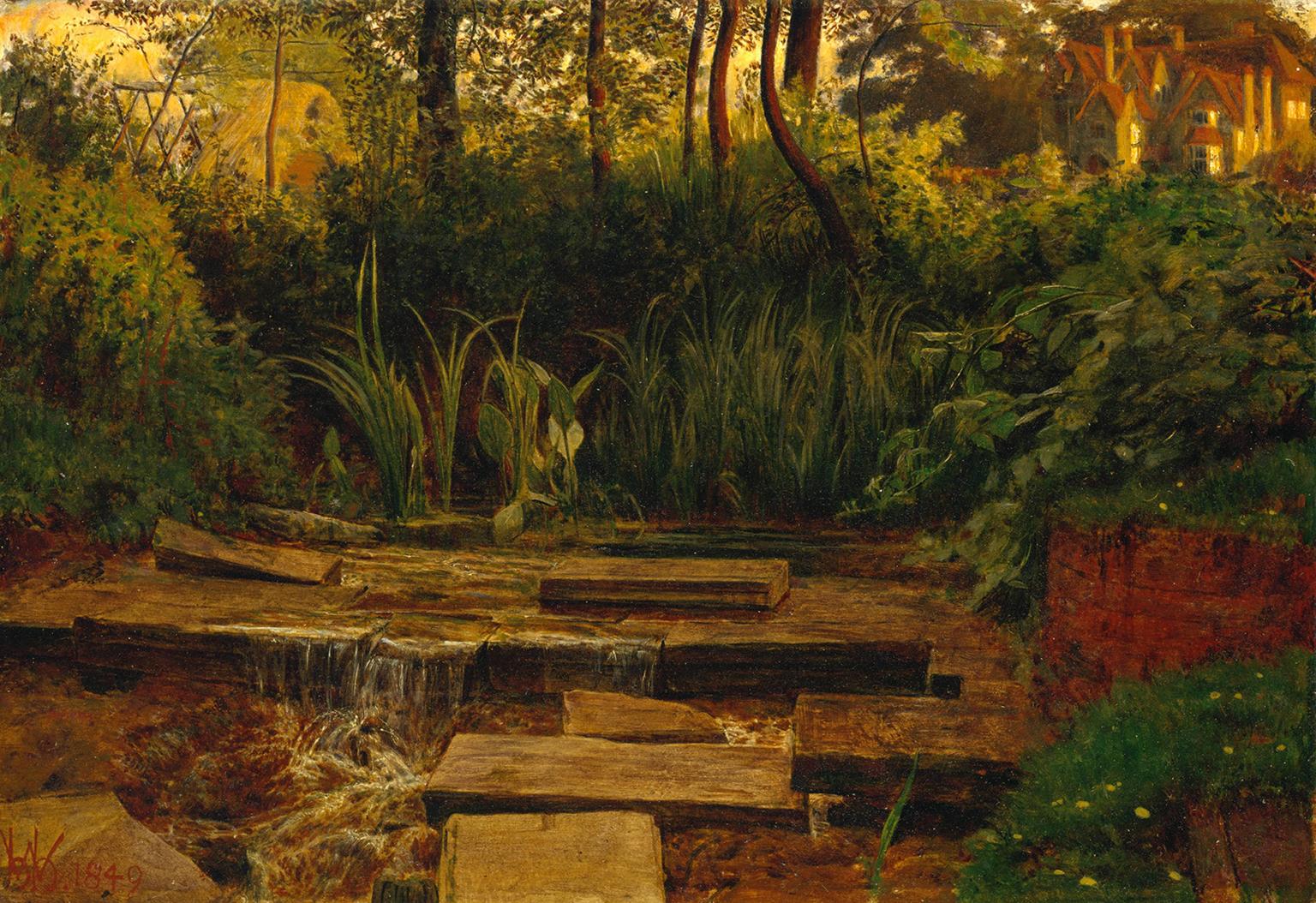
William Holman Hunt, The Haunted Manor 1849
Most of this landscape was painted in the open air in Wimbledon Park, in south-west London. The Pre-Raphaelite Brotherhood believed strongly in painting directly from nature.The picture has a low view point, filled with close and fastidious studies of plants, rocks and water. The murky tones of the waterfall and tangled vegetation contrast strongly with the narrow, brightly-lit strip of landscape at the top of the picture. It is likely that this and the deserted manor house in the top right were added later, to give the scene a mysterious atmosphere.
Gallery label, July 2007
4/30
artworks in Beauty as Protest
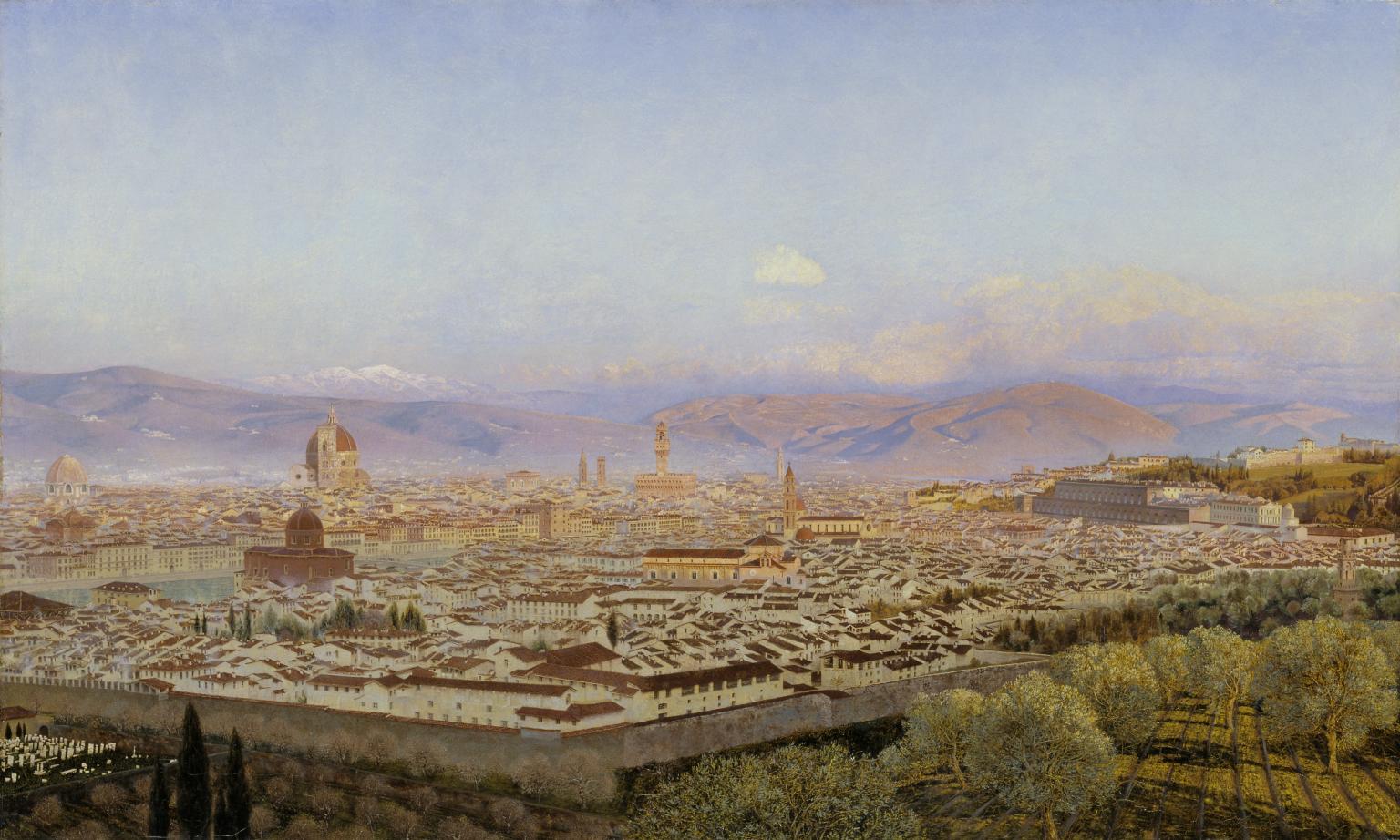
John Brett, Florence from Bellosguardo 1863
Brett became a student at the Royal Academy in 1853. Here he was influenced by the work of the Pre-Raphaelites and the writings of their most powerful supporter, John Ruskin. His earliest pictures in the Pre-Raphaelite style were much praised by Ruskin. During the winters of 1861-2 and 1862-3, he stayed in Florence where he painted this picture. It shows the city from the south-west looking towards Fiesole and the Appenines. The picture adheres strictly to the principle of 'truth to nature' and is a rare example of Pre-Raphaelite townscape.
Gallery label, August 2004
5/30
artworks in Beauty as Protest
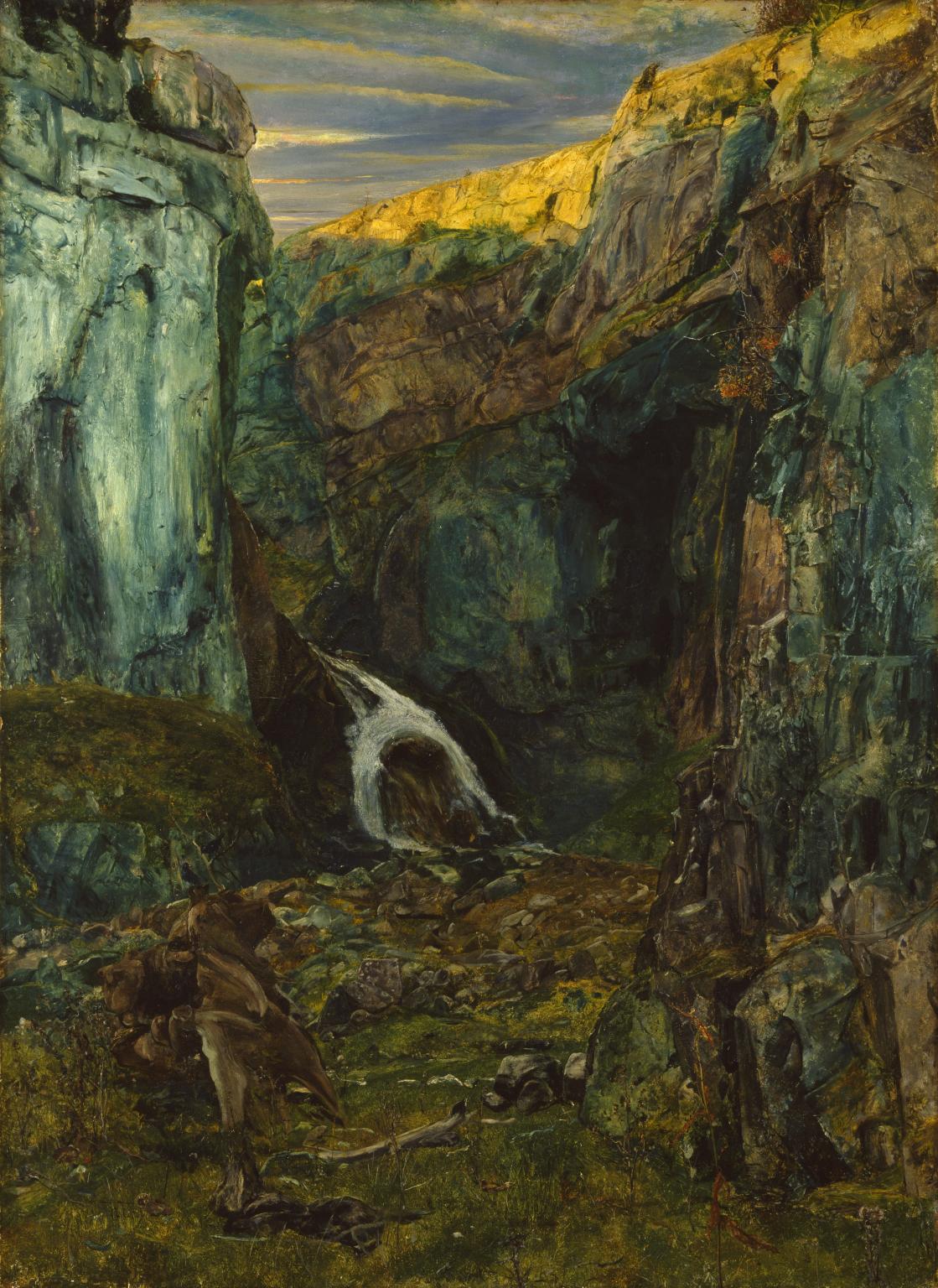
John William Inchbold, Gordale Scar, Yorkshire exhibited 1876
Inchbold, who was born in Leeds, came under the influence of the Pre-Raphaelites in the early 1850s. He established himself as one of the leading landscapists of the movement but by the end of the decade had adopted a broader, more atmospheric approach, as shown here. When it was first exhibited at the Royal Academy it was accompanied by lines from Wordsworth’s sonnet ‘Gordale’ of 1818: ‘... when the air/Glimmers with fading light .../Then, pensive Votary!, let thy feet repair/To Gordale-chasm, terrific as the lair/where the young lions couch; ...’.
Gallery label, November 2016
6/30
artworks in Beauty as Protest
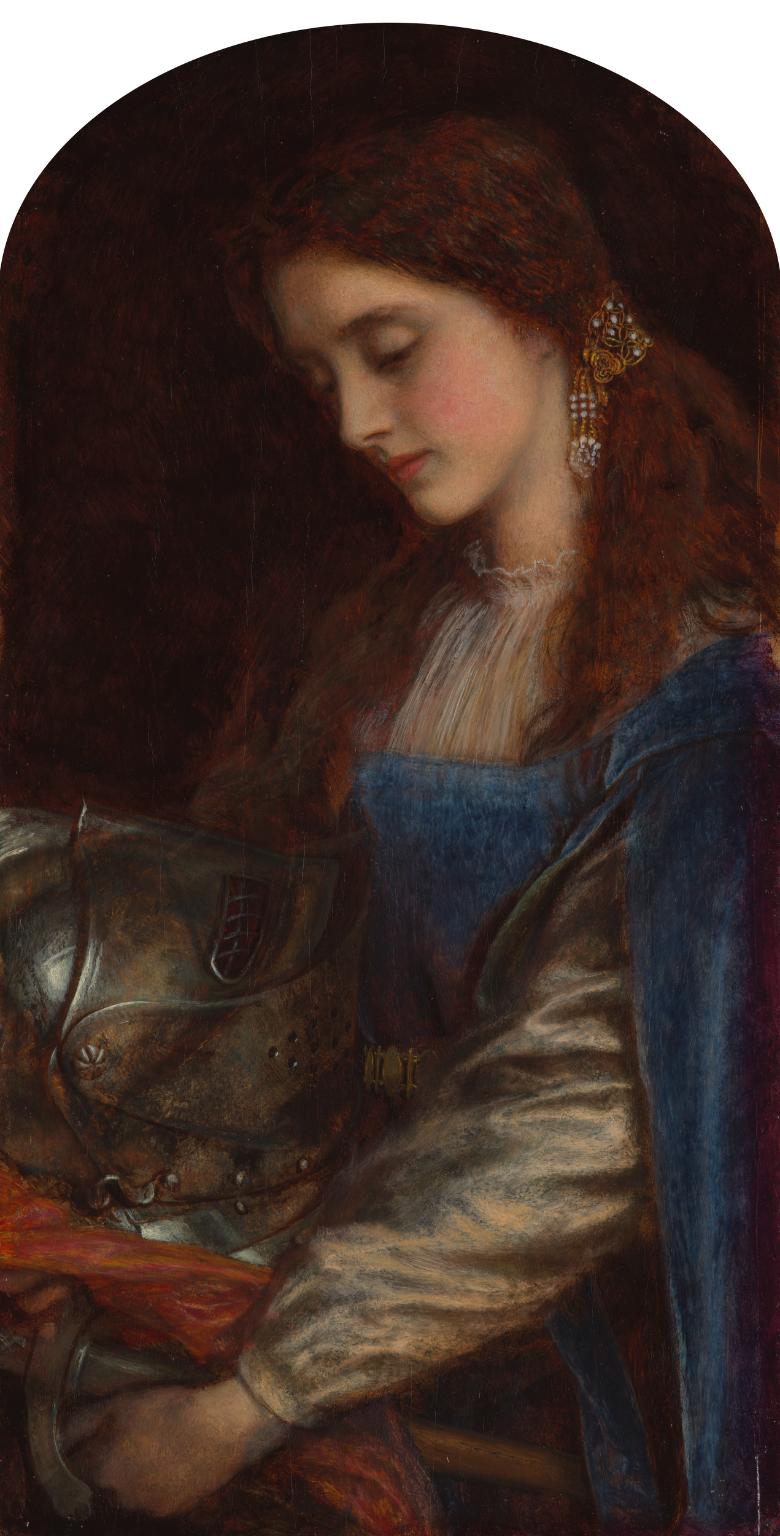
Arthur Hughes, Elaine with the Armour of Launcelot 1867
Arthur Hughes explores love experienced in solitude. The old-style clothing, jewellery and instruments associate these figures with medieval romances. Hughes was inspired by poet Alfred Lord Tennyson’s retelling of the story of Elaine, who fell in love with Lancelot, a Knight in the Court of King Arthur, when he visited her home for a tournament. Here she dreams over his armour. Sir Lancelot did not return Elaine’s love and, when he left, she died of a broken heart. In some versions of the legend, she was placed in a boat and her body drifted down Camelot, a subject most famously painted by John William Waterhouse (in Gallery 8).
Gallery label, January 2025
7/30
artworks in Beauty as Protest
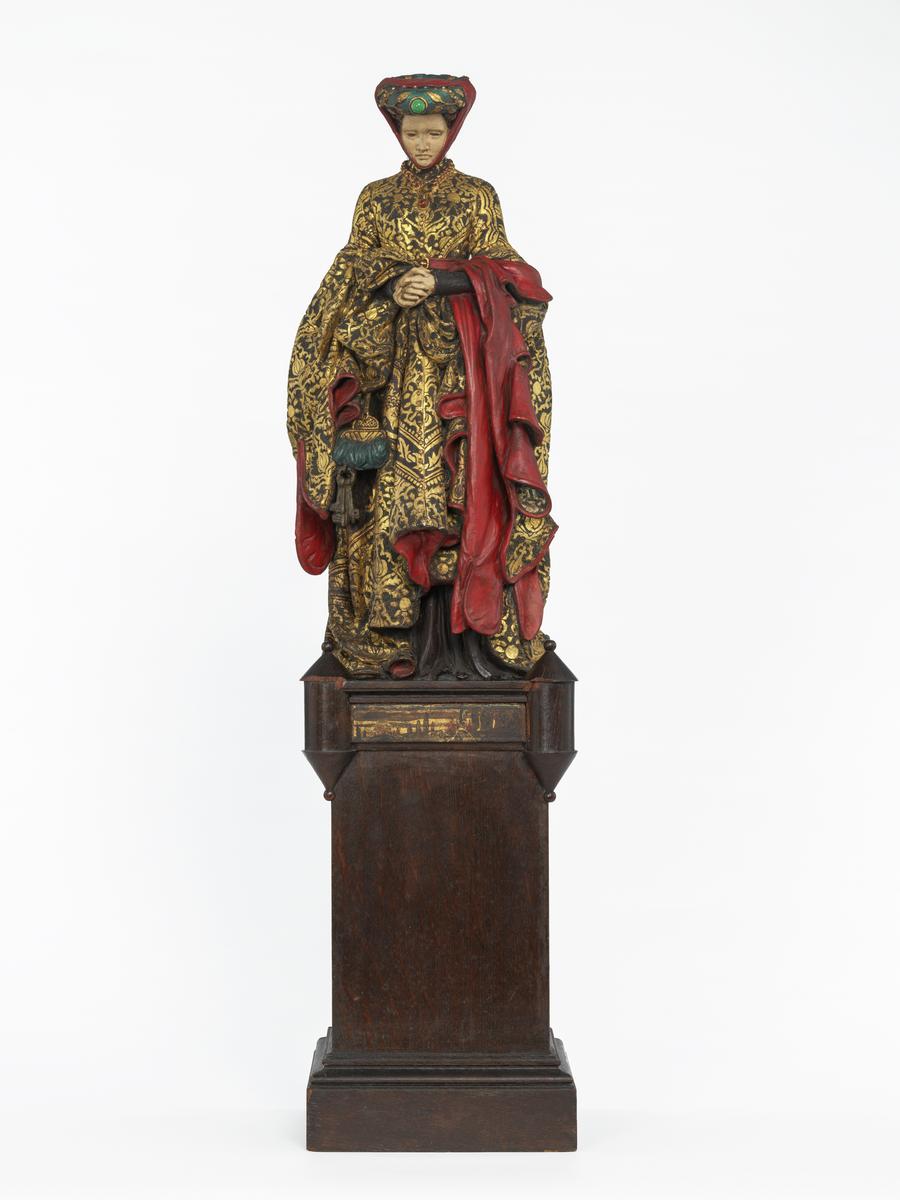
Eleanor Fortescue-Brickdale, The Châtelaine exhibited 1904
The Châtelaine (a French word for a noble woman who is mistress of a castle) is a polychrome, gilded statuette encrusted with semi-precious stones, set on a wooden base with turrets at its four corners and decorated with small Italianate landscapes on all four of its sides. Made of finely modelled plaster, the sculpture is richly patterned, painted and patinated. It represents a noble woman wearing a medieval ‘Balzo’ headdress and an opulent black and gold damask dress lined with red. Her estate is signified by a prominent set of heavy keys hanging from the green purse on her right side. Her face expresses sorrow and her hands are clasped in prayer or anguish. Despite the French title of the work, the figure’s style of dress appears to be Florentine, which is in accord with the Tuscany landscapes that are painted with gold leaf on the wooden base of the sculpture, in the manner of the so-called ‘predella’ scenes situated below sixteenth-century altarpieces. One of them represents a walled city, another a property with cypress trees; a third depicts a more generic landscape and the last one a shore approached by several ships.
8/30
artworks in Beauty as Protest
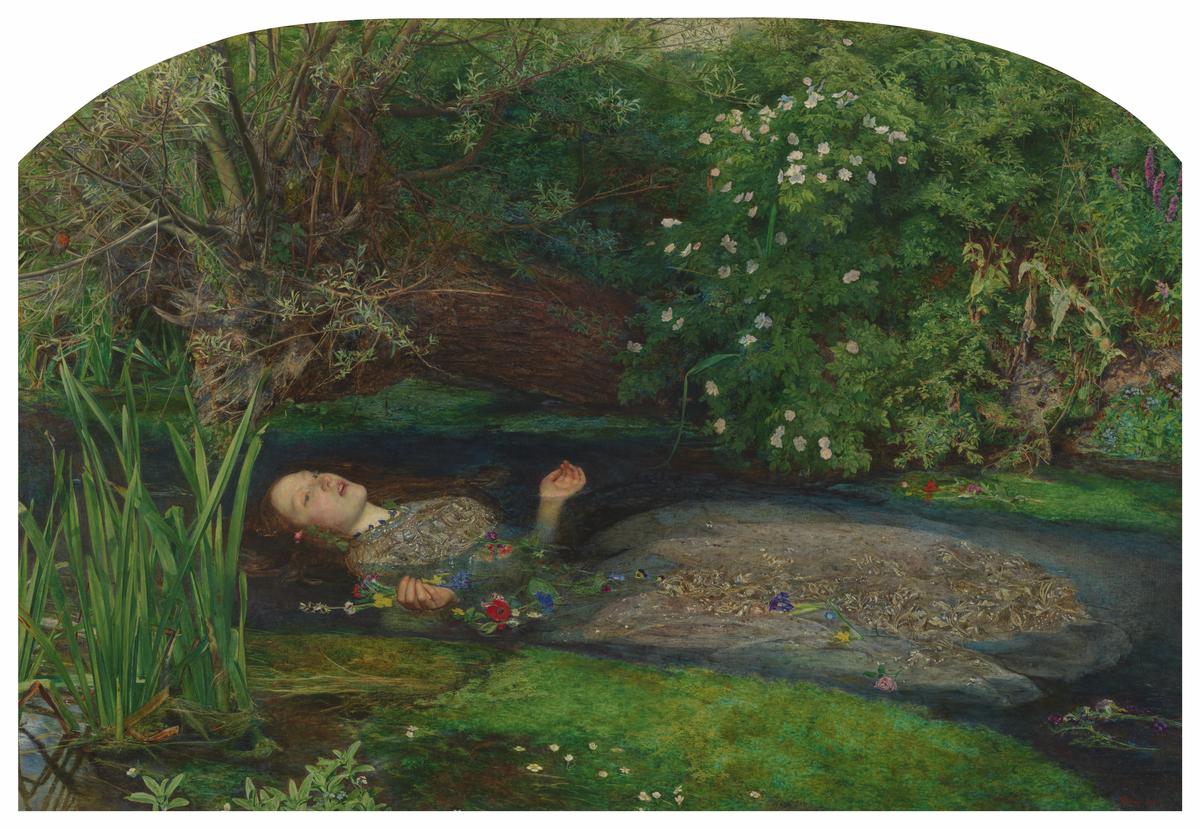
Sir John Everett Millais, Bt, Ophelia 1851–2
This work shows the death of Ophelia, a scene from Shakespeare’s play Hamlet. Traumatised when Hamlet breaks off their betrothal and accidentally kills her father, she allows herself to fall into a stream and drown. The flowers she has been collecting symbolise her story, the poppies representing death. Millais painted the lonely setting leaf-by-leaf over many months by the Hogsmill River, Surrey. Afterwards, the artist, poet and model Elizabeth Siddall posed in a wedding dress in a bath of water at Millais's studio. Through the painting, Millais critiqued the Victorian practice of occasionally arranging marriages for money and status.
Gallery label, March 2022
9/30
artworks in Beauty as Protest
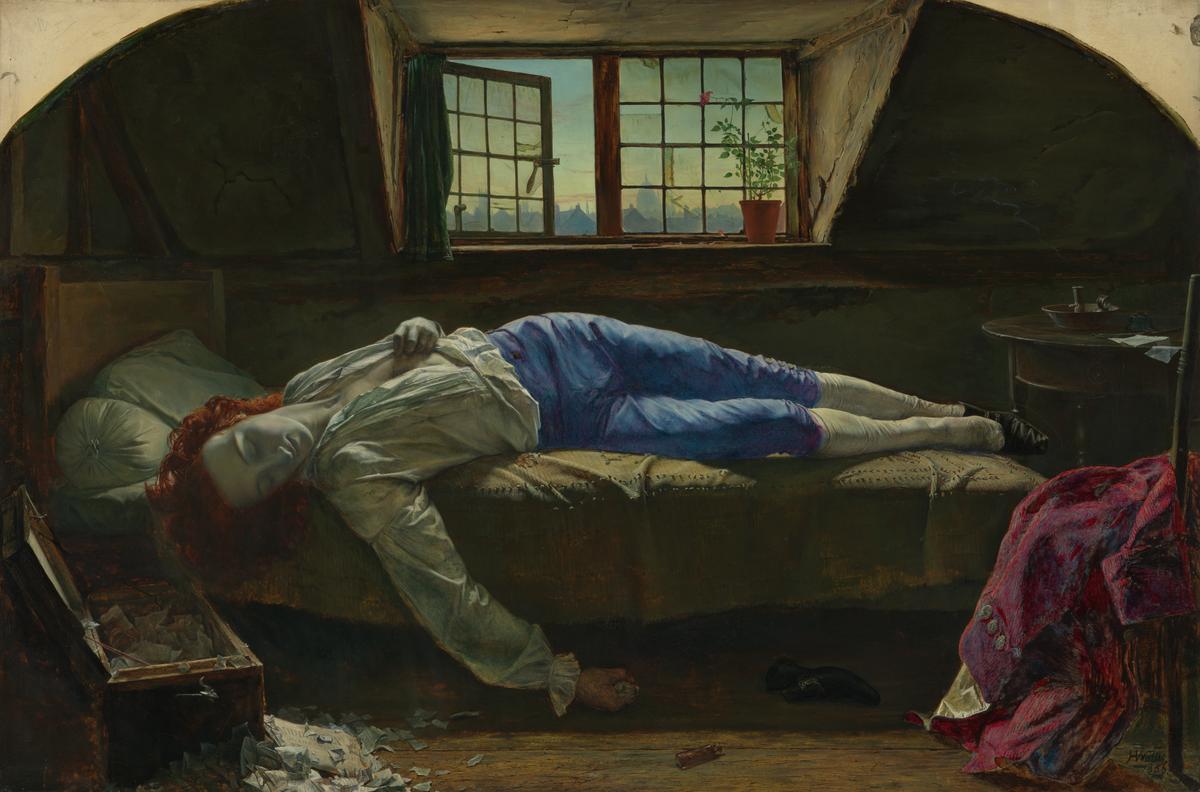
Henry Wallis, Chatterton 1856
This highly romanticised picture created a sensation when it was first exhibited at the Royal Academy in 1856. Thomas Chatterton was a poet whose ‘gothic’ writings, melancholy life and youthful suicide fascinated artists and writers of the 19th century. At an early age, he wrote fake medieval histories and poems, which he copied onto old parchment and passed off as manuscripts from the Middle Ages. The fraud was later discovered. In London he struggled to earn a living writing tales and songs for popular publications. Penniless, he took his own life by swallowing arsenic at the age of 17.
Gallery label, November 2016
10/30
artworks in Beauty as Protest
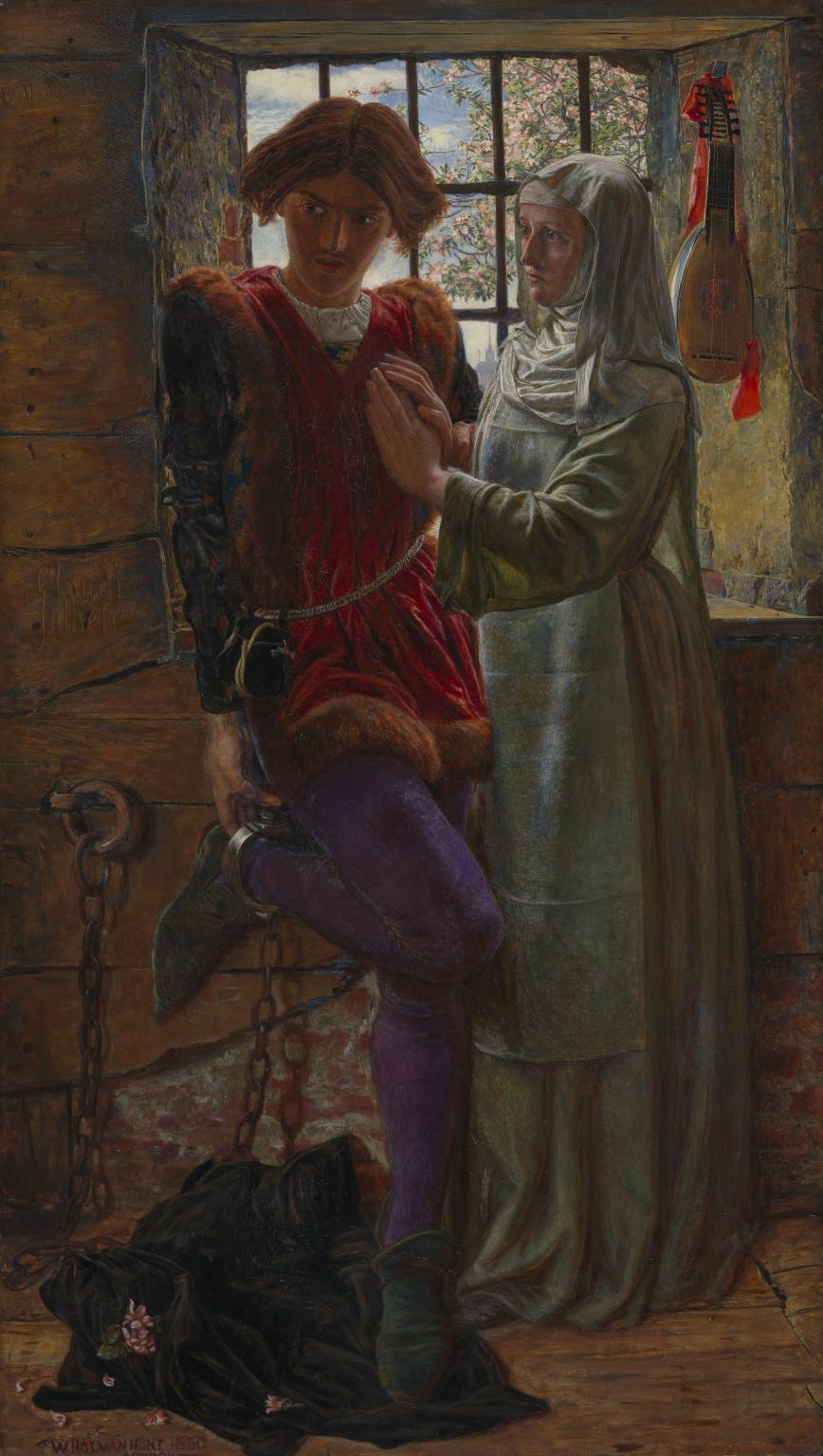
William Holman Hunt, Claudio and Isabella 1850
This scene represents a moment of complex moral dilemma for Claudio and Isabella, characters from Shakespeare’s Measure for Measure. Claudio has been sentenced to death by Angelo, deputy to the duke of Vienna. He can only be saved if his sister, Isabella, sacrifices her virginity to Angelo. Claudio’s awkward pose draws attention to his prison shackles. The apple blossom blown by the wind at his feet symbolises his readiness to buy his own reprieve with Isabella’s chastity. Her white habit emphasises her purity. Holman Hunt summarised the moral of his picture as: ‘Thou shall not do evil that good may come.’
Gallery label, November 2016
11/30
artworks in Beauty as Protest
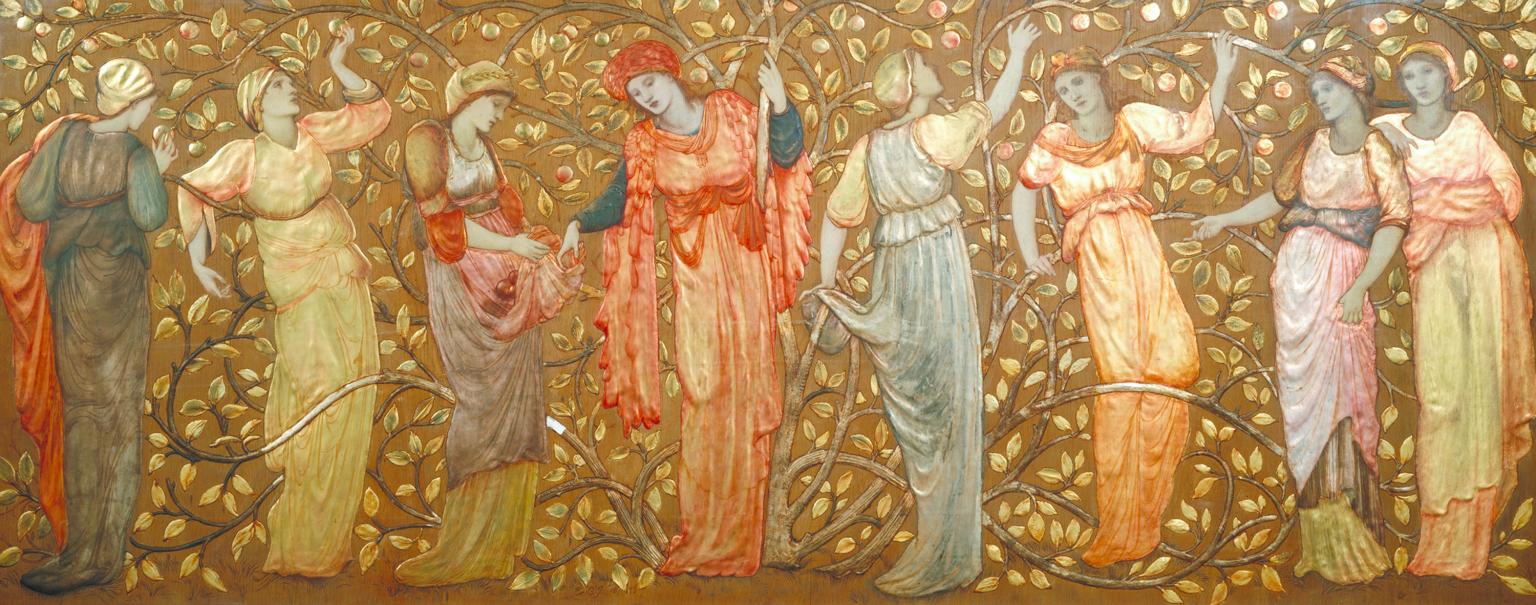
Sir Edward Coley Burne-Jones, Bt, Frieze of Eight Women Gathering Apples 1876
The theme of this panel would appear to be connected with the legend of the Garden of the Hesperides, a subject Burne-Jones treated on several other occasions. It may have been intended as an overmantel for a fireplace or as a decorative panel for a cassone or chest. The gold relief reflects the artist’s interest in early Renaissance art where such decoration was used extensively. The frieze may have been commissioned by the artist’s patron, the MP and collector William Graham, whose daughter Lady Horner owned a similar panel.
Gallery label, November 2016
12/30
artworks in Beauty as Protest
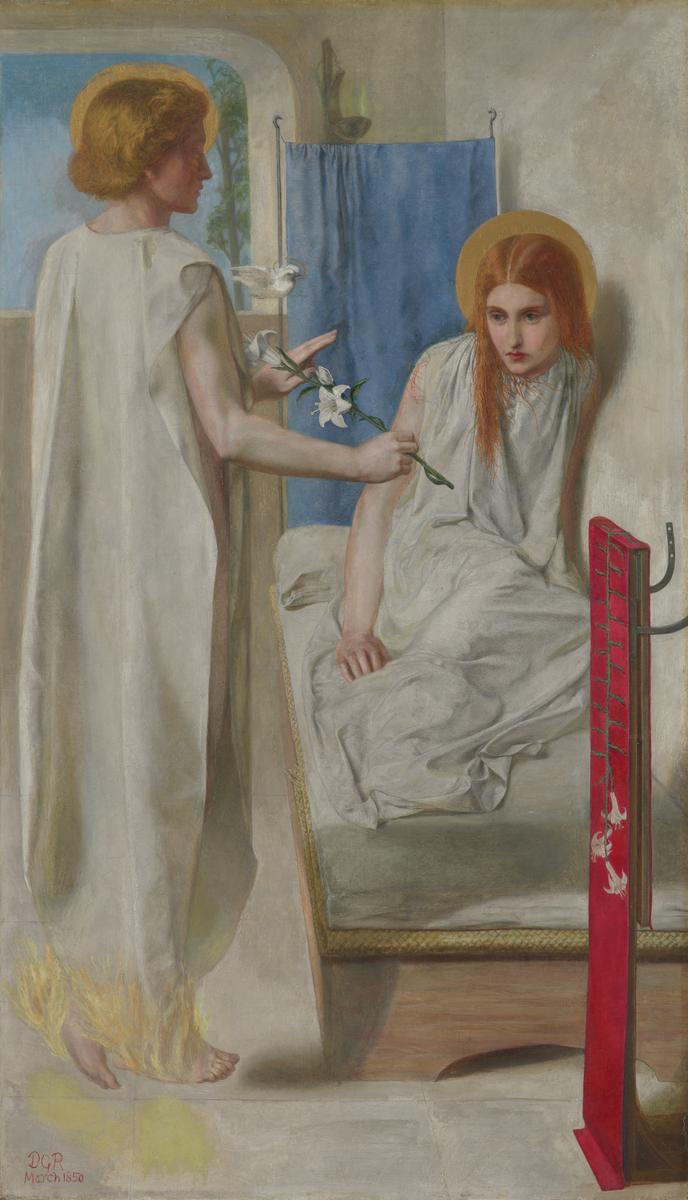
Dante Gabriel Rossetti, Ecce Ancilla Domini! (The Annunciation) 1849–50
Here, the angel Gabriel is telling the Virgin Mary that she will give birth to Jesus Christ. Dante Gabriel Rossetti portrays his sister, the poet Christina Rossetti, as Mary. Both siblings were exploring personal perspectives in their work, engaging with intimate emotions and rejecting more detached approaches. In this painting, the artist adapts medieval depictions of the Annunciation to this more modern, psychological view. Unusually, we see Mary in her bedroom where the angel has disturbed her dreams. Anxiety is suggested by the eerie colouring, her wide eyes and shrinking pose.
Gallery label, January 2025
13/30
artworks in Beauty as Protest
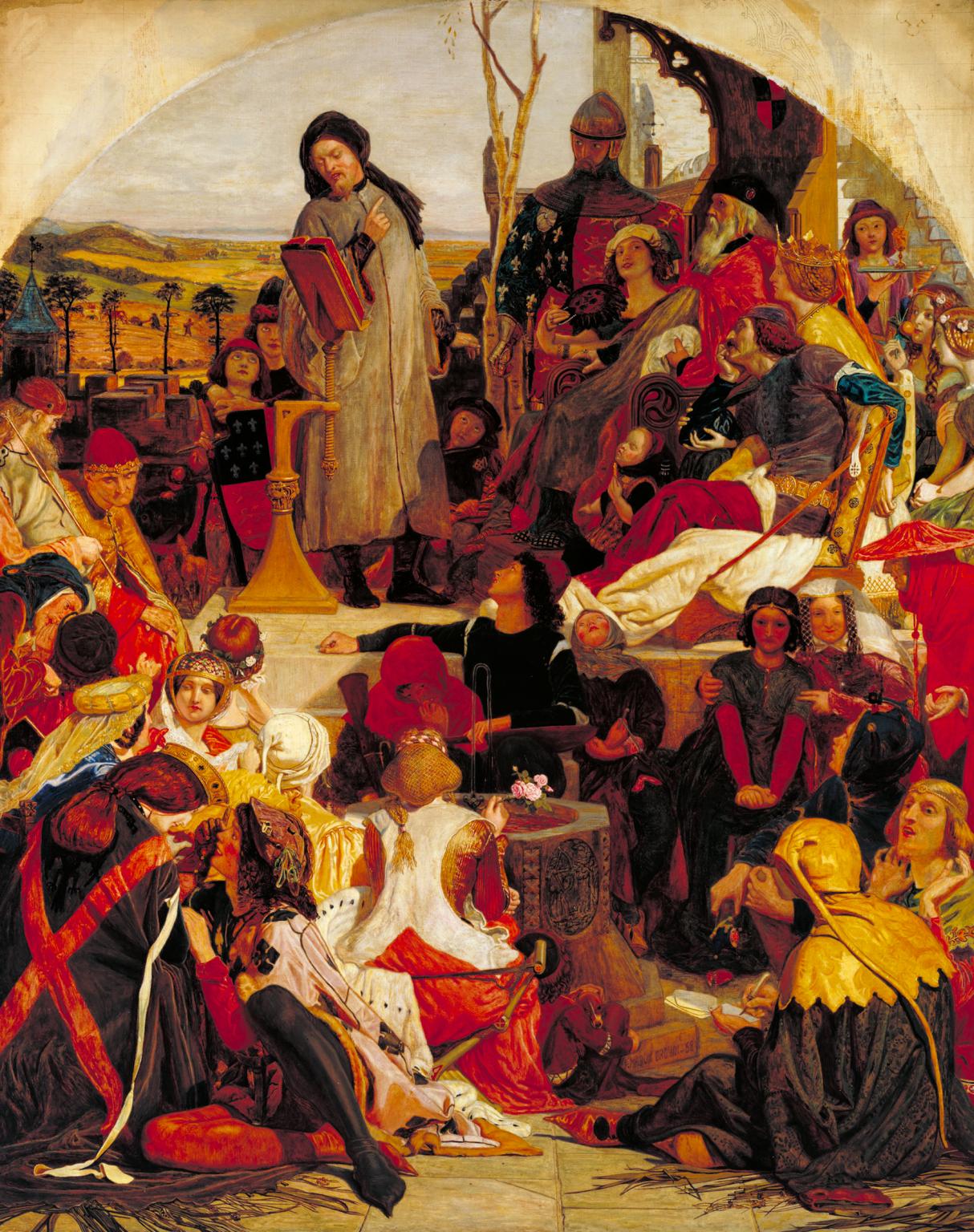
Ford Madox Brown, Chaucer at the Court of Edward III 1856–68
This picture is a replica of Ford Madox Brown’s largest and most ambitious painting, exhibited in 1851. It was significant for its portrayal of natural sunlight and was his first attempt ‘to carry out the notion ... of treating the light and shade absolutely, as it exists at any one moment, instead of approximately or in generalized style’. This pursuit of ‘truth to nature’ was consistent with Pre-Raphaelite ideals, as was his careful workmanship. The picture’s subject, Geoffrey Chaucer, reflects the growing popularity with artists of English literature instead of more conventional classical myths and biblical tales.
Gallery label, November 2016
14/30
artworks in Beauty as Protest
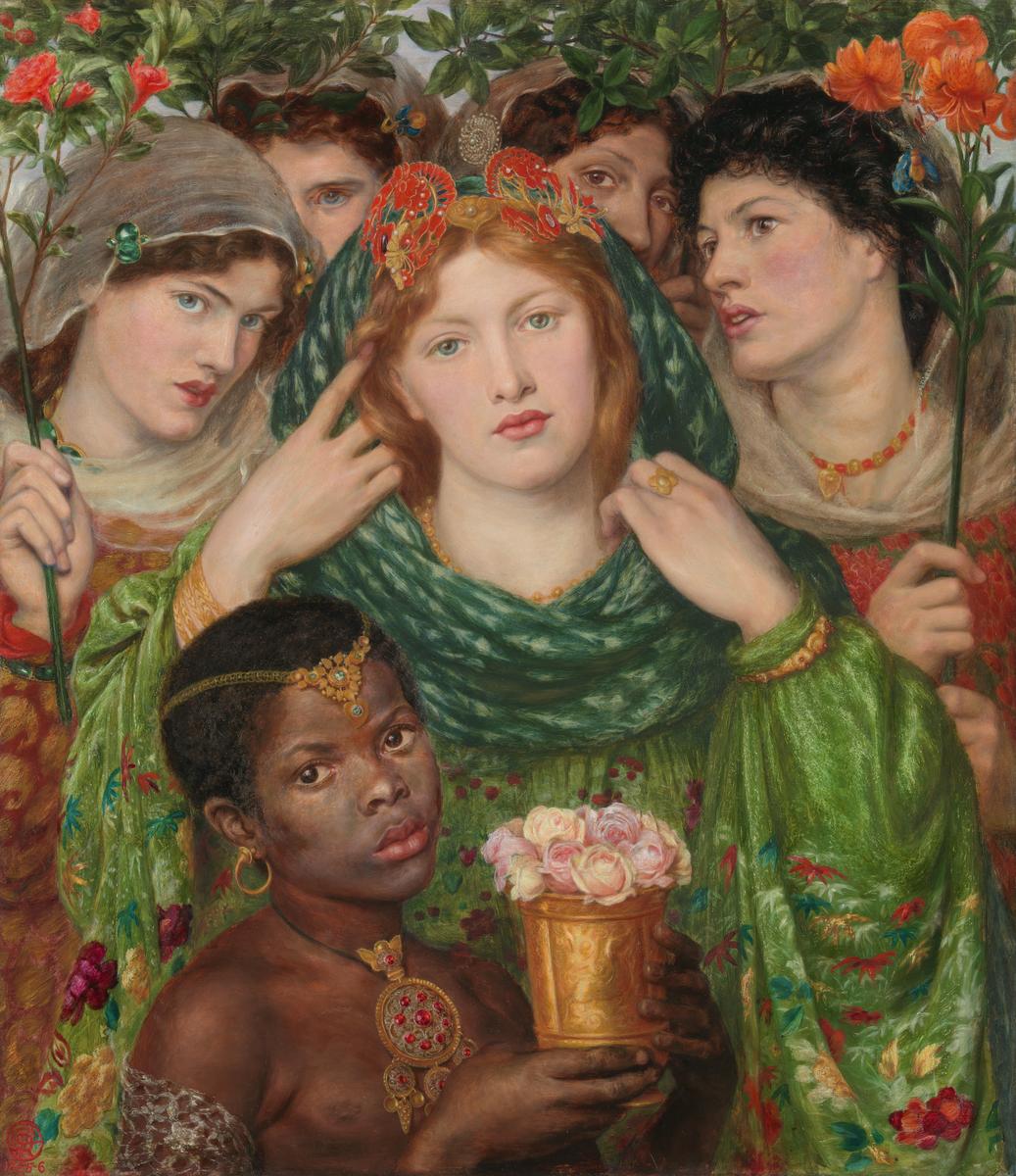
Dante Gabriel Rossetti, The Beloved (‘The Bride’) 1865–6
This painting is inspired by a biblical poem in which a bride reveals her face to her lover. The women surrounding her are modelled by Ellen Smith, an English laundress, Fanny Eaton, of Jamaican heritage, and Kiome Bonnet, of Romany descent. The young boy, whose name is unknown, was brought to London by an American around the time slavery was abolished there. Rossetti's choice of models often challenges rigid Victorian beauty ideals. Yet, the central placement of the white sitter, modelled by Mary Ford, suggests a racial hierarchy. The luxurious fabrics and jewellery from North Africa and East Asia reflect Victorian fantasies of cultures outside of Europe.
Gallery label, October 2025
15/30
artworks in Beauty as Protest
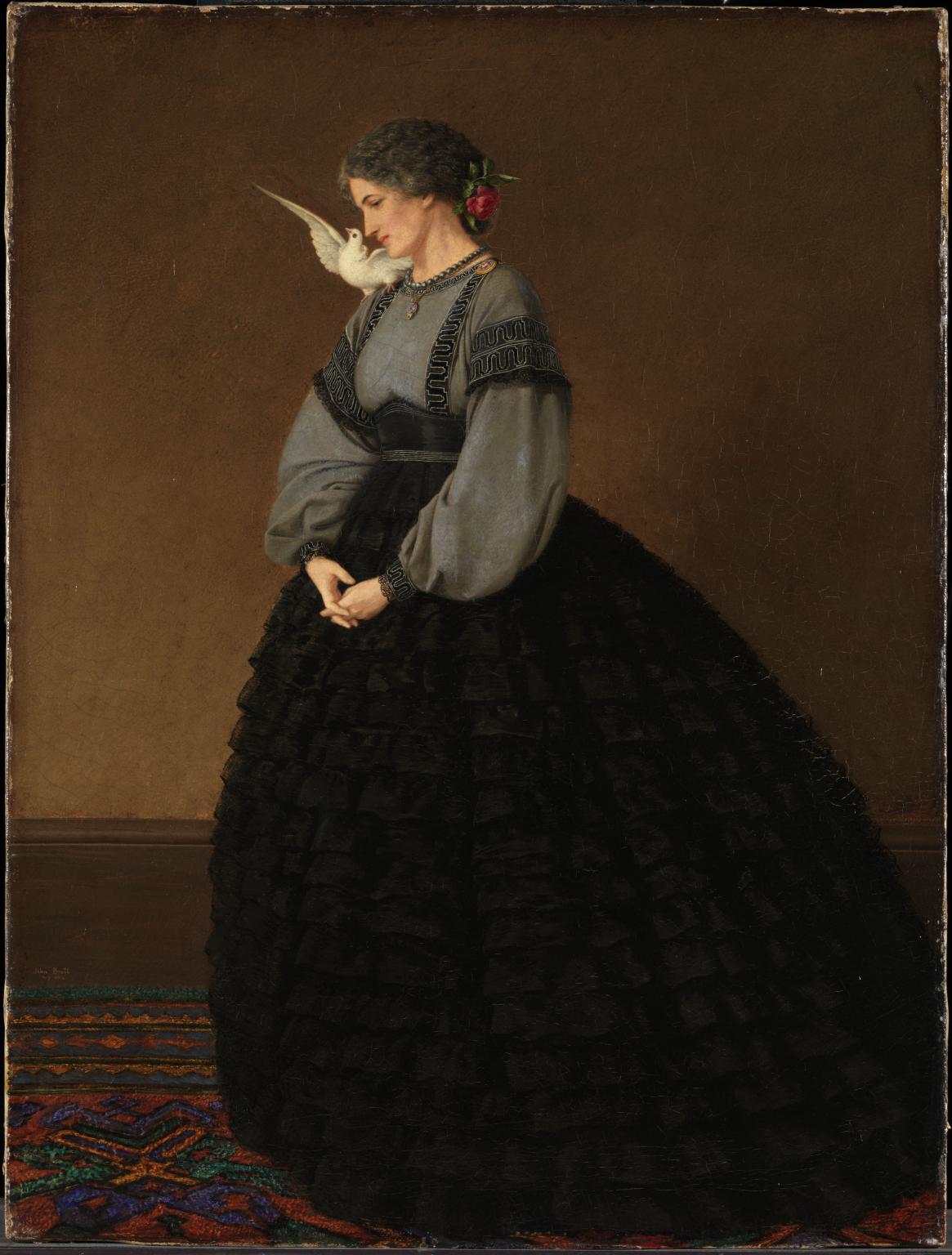
John Brett, Lady with a Dove (Madame Loeser) 1864
Jeannette Loeser, the subject of this portrait, was romantically involved with John Brett until the spring of 1865. The portrait was largely painted in Rome in the early months of 1864, and completed in London in August that year. The wing of the dove echoes the curved outline of the sitter’s skirt, and the dove motif is repeated in the mosaic brooch on her shoulder. Each corner of the frame is decorated with a winged cherub that looks into the picture as if in admiration of her beauty.
Gallery label, November 2016
16/30
artworks in Beauty as Protest
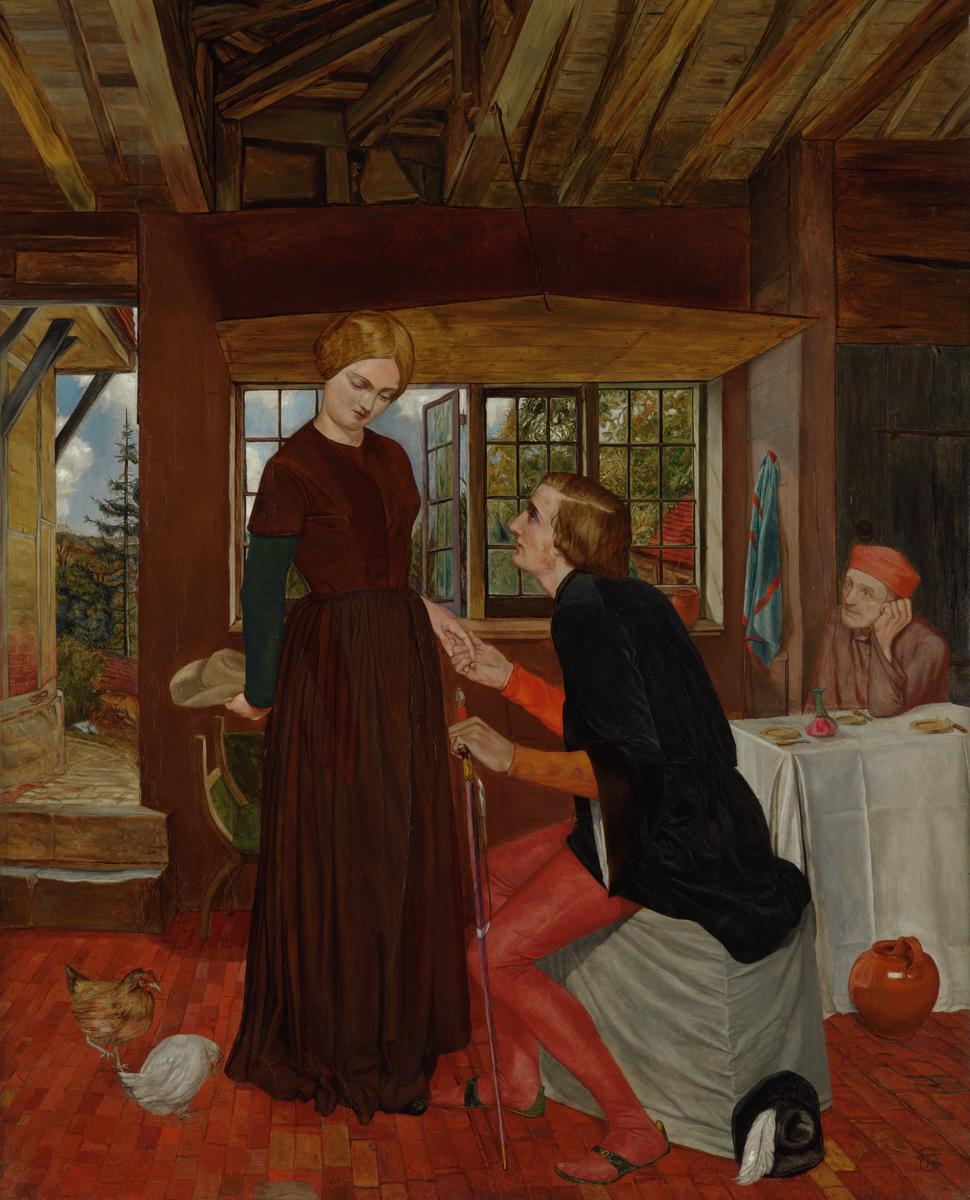
Frederic George Stephens, The Proposal (The Marquis and Griselda) c.1850
This is a scene from The Clerk’s Tale, one of Geoffrey Chaucer’s fourteenth-century Canterbury Tales. The marquis of Saluzzo has fallen in love with a poor but beautiful peasant girl, Griselda, and is proposing marriage to her. He goes on to subject her to a series of appalling trials to test her love. But Griselda is patient and eventually wins his devotion.The background of this picture was painted from life in the kitchen of the rural lodgings that Stephens shared with his friends Holman Hunt and Dante Gabriel Rossetti, at Knole in Kent.
Gallery label, July 2007
17/30
artworks in Beauty as Protest
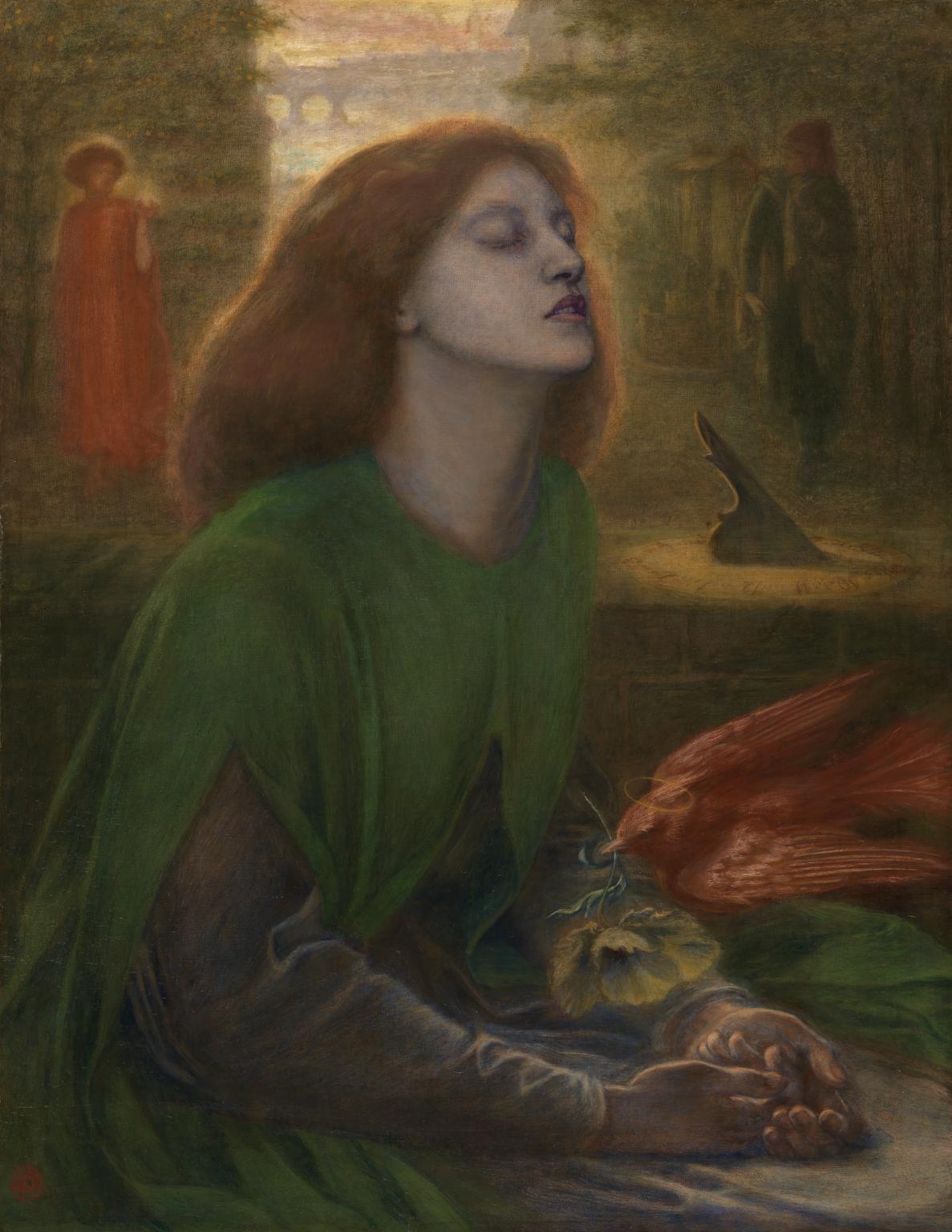
Dante Gabriel Rossetti, Beata Beatrix c.1864–70
Dante Gabriel Rossetti identified closely with the medieval poet Dante Alighieri. Rosetti saw his own despair at the death of his wife, the artist and poet Elizabeth Siddal, through Dante’s writings about the death of his beloved, Beatrice Portinari. Beata Beatrix pictures Siddal as Portinari in a dreamlike Florentine setting. Siddal’s death is re-imagined as a ‘spiritual transfiguration'. As an omen of death, a bird drops a white poppy between her open hands. In the background, Dante looks across at the figure of Love who holds the flame of life, and a sundial marks the time of her passing.
Gallery label, January 2025
18/30
artworks in Beauty as Protest
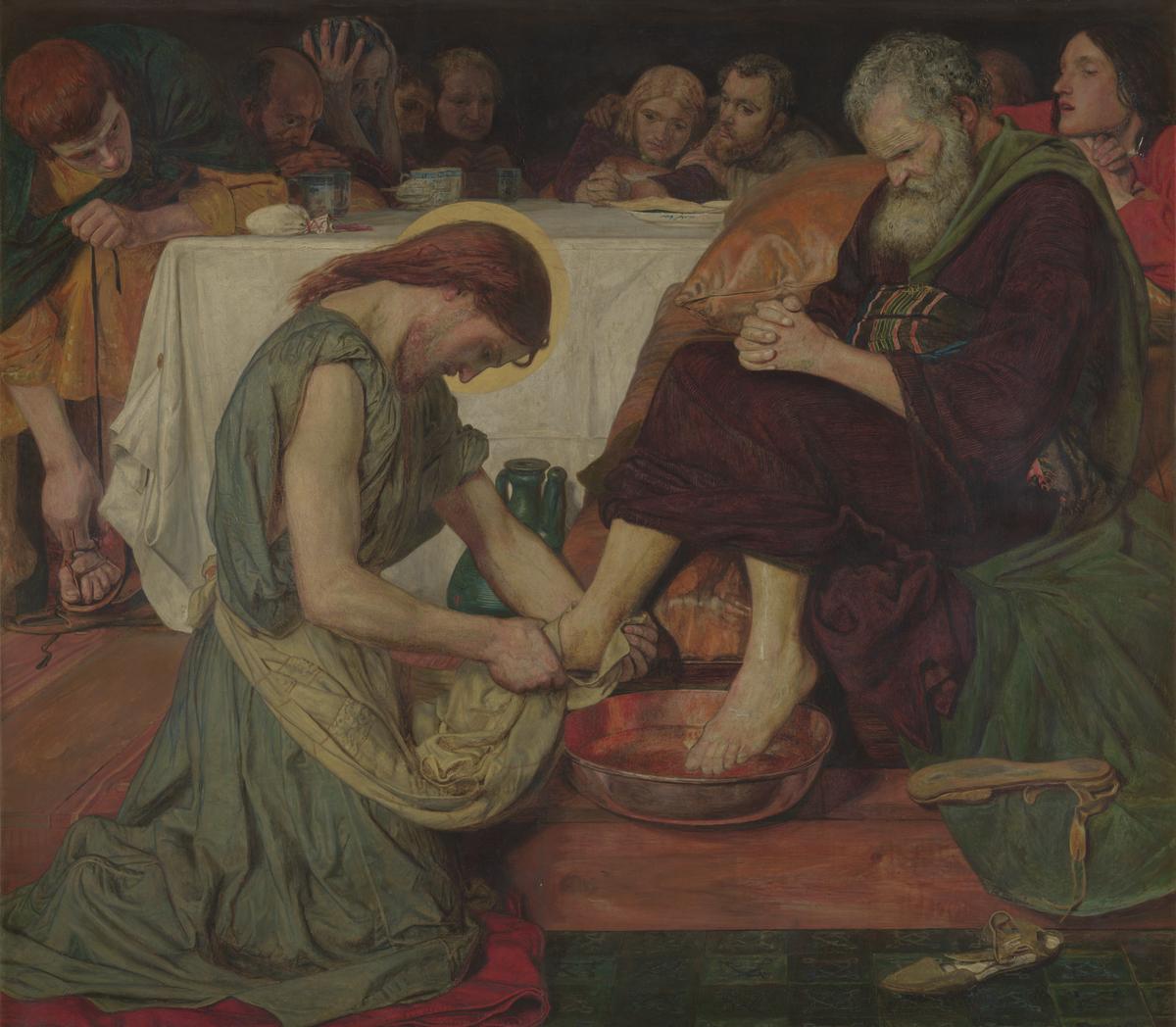
Ford Madox Brown, Jesus Washing Peter’s Feet 1852–6
This picture illustrates the biblical story of Christ washing his disciples’ feet at the Last Supper. It has an unusually low viewpoint and compressed space. Critics objected to the picture’s coarseness – it originally depicted Jesus only semi-clad. This caused an outcry when it was first exhibited and it remained unsold for several years until Ford Madox Brown reworked the figure in robes. Brown was never invited to join the Pre-Raphaelite Brotherhood but he was a close associate of the group. Several members modelled for the disciples in this picture and the critic FG Stephens sat for Christ.
Gallery label, November 2016
19/30
artworks in Beauty as Protest
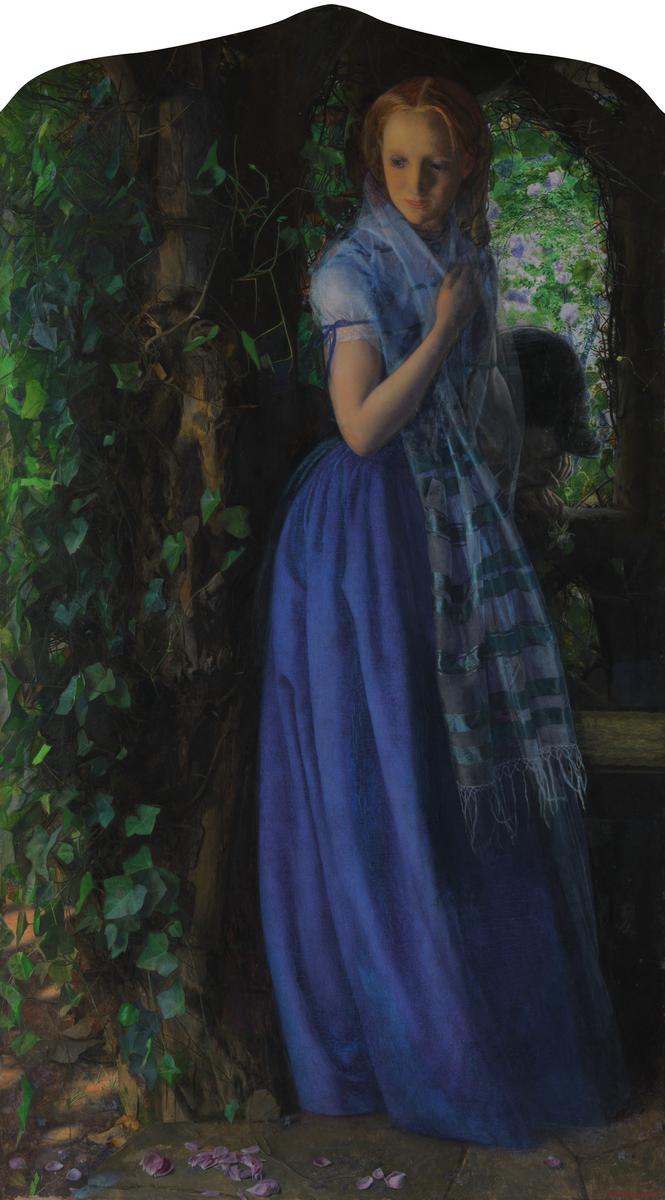
Arthur Hughes, April Love 1855–6
Arthur Hughes’s painting shows a moment of tension between a young couple. The woman turns away as the man bows his head, pressing her hand between his. The sunlit lilacs are symbols of young love but the crushed rose in the shadows on the ground suggests that the relationship is troubled. By contrast, Hughes married the model Tryphena Ford the year this picture was painted. It brought Hughes success and was purchased by William Morris.
The brilliantly coloured dress was typical of the time. New industrial dyes, factory labour and cheaper textiles enabled men and woman to dress for show.
Gallery label, January 2025
20/30
artworks in Beauty as Protest
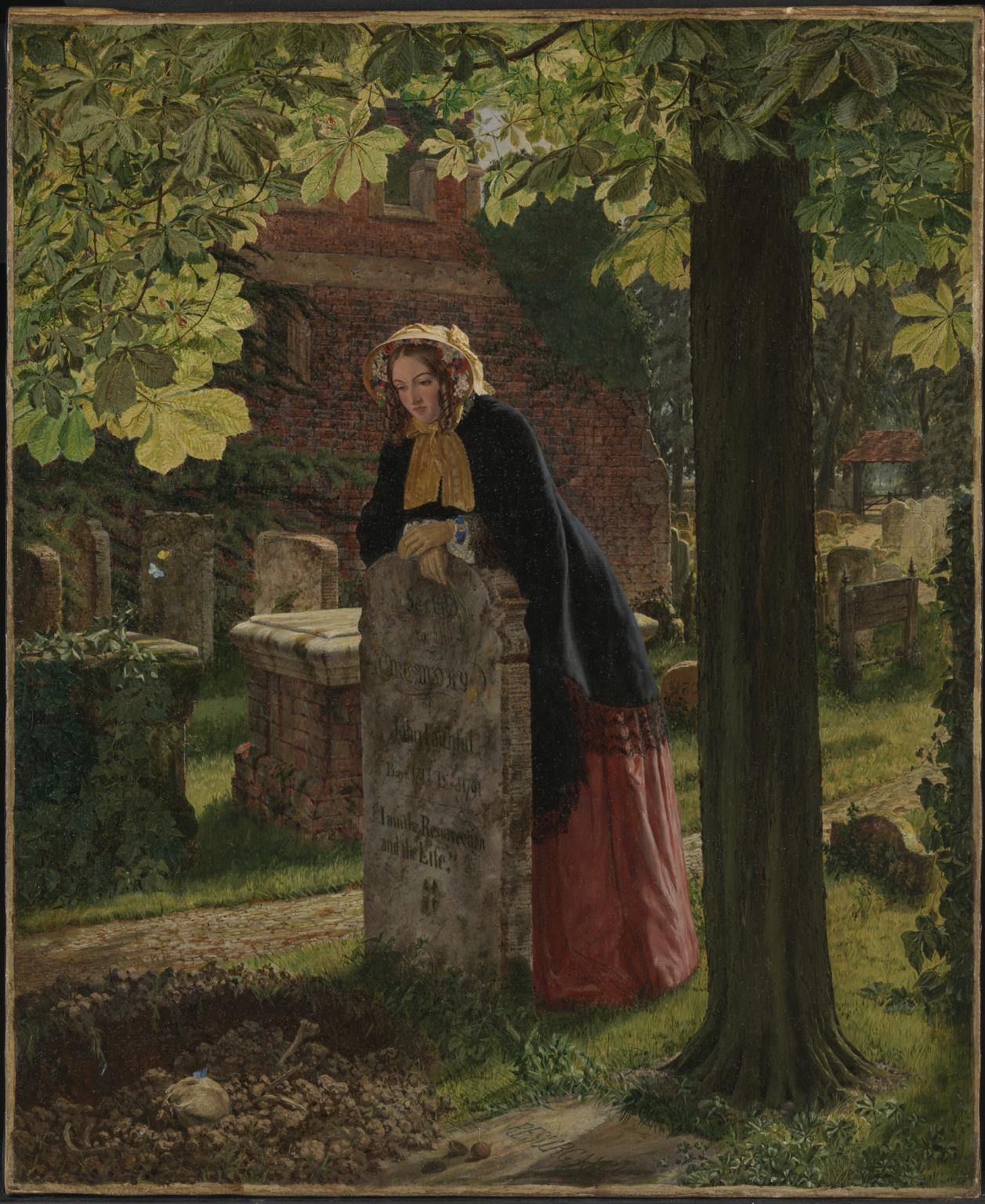
Henry Alexander Bowler, The Doubt: ‘Can these Dry Bones Live?’ exhibited 1855
This young woman, leaning on the gravestone of a man called John Faithful, is contemplating religious doubt. In particular, the Christian belief that the dead will be resurrected on the Day of Judgement. Long-standing religious beliefs were being disrupted at the time this was painted. New scientific publications explored theories of evolution, challenging literal readings of the Bible. Her question appears to be answered by the growing chestnut tree and the stone at its base, carved with the word Resurgam’, which translates as ‘I shall rise again’. The blue butterfly on the skull symbolizes the human spirit.
Gallery label, August 2018
21/30
artworks in Beauty as Protest
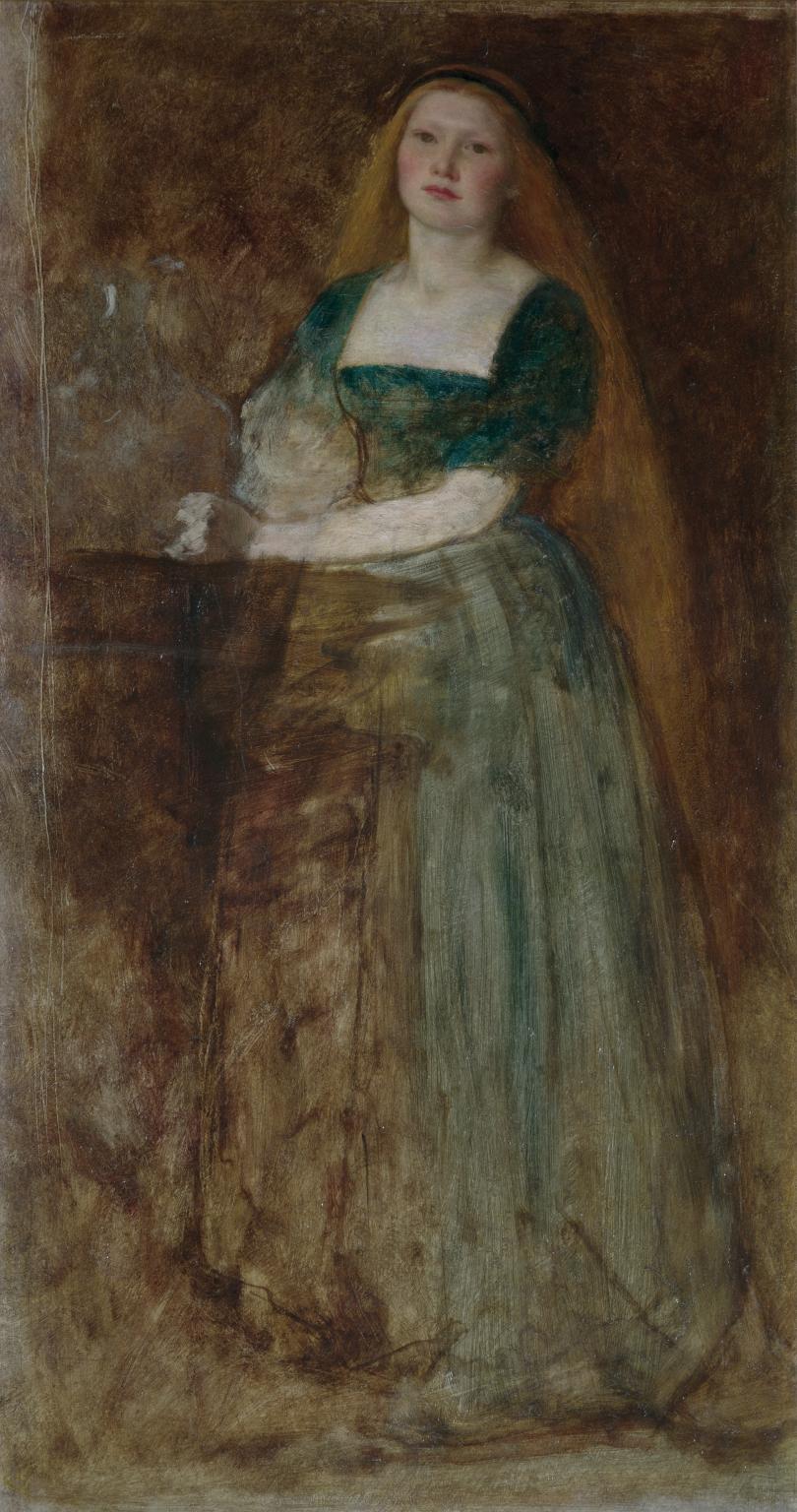
Joanna Mary Wells, Gretchen 1861
This picture alludes to a central scene in Faust, the tragic play published by German writer Johann Wolfgang von Goethe in the early 19th century. In the play, Gretchen, confused, seduced and pregnant by Faust, seeks solace in church. The sitter for the work was probably Wells’s nursery maid. Women artists had limited access to models at the time. Joanna Wells (née Boyce) had established a reputation during the 1850s as a painter of portraits, genre and landscape. She also wrote art reviews for the Saturday Review. Her career ended prematurely at the age of thirty. Wells herself was pregnant when she began this painting. She died shortly after the birth and the picture was left unfinished.
Gallery label, December 2020
22/30
artworks in Beauty as Protest
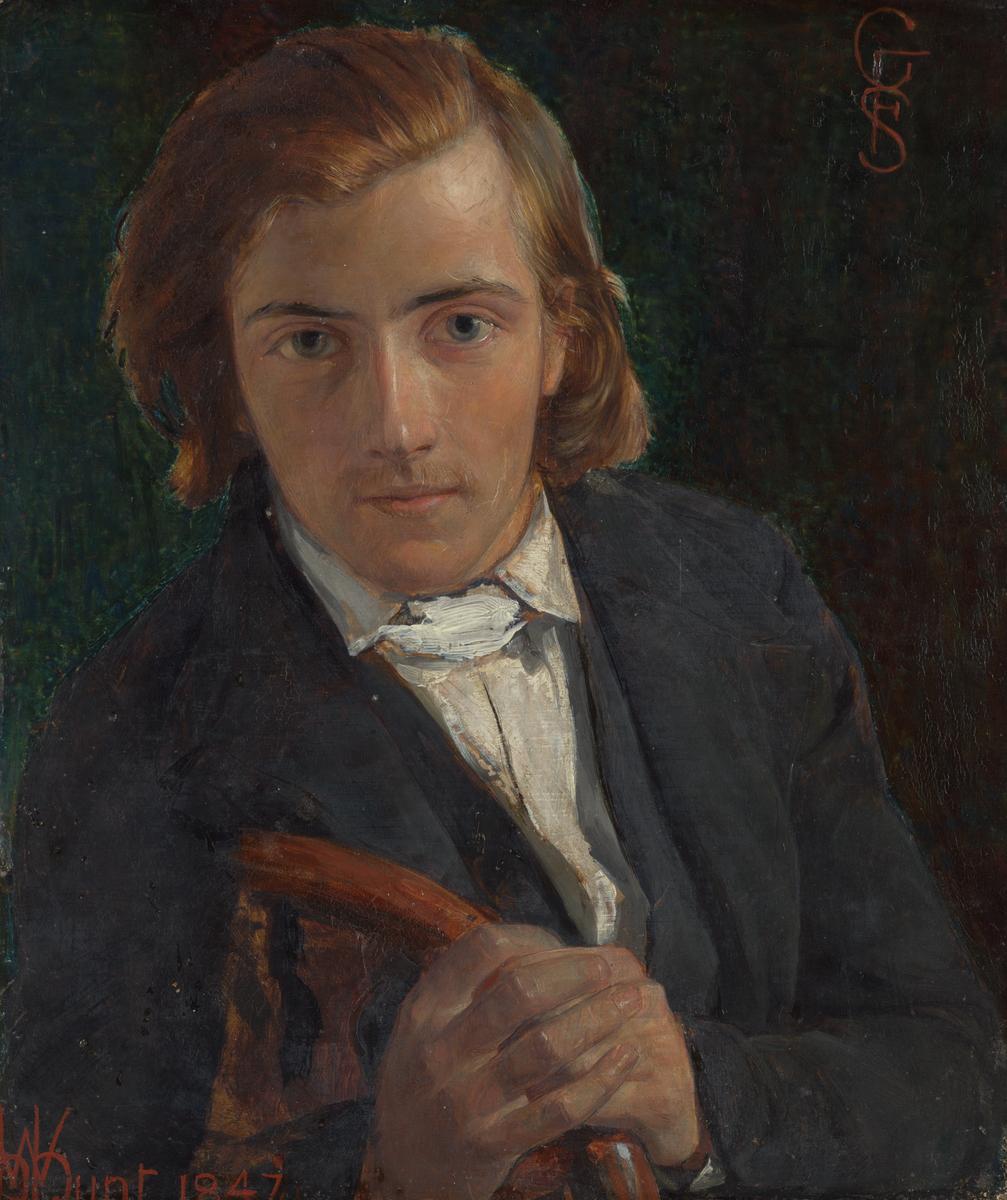
William Holman Hunt, F.G. Stephens 1847
Frederic Stephens was one of the seven original members of the Pre-Raphaelite Brotherhood. He joined the group as a painter and went on to become a leading art critic. Stephens was admired for his appearance and frequently modelled for the circle. In their early years, the Brotherhood struggled to make a living and one member, Thomas Woolner, emigrated to Australia. This picture was part of a set of portraits that the group made of each other to send to their absent friend.
Gallery label, January 2025
23/30
artworks in Beauty as Protest
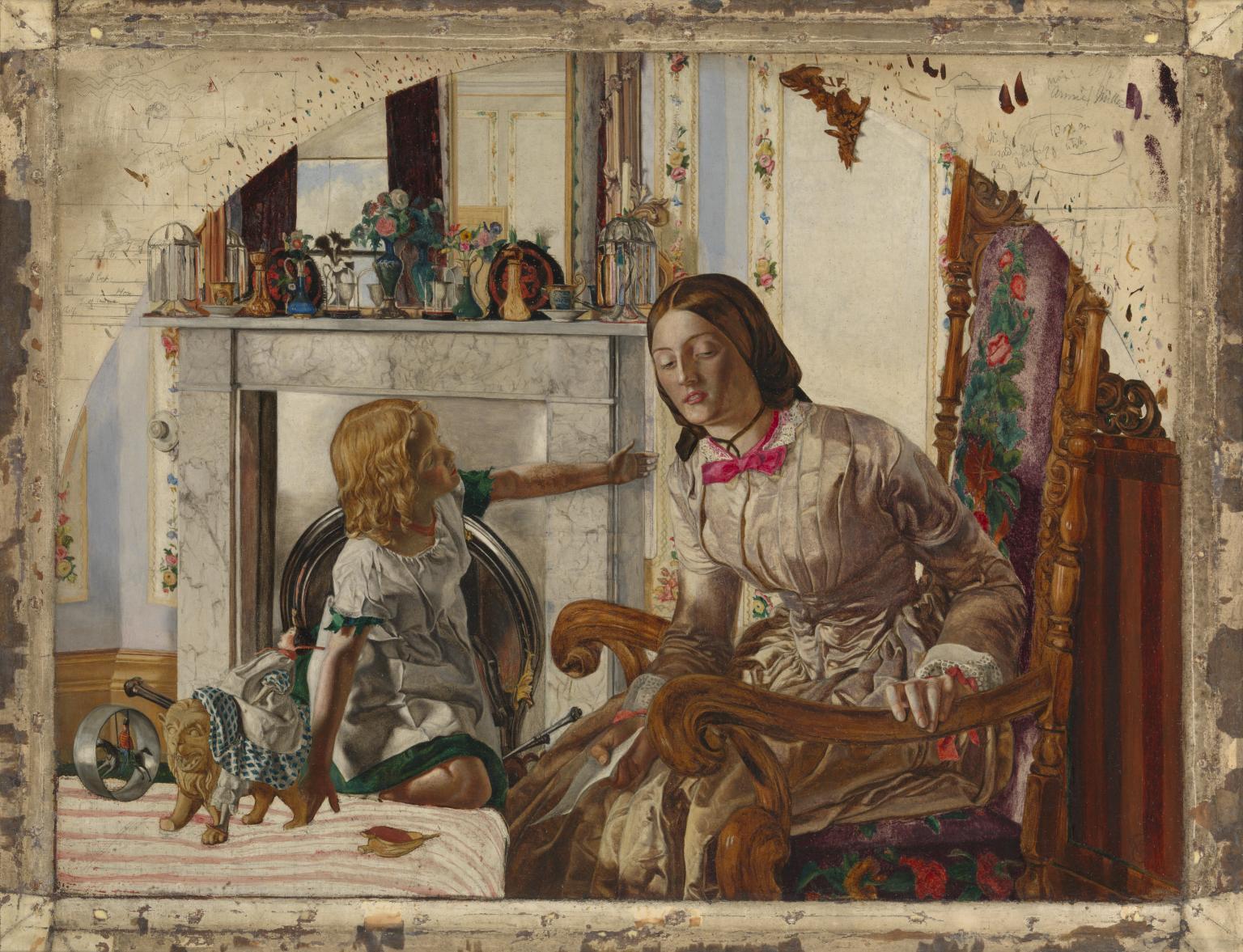
Frederic George Stephens, Mother and Child c.1854
Stephens painted this in the first year of the Crimean War (1853-6) and the major world event plays out in the setting of a Victorian nursery. The child pauses playing to reach towards his mother as she reacts to a letter which brings bad news from the conflict. Stephens encloses the figures in a curved frame like a traditional Madonna and Child and employs everyday objects, such as the military toys, as symbols. Stephen’s extremely detailed Pre-Raphaelite style was time-consuming and the picture was never finished.
Gallery label, August 2018
24/30
artworks in Beauty as Protest
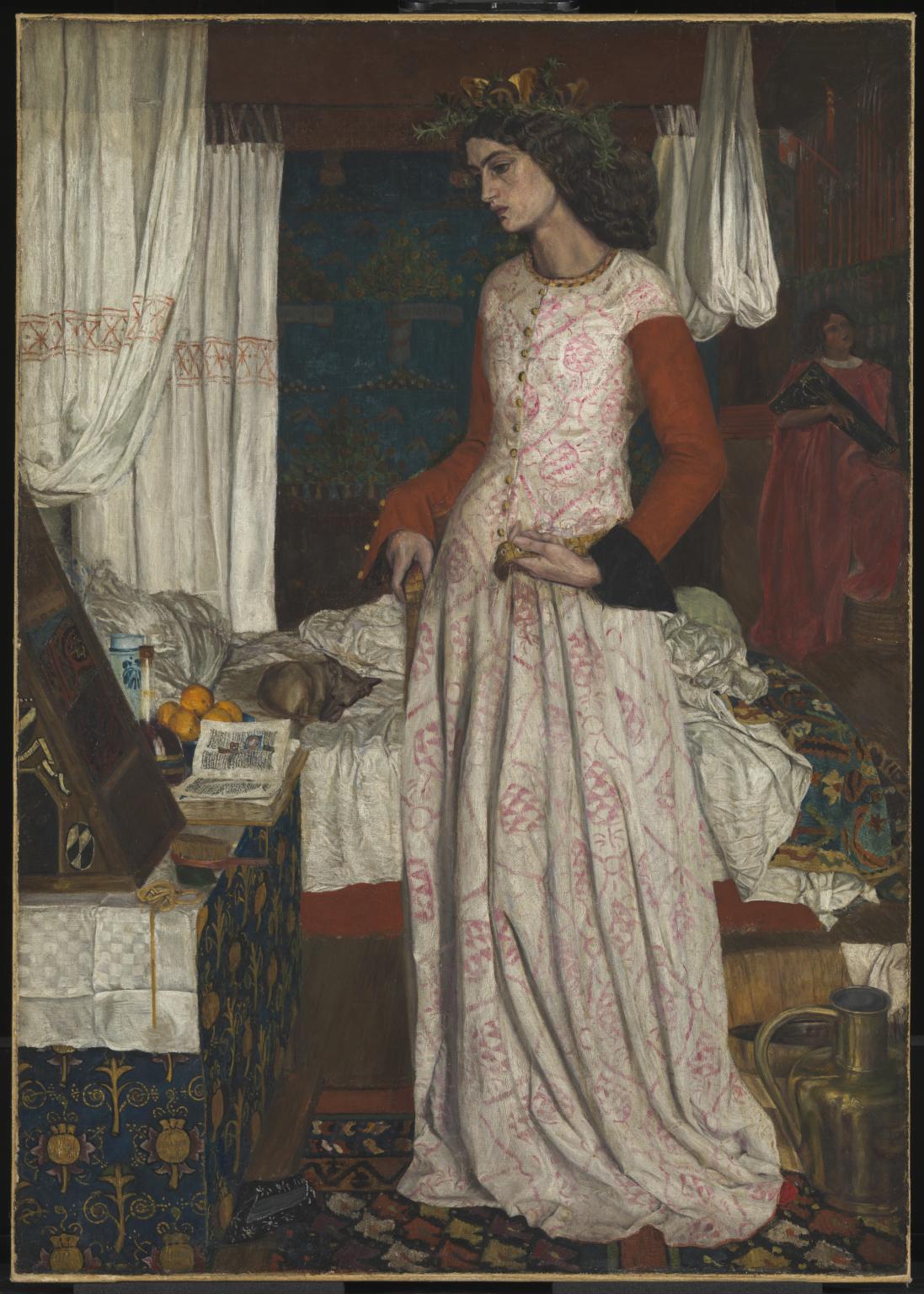
William Morris, La Belle Iseult 1858
Gallery label, August 2024
25/30
artworks in Beauty as Protest
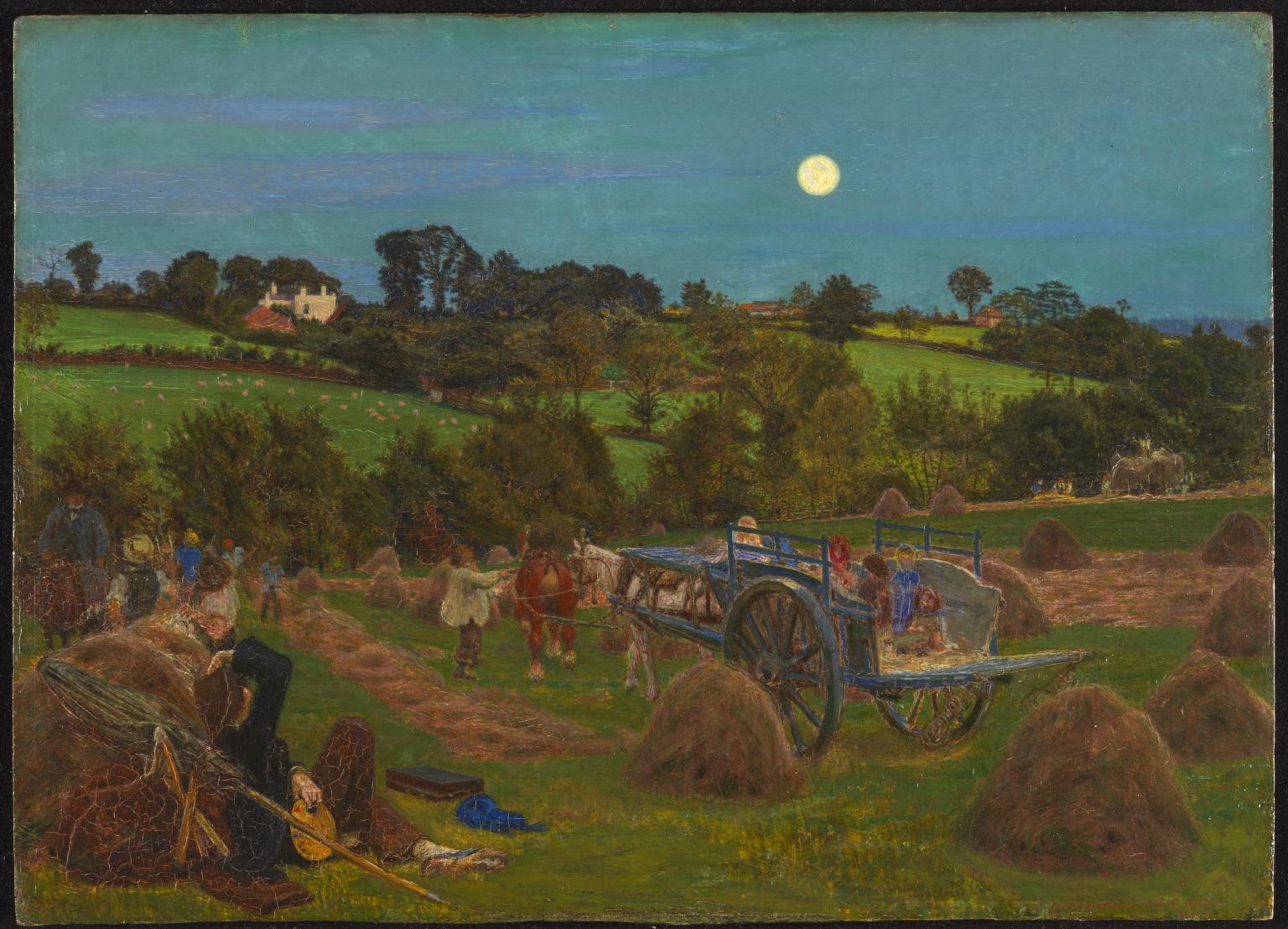
Ford Madox Brown, The Hayfield 1855–6
Brown painted this landscape directly from nature. The setting is the Tenterden estate at Hendon, north London, looking east at twilight. He finished the final details in his studio, adding a self-portrait in the lower left corner. The effect he sought to capture was the way in which the brown hay was made to appear almost pink by contrast with the dense green grass. After it was finished his dealer rejected it on the grounds that he had never seen hay of this colour. Brown later retouched the painting before selling it to his friend and fellow artist William Morris.
Gallery label, November 2016
26/30
artworks in Beauty as Protest
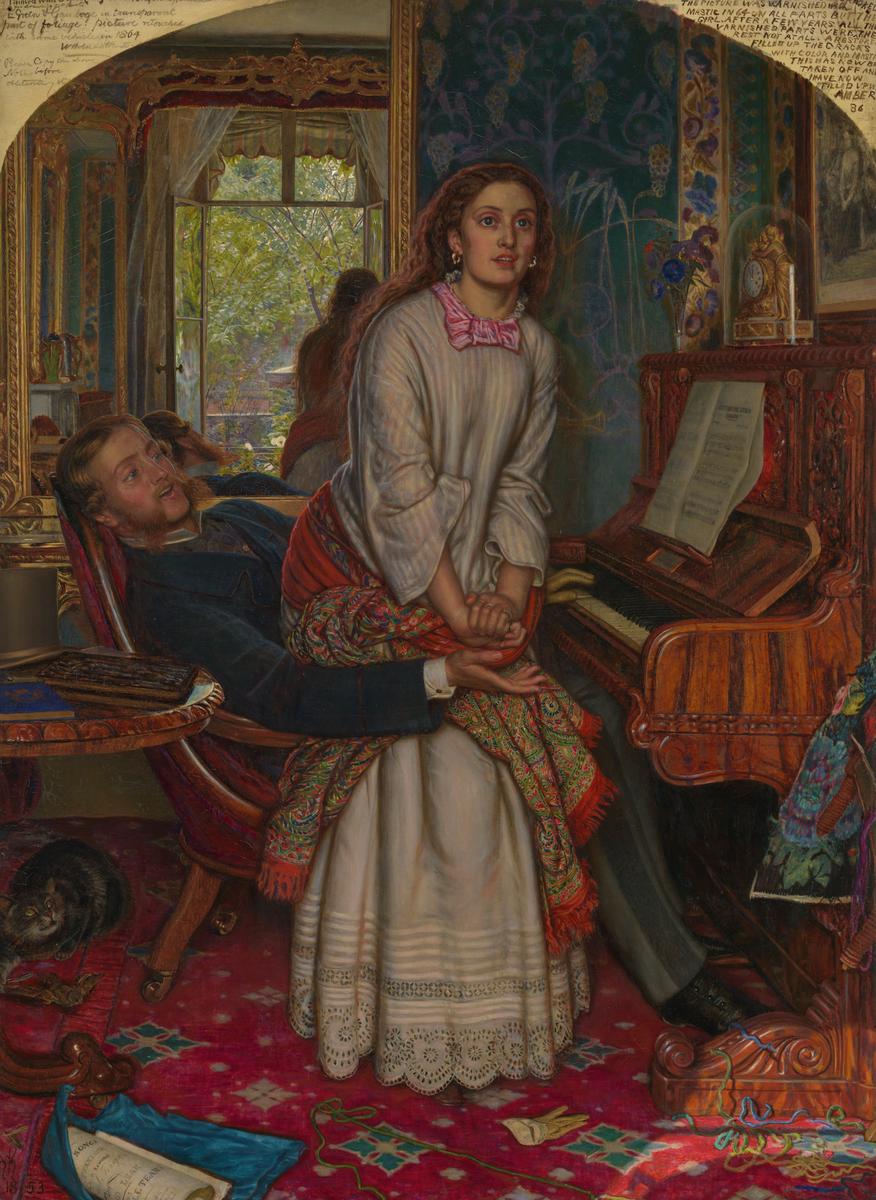
William Holman Hunt, The Awakening Conscience 1853
Hunt’s modern life painting represents a wealthy man visiting his mistress in an apartment which he has provided for her. The tune that he idly plays on the piano has reminded her of her earlier life and she rises from his lap towards the bright outside world (made visible to the viewer in the mirror). The claustrophobic space is filled with intricate clues, such as the bird trying to escape from a cat and the female figure enclosed in a glass dome, which echoes the shape of the painting.
Gallery label, November 2016
27/30
artworks in Beauty as Protest
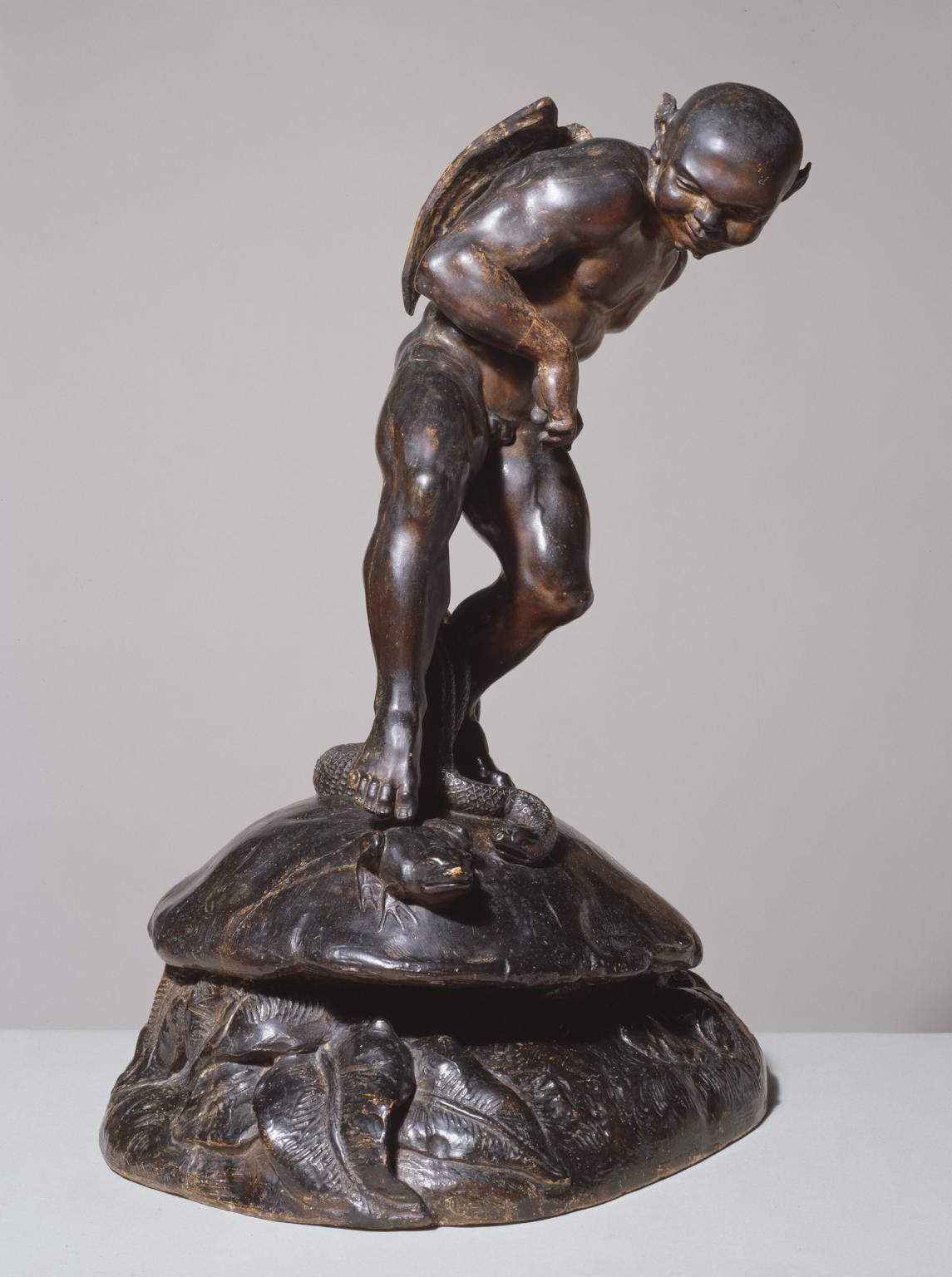
Thomas Woolner, Puck 1845–7
Puck is a mischievous invisible fairy in Shakespeare’s A Midsummer Night’s Dream. Thomas Woolner has illustrated a scene here from an ‘Imaginary Biography’ of Puck. He alights on a mushroom to save a sleeping frog from a hungry snake. The sculpture captures the instant before a sudden movement – as Puck touches the frog with his foot it will jump away just before the snake attacks.Ideal or poetic subjects drawn from literature, mythology or history, were highly regarded by sculptors in the mid-nineteenth century.
Gallery label, July 2007
28/30
artworks in Beauty as Protest
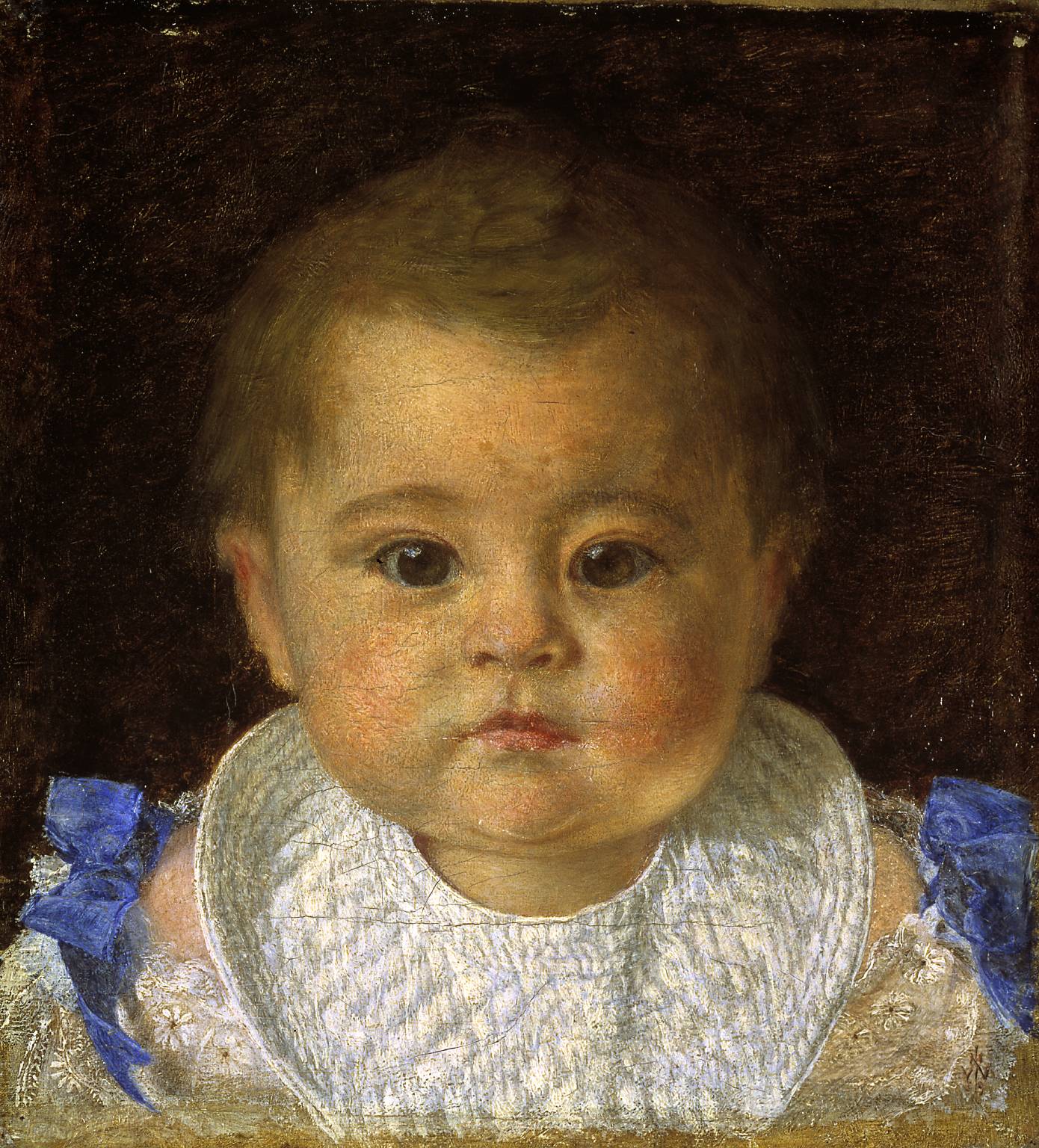
Joanna Mary Wells, Portrait of Sidney Wells 1859
In this portrait, the artist’s second child returns our gaze. Joanna Wells (née Boyce) was part of the Pre-Raphaelite circle. The portrait’s frontal format draws on early images of Jesus that Wells studied in Italy. Her meticulous technique brings the viewer physically and psychologically close to her subject.
In Victorian times, birth held high risks for mother and child. Sidney Wells died of a childhood illness and Joanna Wells did not survive the delivery of her third baby, two years later.
Gallery label, January 2025
29/30
artworks in Beauty as Protest
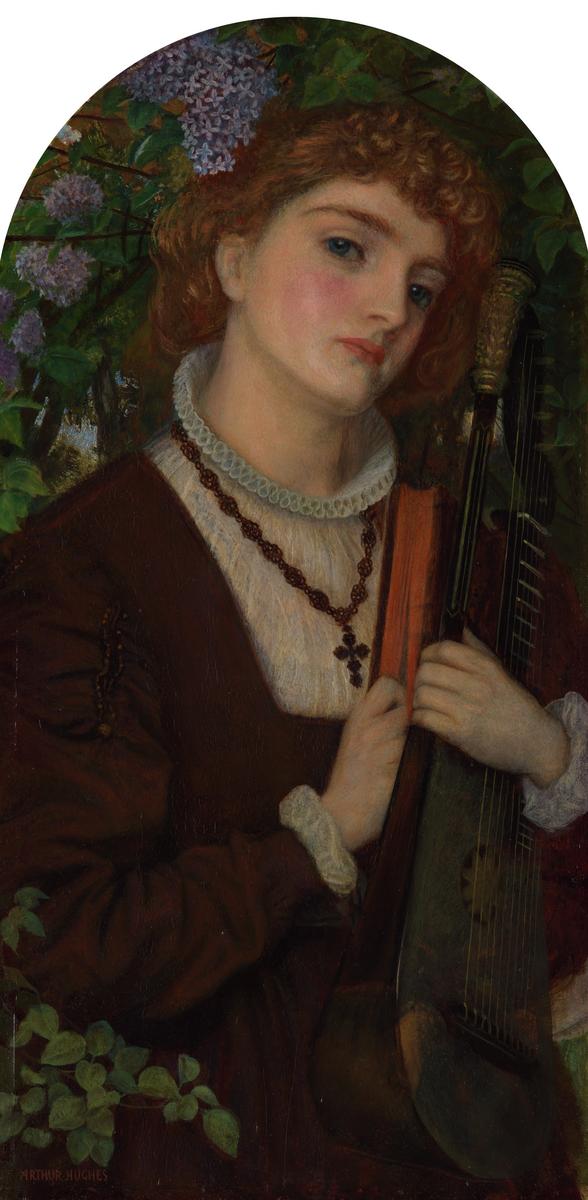
Arthur Hughes, The Singer 1866
30/30
artworks in Beauty as Protest
Art in this room
Arthur Hughes
The Eve of St Agnes
1856
Ford Madox Brown
Carrying Corn
1854–5
Henry Wallis
The Room in Which Shakespeare Was Born
1853
William Holman Hunt
The Haunted Manor
1849
John Brett
Florence from Bellosguardo
1863
John William Inchbold
Gordale Scar, Yorkshire
exhibited 1876
You've viewed 6/30 artworks
You've viewed 30/30 artworks